

Piero Dies at 81: Iconic 'Mi Viejo' Singer Remembered for Generation-Defining Hits Across Regions
The Argentine singer behind 'Mi Viejo' died in Buenos Aires leaving a legacy of family tributes, protest music and peace
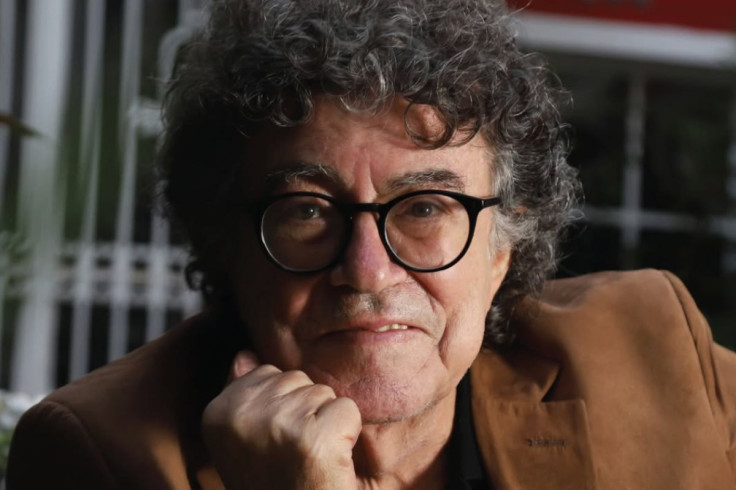
Piero's family and friends have confirmed that the Argentine singer behind 'Mi Viejo' died in Buenos Aires on 7 October aged 81.
He had spent several days in hospital before his death, and no cause has been disclosed. Across more than six decades, his songs about family, peace and social justice reached audiences throughout Latin America. He remained active onstage, celebrating his 81st birthday in Bogotá in April 2026.
Piero's Family Remembers His Voice and Message of Peace Through Songs That Crossed Borders
'It is with deep sorrow that we announce the passing of our beloved Piero at the age of 81. His voice, his songs, and his message of peace remain with us forever. His light will continue to shine wherever his music reaches. His family and friends thank you for your messages. Safe travels, dear Piero,' read the family's announcement on Instagram, translated from Spanish.
Born Piero Antonio Franco De Benedictis in Gallipoli, Italy, on 19 April 1945, he moved to Argentina with his family aged three. His professional career began in the 1960s, initially with popular songs before his repertoire increasingly addressed social issues.
His partnership with Argentine journalist and lyricist José Tcherkaski began in 1968. A year later, 'Mi Viejo' appeared on his debut album of the same name, with lyrics by Tcherkaski and music by Piero.
The tribute to fatherhood became his defining recording and a familiar choice at birthday celebrations across South America. Fundación Konex has noted that the song has been recorded in more than 500 versions.
It entered the Latin Grammy Hall of Fame in 2007. The Latin Recording Academy recognised Piero with a Lifetime Achievement Award in 2016.
His later Piero, Mi Querido Viejo tour celebrated 60 years of his career and 80 years of life. Its title translates as My Dear Old Man.
Piero's Protest Music and Years in Exile
The collaboration also produced 'Pedro Nadie' and 'Para el Pueblo lo Que Es del Pueblo', songs associated with the social and political tensions of Argentina and the wider region during the 1970s.
His performance of 'Pedro Nadie' won the international competition at Rio de Janeiro's Festival Internacional da Canção in 1970.
Following Argentina's 1976 military coup, Piero went into exile as the regime targeted artists associated with protest music. He spent time in Panama, Italy and Spain before returning to South America.
Following his years in exile, Piero continued recording and performing songs centred on peace, social justice and Latin American identity.
Colombia Became a Second Home for Piero
Piero's connection with Colombia began at the Feria de Cali in 1971. Booked for one concert, he performed additional shows, including free appearances for groups that approached him.
He returned the following year to perform at Bogotá's Media Torta. His visits later extended beyond major concert venues to communities in regions including Urabá and Caguán, where he supported peace initiatives through music and other projects.
Following the 1985 Armero tragedy, Piero became involved in efforts supporting affected communities. His work in Colombia increasingly extended beyond concerts, reflecting his longstanding commitment to peace and social causes.
He also lived in Colombia for periods and was granted Colombian nationality, reflecting his longstanding relationship with the country.
© Copyright IBTimes 2026. All rights reserved.