

Arizona Court Tosses Man's Sentence After Judge 'Loved' Dead Victim's AI Video Offering Forgiveness
The Appeals court has ordered new sentencing hearing for Gabriel Horcasitas, ruling that an AI-generated video of his victim made the original hearing fundamentally unfair
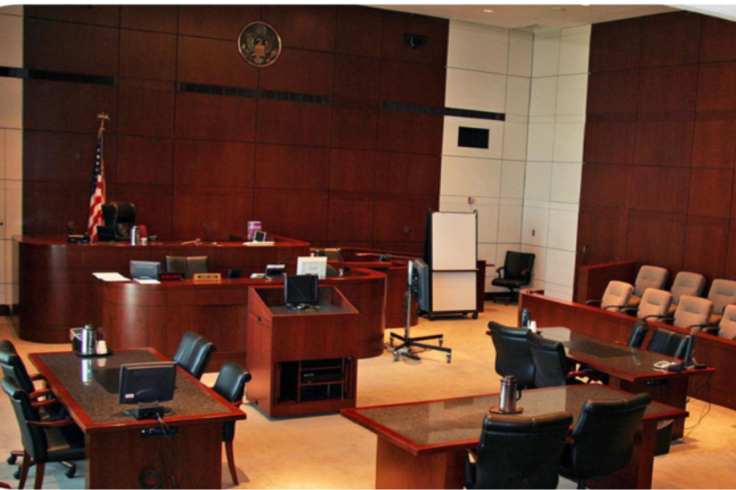
An Arizona appeals court has thrown out the prison sentence of a man convicted of manslaughter over a road rage shooting, ruling that an AI-generated video of the victim forgiving him made the sentencing hearing unfair.
Gabriel Paul Horcasitas was sentenced to 10 and a half years in 2025 after a judge praised a digital recreation of Christopher Pelkey produced by the victim's family.
The Arizona Court of Appeals upheld his manslaughter conviction on Wednesday, 30 September 2026, but vacated the sentence and ordered a new hearing. The panel found that the AI video had rendered the sentencing 'fundamentally unfair'.
A Script Written by His Sister
Pelkey, 37, was shot dead by Horcasitas at a red light in Chandler, a suburb of Phoenix, on 13 November 2021.
The case went to trial twice. At the first trial, a jury acquitted Horcasitas of murder but convicted him of manslaughter and endangerment. A judge then ordered a new trial after finding that prosecutors had failed to disclose potentially exculpatory evidence from Pelkey's phone. At the second trial, Horcasitas pleaded guilty to endangerment and was again convicted of dangerous manslaughter.
Before sentencing on 1 May 2025, Pelkey's family presented a video in which an AI-generated version of him addressed the court. His sister, Stacey Wales, wrote the script, while her husband, Tim Wales, and a friend created the likeness using Pelkey's photograph and voice recordings, Reuters reported at the time.
In the video, the recreated Pelkey spoke directly to the man who killed him. 'I believe in forgiveness and in God who forgives,' the avatar said.
A killer is being resentenced after an AI video of his dead victim forgiving him was played in court
— Dexerto (@Dexerto) October 6, 2026
The victim’s sister wrote the script, and said they “probably could have been friends” pic.twitter.com/HYI6et1yLx
Maricopa County Superior Court Judge Todd Lang responded warmly. 'I loved that AI,' he said, adding that he felt the forgiveness was genuine and that Pelkey had been speaking 'from his heart', according to the appeals court's opinion.
Lang then sentenced Horcasitas to 10 and a half years for manslaughter, above the nine-year term prosecutors had sought. The defence had asked for seven years. Lang also imposed a concurrent sentence of two years and three months for endangerment.
The hearing drew international attention and was among the first known uses of an AI-generated victim impact statement in an American court.
'Fundamentally Unfair'
The appeals panel concluded that the video had crossed a line. It found that the presentation 'clearly impacted the sentencing judge' and 'so prejudiced Horcasitas as to render the sentencing procedure fundamentally unfair', according to Arizona's Family.
The court acknowledged that the record did not show precisely how the AI video factored into the sentencing calculus, but said there was no question that it played a role.
The panel noted that the video did not document a real event. It described the AI portion as 'a depiction of the victim and his thoughts created from the imaginings of the victim's sister'.
The court said the technology 'erases the interpretive distance' between a family's belief about what a victim would have said and the victim's own voice and opinions.
The ruling was specific to the AI-generated material: the panel found that genuine recordings of Pelkey embedded in the presentation were permissible.
Horcasitas's manslaughter conviction stands, NBC News reported. Only the sentence has been vacated, and the case now returns to the trial court for resentencing.
A First for Arizona Courts
The ruling addresses a question no Arizona appellate court had previously considered. 'No Arizona case has addressed the admissibility of an AI-generated depiction of a victim offered as victim impact evidence,' the panel wrote, as reported by Fox 10 Phoenix.
Arizona's constitution and statutes give crime victims the right to be heard at sentencing, and Arizona courts have allowed family members to present victim impact material on their behalf.
Courts have generally afforded victims broad rights to present such evidence, while retaining the power to exclude material that becomes unduly prejudicial.
The decision does not ban AI-generated victim material outright. It establishes that this particular presentation rendered the sentencing fundamentally unfair.
Courts elsewhere in the United States have also confronted AI in the courtroom. In March 2025, judges on a New York appellate court stopped a presentation after discovering that a litigant had attempted to deliver his argument through an AI-generated avatar without disclosing it.
A Family Facing a New Hearing
The decision means Pelkey's relatives must return to court for a fresh sentencing hearing, almost five years after his death. Wales said in 2025 that she wrote the script to reflect what she believed her brother would have wanted to say.
It remains unclear whether the family will seek to present any AI-generated material at the new hearing. The appellate ruling makes plain that a recreation of the victim speaking in his own name is likely to face close scrutiny.
The case returns to the trial court for resentencing, with the AI-generated portion of the victim impact presentation excluded. The appeals court did not specify what term Horcasitas should receive.
The ruling is the first appellate guidance in Arizona on AI-generated victim impact evidence, and courts in other states are likely to study it closely.
© Copyright IBTimes 2026. All rights reserved.