

Donald Trump's Solo Meeting With Vladimir Putin Handed Kremlin 'A Tactical Victory', Analyst Says
Analysts said the encounter helped reduce the appearance of Russia's isolation, even as the wider US-Russia-China summit produced no concrete resolution to the war
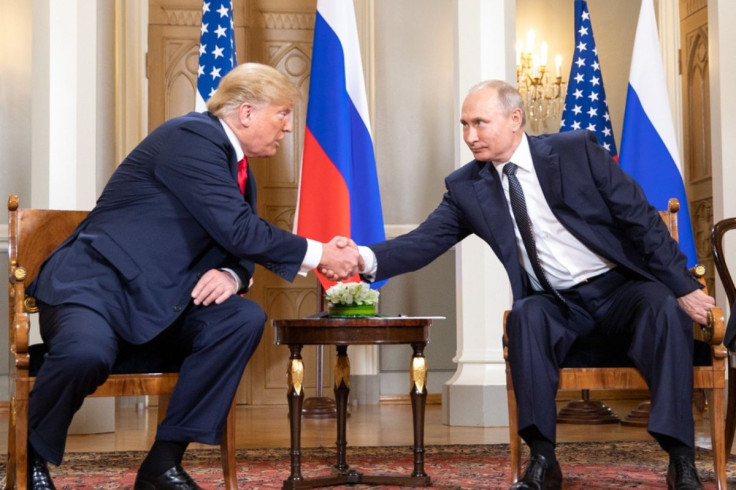
On 19 November 2026, US President Donald Trump held a separate meeting with Russian President Vladimir Putin during the APEC summit in Shenzhen, China. The encounter offered Moscow a diplomatic victory, despite producing no publicly announced breakthrough on Ukraine. Russian political analyst Abbas Gallyamov described the meeting as 'a tactical victory for Putin'.
The meeting came as Putin continued facing international isolation following Russia's full-scale invasion of Ukraine in February 2022. His renewed engagement with Trump offered an opportunity to restore Moscow's diplomatic standing without announcing concessions over the war.
Donald Trump Putin APEC Meeting Gave Moscow A Diplomatic Opening
A former speechwriter for Putin, Abbas Gallyamov, told NBC News that Trump's willingness to meet the Russian leader was already a success for the Kremlin.
'It's a tactical victory for Putin,' he said. 'That in itself is success.'
Other analysts offered similar assessments following the subsequent three-way meeting involving Trump, Putin and Chinese President Xi Jinping.
Elizabeth Wishnick, an expert on Chinese-Russian relations at the CNA Corporation, told Radio Free Europe/Radio Liberty that Putin emerged as the biggest winner.
'Putin came away with a lot. He was the biggest winner at this meeting,' she said.
Sari Arho Havren, an associate fellow at the Royal United Services Institute, also highlighted the significance of Putin's renewed international visibility. Stating 'The Russian leader's isolation was tremendously reduced when it comes to optics, but maybe also in reality because of the joint "peace declaration" after the meeting.'
The separate Trump-Putin encounter lasted approximately 35 to 40 minutes, according to Kremlin foreign policy aide Yuri Ushakov. He said the presidents discussed bilateral relations, the Ukrainian conflict and preparations for the subsequent trilateral summit.
Ushakov described the conversation as having gone 'very well', although neither government announced a concrete agreement to end the war.
Xi Jinping's APEC Summit Complicated Putin's Diplomatic Victory
The bilateral encounter was followed by an unprecedented gathering involving the leaders of the United States, Russia and China.
The three presidents subsequently issued a joint declaration addressing international security, energy cooperation and nuclear risks. However, it offered no specific resolution to Russia's invasion of Ukraine.
China also gained from hosting the gathering. Its diplomatic role placed Xi at the centre of discussions involving two major global powers.
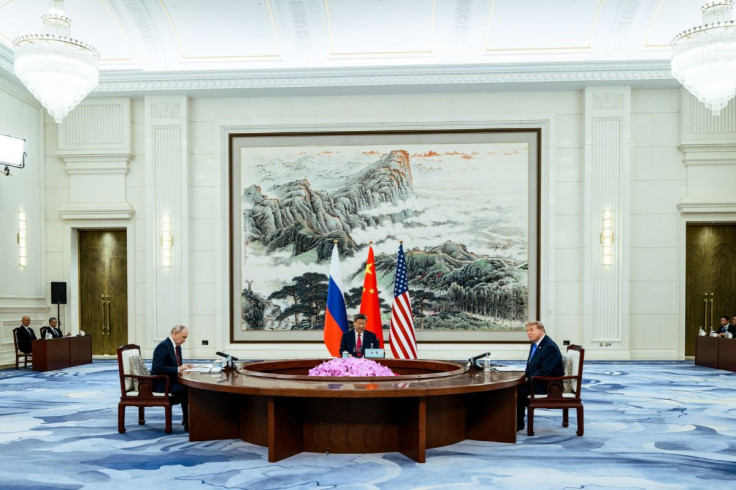
The Guardian reported that Xi used the gathering to showcase China's diplomatic influence, positioning Beijing at the centre of discussions involving Washington and Moscow. However, the unprecedented summit ended without concrete agreements on its major issues, including Ukraine.
Michael Froman, president of the Council on Foreign Relations, described the gathering as 'much ado about nothing, at least for now'.
The report exposed the difference between diplomatic visibility and tangible progress. Trump secured another opportunity to engage directly with rival powers, while Xi strengthened China's international profile.
Putin, meanwhile, received something particularly valuable. His appearance alongside the American and Chinese presidents challenged the image of a Russian leader diplomatically sidelined by the Ukraine war.
The gathering did not establish a peace agreement or settle the conflict's central disagreements.
For Moscow, the immediate diplomatic gains were nevertheless difficult to dismiss. Putin had returned to the international negotiating table, and Washington had engaged him directly.
© Copyright IBTimes 2026. All rights reserved.