

Scientists Baffled as Mysterious 11-Metre Asteroid Begins 'Accelerating in a Way That Defies Expectations'
Researchers question whether buried water ice can survive on 1998 KY26 long enough to explain this unusual acceleration
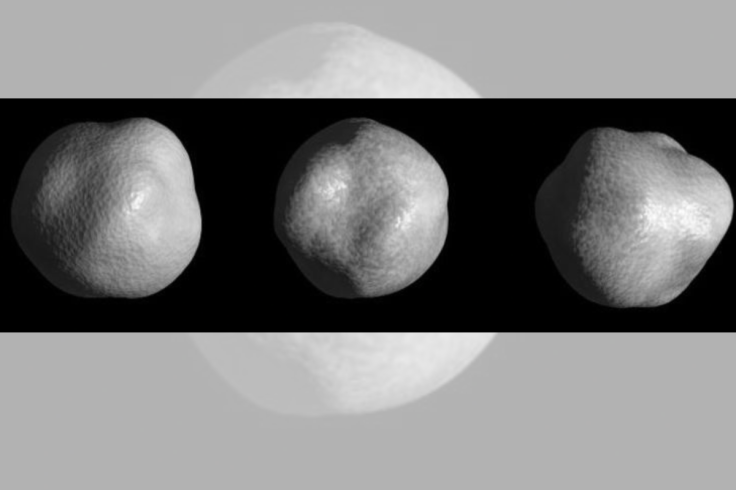
Thermal modelling suggests a tiny 11‑metre asteroid with a puzzling non‑gravity acceleration may be too warm to hide long‑lived buried ice, casting doubt on a leading theory that it behaves like a 'dark comet.'
New research from the Georgia Institute of Technology challenges the idea that asteroid 1998 KY26 is venting hidden water vapour in a way that could subtly push it off course as it travels around the Sun.
Scientists had considered whether the object might be a dark comet, releasing gas without producing a visible tail. Such activity could provide an additional push, but the research raises questions about whether the water ice needed to sustain it could survive.
Aerospace engineers Korbin Hansen and Masatoshi Hirabayashi examined temperatures across the asteroid and inside it. Their findings challenge the dark comet hypothesis without establishing what causes its unexpected movement.
'Our temperature model results indicate that the water outgassing rate on 1998 KY26 would be too high to maintain buried ice, refining the understanding of the asteroid's composition', the researchers write in their paper.
Why 1998 KY26 Invited the Dark Comet Hypothesis
Asteroids are generally rocky bodies whose movements respond to forces including gravity and solar radiation pressure. Comets contain ice that can turn directly into gas, a process called sublimation. As that gas escapes into space, it can provide an additional push.
The familiar image of a comet includes a bright tail, but visible streamers are not essential to the proposed behaviour of dark comets. These objects are thought to release gases without producing the conspicuous tails associated with ordinary comets.
They can therefore resemble asteroids while displaying acceleration that suggests gas may be escaping.
1998 KY26 rotates once every 5.35 minutes. Its trajectory also exhibits unusual acceleration perpendicular to the plane of its orbit, prompting scientists to consider whether it might belong to this category.
The question concerns more than its appearance. For water escaping as gas to explain the motion, there would need to be an ice supply capable of sustaining that process under the conditions the asteroid experiences.
Inside the Temperature Puzzle of 1998 KY26
Hansen and Hirabayashi combined available information about the asteroid's size, orbit, reflectivity and likely composition to model temperatures across its surface and deeper inside.
Their approach tested whether the conditions would allow buried water ice to survive. It examined a requirement of the dark comet explanation rather than directly establishing the asteroid's composition.
Buried water ice needs temperatures below around 145 kelvin, or minus 128 degrees Celsius, to survive over long periods. Even the coldest regions in the researcher's model averaged at least 212 kelvin, or minus 61 degrees Celsius, over the asteroid's orbit.
Although those temperatures are far below freezing, the model indicates they would still be too warm for water ice to remain stable over long periods.
The researchers calculated that, if water ice accounted for 1 per cent of the asteroid's mass, it would disappear in just over 2,000 years under those conditions. If escaping water were also supplying the observed unusual acceleration, that ice would last just 62 years.
Both estimates concern a hypothetical ice supply. They do not establish that water ice is present or that escaping gas causes the acceleration.
What Scientists Still Do Not Know About 1998 KY26
An important uncertainty prevents the thermal findings from excluding buried ice altogether. It remains unclear how long 1998 KY26 has occupied its current orbit, leaving open the possibility that some ice survives despite the modelled depletion times.
An earlier paper traced the object to a potential origin in the asteroid belt. That proposed history concerns where it may have originated, while the cause of its unusual acceleration remains unresolved.
Solar radiation pressure is another possible explanation. Sunlight exerts a small force that could account for the asteroid's unusual movement, although its role in the observed acceleration remains unconfirmed.
© Copyright IBTimes 2026. All rights reserved.