Avril Lavigne Body Double Rumour: Singer Calls Theory 'Dumb'
The singer has repeatedly dismissed claims that she died in the early 2000s and was replaced by a look-alike

Avril Lavigne's body double rumour returned to attention around the singer's 42nd birthday on 27 September 2026. The long-running conspiracy theory claims Lavigne died in the early 2000s and was replaced by a look-alike called Melissa Vandella. Lavigne has rejected the claim, telling Alex Cooper on Call Her Daddy in 2024, 'Obviously I am me. It's so dumb.'
The claim has circulated for years, but its documented online history is less mysterious than the theory suggests. The best-documented origin is a Brazilian blog published in 2011, while some later accounts have suggested the idea may have circulated earlier. The original blog presented itself as an example of how conspiracy theories can appear convincing.
Lavigne first became a global star after Let Go was released in June 2002. The album included 'Complicated', 'Sk8er Boi' and 'I'm With You', establishing the teenager as a major pop-rock artist. Her second album, Under My Skin, followed in May 2004.
How The Melissa Theory Took Hold
The theory alleges that Lavigne hired a look-alike to deal with the pressures of fame. It later claimed that she died and that the supposed double continued her career. Some versions identify the alleged replacement as Melissa Vandella and accuse the record industry of concealing Lavigne's death.
Those claims are allegations within a conspiracy theory, not established facts. No reliable evidence has been presented that Lavigne died or that Melissa Vandella replaced her. There is also no evidence of a record-company cover-up.
Supporters have pointed to changes in Lavigne's appearance, clothing and handwriting over time. They have also highlighted a photograph with the name 'Melissa' on her hand. Some have interpreted lyrics from Under My Skin as hidden clues.
Those details do not establish a replacement. Changes in appearance can occur as people age, while styling, photography, makeup and clothing can alter how a person looks. Interpreting lyrics or an image as evidence of a secret identity also requires assumptions that are not independently verified.
The 'Melissa' photograph has become one of the theory's most repeated pieces of supposed evidence. However, the existence of the image does not establish that a person named Melissa Vandella was a professional double. It also does not establish that Lavigne was replaced.
The theory later spread beyond its original context. A 2015 BuzzFeed account by Ryan Broderick noted that the Brazilian blog presented the idea as a demonstration of conspiracy theories. The claim nevertheless gained wider attention online, including through a widely shared social media thread in 2017.
What Avril Lavigne Has Actually Said
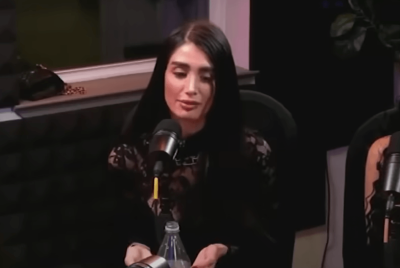
Lavigne addressed the theory directly during an appearance on Call Her Daddy on 15 May 2024. Cooper asked about the claim that Lavigne had died and been replaced, and the singer responded with laughter.
'Obviously I am me. It's so dumb,' Lavigne said. She also described the rumour as funny and said she did not consider it particularly negative or creepy.
Lavigne had addressed the claim before. In a 2019 Entertainment Weekly interview, she called it a 'dumb internet rumor' and said she was surprised that people believed it.
The singer has also spoken publicly about a serious health battle. In 2015, Lavigne told People that she had Lyme disease and had been bedridden for five months. That documented illness does not constitute evidence for the replacement theory.
The rumour has continued to resurface because old photographs and isolated details are easy to recirculate. A recent Reddit discussion marking Lavigne's 42nd birthday shows the theory remains familiar online. It does not establish a broad social-media resurgence.
The available evidence therefore supports a much simpler account. Lavigne remains the person identified in her public career, while the Melissa Vandella claim remains an unsubstantiated conspiracy theory. She has repeatedly dismissed the story herself.
The enduring appeal of the story is less about evidence than about how online narratives can turn ordinary changes into supposed clues. Once a theory is repeated often enough, familiar photographs and career changes can be presented as a connected pattern without independent proof.
© Copyright IBTimes 2026. All rights reserved.
- Recommended For You