

Apollo 16 Astronaut Says UFOs Are Literally Demons and Claims God Proved It Over a Morning Breakfast
The former NASA astronaut says a friend unexpectedly raised UFOs after Duke prayed for a specific sign, but the account provides no scientific evidence
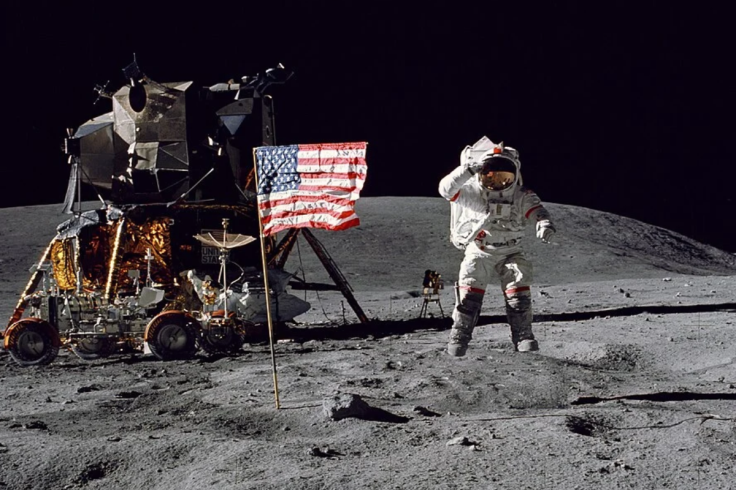
Apollo 16 astronaut Charlie Duke says UFOs are demonic, citing a breakfast conversation he believes was a sign from God.
His remarks appeared in a US Christian Broadcasting Network interview published on 12 October. The 91-year-old former NASA astronaut has told this story before.
He described the breakfast incident in a September 2025 podcast, well before it resurfaced this month, as his account reflects a religious belief, not a scientific finding.
Apollo 16 Astronaut Recalls the Breakfast Conversation
Duke said he had faced scepticism while discussing his interpretation of UFO sightings at Rotary Club gatherings. 'People were laughing me off the stage,' he recalled.
He eventually asked God for a specific sign. Duke said he wanted an old businessman friend, with whom he had never discussed UFOs, to raise the subject at breakfast the following morning.
According to Duke, the friend did exactly that. During breakfast, his friend unexpectedly invited him to discuss UFOs. Duke interpreted the exchange as an answer to his prayer.
The account rests on Duke's recollection. Even if the conversation happened as described, it does not, on its own, establish that unidentified objects have a supernatural origin. Duke had previously shared the episode in a 27 September 2025 interview with Mission Chats.
He also cited 2 Corinthians 11:14, which describes Satan disguising himself as an angel of light. Duke interprets that passage as supporting his suspicion that apparent encounters with aliens could involve spiritual deception. The biblical verse itself makes no reference to UFOs or extraterrestrial visitors.
Apollo 16 Moonwalker's NASA Record Does Not Establish His Theory
Duke's prominence comes from a career central to American space exploration. He was Apollo 16's lunar module pilot in April 1972, becoming the 10th and youngest person to walk on the Moon at 36.
Three years earlier, he served as capsule communicator during the Apollo 11 landing. From Mission Control, he relayed communications to Neil Armstrong and Buzz Aldrin as they made history.
Yet Duke has acknowledged that he never personally saw a UFO during his space missions. He reported unusual flashes of light, but those are not evidence of mysterious craft.
NASA has documented similar flashes reported by Apollo astronauts and linked them to cosmic rays interacting with their visual systems. The Apollo 16 crew also conducted a light-flash experiment during the return journey.
His work as an astronaut is part of the historical record. His explanation for UFOs comes from faith and the meaning he assigns to a personal conversation.
Apollo 16 Veteran's Views Reflect a Broader Religious Dispute
Duke is not alone in offering a religious interpretation of unidentified phenomena. Vice-President JD Vance expressed a similar view during a 27 March 2026 interview with podcaster Benny Johnson.
'I don't think they're aliens. I think they're demons,' Vance said, before discussing how his Christian beliefs shape his understanding of unexplained events.
Catholic leaders have also responded. On 3 June, Cardinal Robert McElroy removed Monsignor Stephen Rossetti as an exorcist for the Archdiocese of Washington.
The archdiocese also ended its affiliation with Rossetti's St. Michael Center for Spiritual Renewal. Its official statement cited his comments linking UFOs to demonic activity and the centre's use of social media.
In a 29 June interview with Catholic News Service, McElroy said his decision reflected concerns about the public exercise of an exorcist's ministry. He did not present it as a ruling on extraterrestrial life.
Rossetti subsequently expressed regret over the controversy and reaffirmed his commitment to Church teaching. His diocese said he remained a priest in good standing.
Religion scholar Diana Walsh Pasulka has separately discussed how interest in UFOs intersects with religious belief. 'Belief in UFOs is really one of the best things that's happened to religion in a long time,' she told the Associated Press.
Her observations concern the relationship between religion and unexplained phenomena, rather than supporting Duke's particular theory.
NASA's scientific position remains separate from these theological arguments. Its guidance says available data do not support the claim that unidentified anomalous phenomena are evidence of alien technology. That absence of evidence offers no basis for declaring them demonic, either. Investigators still need reliable observations before determining what individual reports show.
© Copyright IBTimes 2026. All rights reserved.