

NASA Chief Claps Back at NFL Star Over 1969 Moon Landing Doubts, Claiming He Has 'Receipts'
The NFL star's remarks came following a remarkable performance
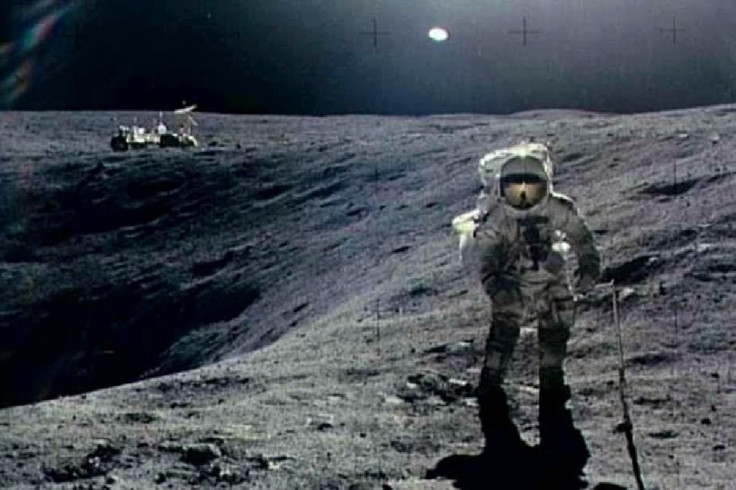
New England Patriots quarterback Drake Maye has drawn attention after expressing doubts about whether American astronauts landed on the Moon in 1969, prompting a response from NASA Administrator Jared Isaacman.
Maye made the remarks during his weekly appearance on Boston sports radio station WEEI on Monday, 5 October, a day after leading the Patriots to a dramatic 29–26 victory over the Buffalo Bills.
Asked about conspiracy theories during the programme, the 24-year-old quarterback pointed to the Apollo Moon landing, which saw Neil Armstrong and Buzz Aldrin become the first humans to walk on the lunar surface.
'I don't know about the moon, you know,' Maye said. 'I think I can see back in the day why we would put on the mask if we went there, but I'm not really sure 200 percent if we went there or not.'
The quarterback subsequently clarified that he was not firmly committed to the theory that the landings were fabricated.
'I wouldn't say I'm leaning one way or the other. I just know I'm a little bit skeptical,' he added.
Maye explained that his interest in conspiracy theories developed while studying at the University of North Carolina. He recalled exploring claims ranging from Adolf Hitler surviving the Second World War to the satirical 'Birds Aren't Real' movement.
The remarks spread beyond New England after a clip of the interview was shared on X, drawing attention from sports fans and space enthusiasts.
NASA Administrator Fires Back
Isaacman responded to a social media post highlighting Maye's comments, signalling that he could provide evidence supporting the historical record.
'I quite literally have the receipts,' Isaacman wrote on X.
I quite literally have the receipts
— NASA Administrator Jared Isaacman (@NASAAdmin) October 7, 2026
The NASA administrator's response brought the debate into focus, given the extensive documentation supporting the Apollo programme. On 20 July 1969, Apollo 11 commander Armstrong stepped onto the lunar surface, followed by Aldrin, while Michael Collins remained in lunar orbit.
The mission returned approximately 21.5 kilograms of lunar material, which scientists subsequently analysed. Across the Apollo programme, six missions successfully landed astronauts on the Moon between 1969 and 1972, bringing back about 382 kilograms of rocks and soil.
The evidence extends beyond photographs and television broadcasts. Lunar samples have been studied by researchers, while instruments left on the surface have supported scientific experiments. Apollo 11 also deployed a laser reflector that researchers can use to measure the distance between Earth and the Moon.
NASA's Lunar Reconnaissance Orbiter has photographed the Apollo landing sites, revealing remnants of spacecraft and traces of astronaut activity.
What the Evidence Says About Moon Landing Claims
Claims that the Apollo landings were staged have circulated for decades, often focusing on photographs, shadows and the American flag appearing to move. These arguments have been repeatedly addressed by scientists and space historians.
The flag's movement, for example, resulted from astronauts handling it while placing it into the lunar surface. With no atmosphere on the Moon, the flag's motion differed from what observers might expect on Earth.
The Apollo missions also took place during the Cold War, when the United States was competing with the Soviet Union for technological and geopolitical influence. The Soviet Union tracked American space missions and had a strong incentive to expose a fabricated achievement.
Maye's comments came after an impressive performance against Buffalo. He threw for 269 yards and three touchdowns, including the decisive late score, to help New England secure the win.
© Copyright IBTimes 2026. All rights reserved.