'Burnerverse' College Sports Accounts Accused of Targeting Women With Harassment and Doxing
Maddie Kowalski's case highlights how anonymous sports accounts allegedly spread intimate material
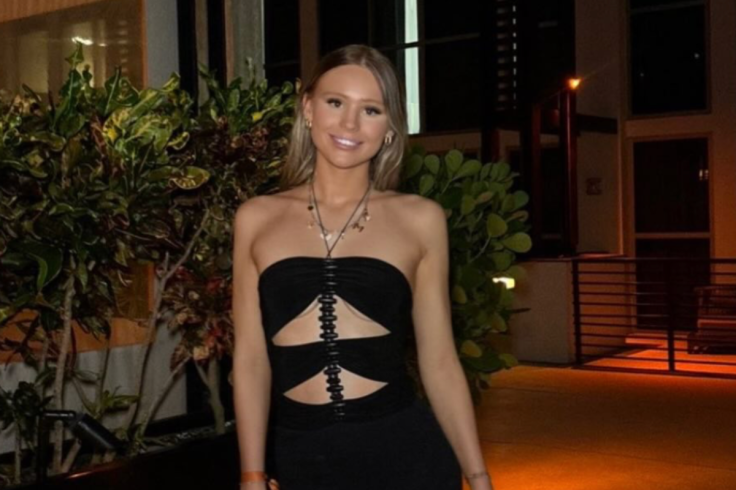
A sprawling network of anonymous accounts built around American college sports fandom has also been used to target young women with coordinated campaigns of sexual humiliation, harassment and doxing.
The clearest documented case involves Maddie Kowalski, who was a 19-year-old University of Florida student in November 2025 when a sexually explicit video that she says was recorded and shared without her consent was posted to X.
Within a day, her name was trending nationally and material about her had been viewed more than 8.5 million times. Nine months later, after an investigation that stalled when the assigned officer went on leave, police in Gainesville charged three men.
How the Burnerverse Works
The network has a name among the people who use it. Known as the burnerverse, or beev, it is a loosely connected web of anonymous burner accounts on X operated largely by students and alumni, whose primary purpose is discussing college sports, a WIRED investigation by Ej Dickson published on 14 September 2026 found.
WIRED identified at least nine other college-aged women whose lives were affected by harassment and doxing from the same network. Kowalski had also heard of an earlier target, a University of Mississippi student named Mary Kate Cornett, who was doxed in much the same way nine months before.
What Happened to Maddie Kowalski
The campaign against her began with rumours on other platforms. WIRED reported that Kowalski, a member of the Delta Zeta sorority, learned from a friend that an image of her was circulating at another university hours away, then found what appeared to be hundreds of messages about a Delta Zeta student on the anonymous campus app Yik Yak, some of them joking about masturbating to the material.
An account on X then published the video itself. The handle, which used an obscene username, posted it around six o'clock that evening and named her, and by Monday afternoon the hashtag carrying her name was trending nationwide with more than 1,200 posts using it. Much of the circulating material showed her incapacitated.
The consequences were physical as well as reputational. WIRED reported that Kowalski withdrew from her classes and returned home, later received treatment for post-traumatic stress disorder and reported experiencing hair loss and rashes.
Anonymous accounts published personal information about her and her family, while others sent threatening and abusive messages.
Her mother described the imbalance that followed. The men she believed responsible were carrying on with ordinary student life, posting and going out as usual, while her daughter was judged for everything she did.
The Charges and the Limits of the Case
Kowalski began working on the problem herself. As the Gainesville investigation went quiet because the officer assigned to it was on leave and no charges had been filed, she developed her own theories about who was behind some of the anonymous accounts.
The breakthrough came in early August 2026. Gainesville police charged Kamran Ahmed, Brendan Pitfield and Jacob Gomberg with sexual cyberharassment, and Ahmed was additionally charged with a third-degree felony for allegedly committing sexual cyberharassment for financial gain, WIRED reported.
Police alleged in sworn complaints that the men were connected to burner accounts involved in spreading the material. None has been convicted, and the allegations have not been tested at trial.
Under Florida law, sexual cyberharassment is generally a first-degree misdemeanour. Certain violations involving an intent to cause physical, mental, economic or reputational harm, or committed for profit or pecuniary gain, can constitute a third-degree felony
A first-degree misdemeanour carries a maximum fine of $1,000 (£740), while a third-degree felony is punishable by up to five years in prison and a fine of up to $5,000.
Kowalski has also filed civil lawsuits against the three men in the Northern District of Florida, alleging sexual cyberharassment and seeking financial damages, WIRED reported.
Most of the network remains untouched by the criminal case. Many of the accounts that amplified the material remain unidentified, and none has been publicly charged in connection with Kowalski's case.
The reporting does not describe a broader platform-wide crackdown on the network of anonymous accounts. Three men have been charged, one of them with an additional felony, while many of the anonymous accounts that amplified the campaign remain beyond public identification.
If you have been affected by the sharing of intimate images without consent, help is available. In the UK, the Revenge Porn Helpline can be reached on 0345 6000 459. In the US, the Cyber Civil Rights Initiative operates the Image Abuse Helpline on 844-878-2274. The National Center for Missing and Exploited Children runs Take It Down, a free service for sexually explicit images or videos taken when the person depicted was under 18.
© Copyright IBTimes 2026. All rights reserved.
- Recommended For You