What Is Innovation Worth in the Age of AI?
As AI becomes increasingly commoditised, the startups that win won't be the ones with the most technology—they'll be the ones that solve the most meaningful problems

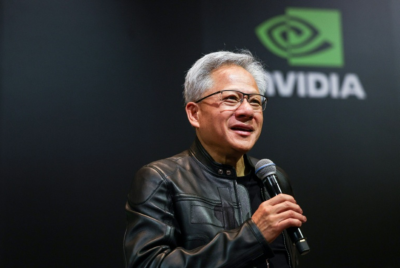
Recently, a small Chinese AI lab detonated a bomb under Silicon Valley's most lucrative industry. DeepSeek's R1 model was reportedly built for $5.6 million using chips that weren't cutting-edge, yet it matched OpenAI's performance on multiple benchmarks. By the time markets opened on January 27, 2025, Nvidia had shed nearly $589 billion in value. The financial loss was not really about chips, models, or even technology. It raised a more fundamental question: what is innovation actually worth today?
At Legendary Ventures, we see more than 500 pitches annually. We've watched early-stage founders make countless mistakes, but we've also seen remarkable successes. Based on our experience, the strongest early-stage founders share a common trait: they build products and services to solve problems—not technology for technology's sake.
State of Venture Affairs
The prevailing AI playbook has prioritised capital intensity, proprietary models, and infrastructure scale as proxies for growth. DeepSeek inverted that logic: solve a real problem cost-effectively, and let adoption prove value.
As Microsoft CEO Satya Nadella observed, 'Jevons paradox strikes again' —an irony not lost on OpenAI, which reportedly generated $13.1 billion in revenue in 2025 but raised nearly $58 billion in funding and continues to burn billions more than it earns each year.
In 2025, over $211 billion flowed into AI startups globally. Fifty-five U.S. companies raised $100 million or more, with many of the biggest winners being vertically integrated AI companies—most of which still cannot clearly demonstrate a viable return on capital.
Meanwhile, founders continue to raise on the future value of the technology, while investors increasingly weigh opportunity against skepticism about returns. We believe the most innovative startups share a few common traits.
The Startup Culture
The most common mistake we see among early-stage founders is conflating a broad technology thesis with an even broader go-to-market strategy—often to raise capital rather than to deliver product value.
Many seem to believe Rome can be built in a day if they raise enough money to do 'something'. But the best startups do the opposite. They start narrow and expand based on real outcomes and revenue, not 'visionary' forecasts.
They choose a single, painful problem to solve — regardless of how 'sexy' it sounds — before they approach investors.
For example: does a B2C retailer really need AI for enterprise supply chain management, or would they benefit more immediately from automating something as simple as product copywriting so their merchandising team can focus on actual merchandising and improving margins?
Similarly, does a B2B integrator need AI to help developers debug code, or would it be more valuable to minimise client support costs and improve margins for customers? Does a healthcare provider really need AI to coach internal communications, or would it create more value by automating scheduling and payment processing?
The best early-stage founders believe their technology must be simple enough to support a clear, concrete value proposition. In other words, they are hyper-focused on generating revenue before they think about raising capital.
They deliver practical value before pitching a $50 billion TAM story wrapped in a #FOMO narrative.
In a market where innovation is being rapidly commoditised, the #NOMO founder with the deepest niche in a vertical may outlast those chasing the #FOMO.
You don't need the most transformative technology to be successful. You just need to solve a problem.
The Startup Focus
Another common mistake is treating 'data' as a competitive advantage.
Some early-stage founders hear the phrase 'proprietary data' and assume that expensive infrastructure, complex partnerships, and intellectual property will automatically produce an unassailable moat.
The truth is, the early days of the 'information economy' are over. Regulation has caught up. Privacy and security laws now limit the scale-value equation. Data alone is no longer enough—even in the era of LLMs.
The playbook remains familiar, but the era has changed.
Yahoo! lost the search wars to Google not because Google had more data, but because it used overcapacity in its data centers to build a faster, simpler product.
Practical execution beats data accumulation.
The Startup Pitch
The most durable companies we've backed don't sell technology. They sell outcomes that happen to be powered by technology.
When a product is positioned as an AI tool — for example, as an indispensable layer within an existing workflow or system — its value is determined by how the customer experiences it in their day-to-day reality, not necessarily by how the founder imagines its value.
Too many early-stage founders fail to ask basic questions:
What does my product actually solve for the customer? What does it solve for their end customer? Does it remove friction—or just create more work?
Too often, founders pitch before they've deeply understood the client's actual problem.
Future of Venture Affairs
DeepSeek proved something bigger than model efficiency: human-centered products and services matter more than technological novelty.
The next wave of industry breakthroughs will come from a new generation of early-stage founders who deploy technology not as the product itself, but as a practical solution—one that transforms foundational applications into indispensable business assets through customer focus.
Today, the technology landscape is more accessible and competitive than ever. The cost of building a solution has plummeted. But the cost of differentiating one has skyrocketed.
In that environment, the founders most likely to succeed will be the ones who:
- identify a specific problem regardless of TAM,
- execute toward real revenue over forecasts,
- earn niche market share before chasing scale,
- deliver measurable ROI quickly, and
- remain honest about what they don't know.
When Arvind Jain built Glean — now valued at $7.2 billion with $200 million in annual recurring revenue — he didn't start with 'transformers are cool' as the pitch. He started with a much simpler insight: enterprise search is broken, and I know this because I worked at Google.
He asked customers for help in making it better. Then he solved the problem with a practical solution—not with technology for its own sake.
What makes a startup a real startup is not inventing new problems. It's solving existing ones for someone who actually needs the answer.
© Copyright IBTimes 2026. All rights reserved.
- Recommended For You