

Elon Musk's $1 Million Election Giveaway Scandal Explodes as Billionaire Settles Fraud Lawsuits
Elon Musk faces renewed scrutiny over his controversial $1 million (£750,000) election giveaway after agreeing to settle fraud lawsuits alleging voters were misled
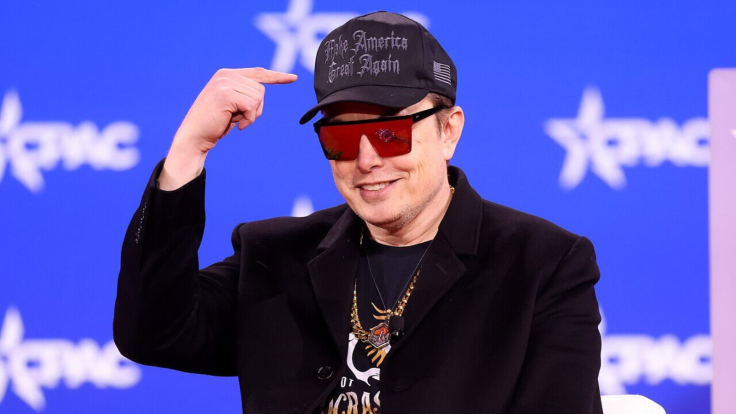
Elon Musk and his America PAC have moved to settle two fraud lawsuits over a controversial $1 million (£750,000) election giveaway, after a lawyer for the group admitted in court that winners were 'not chosen by chance'.
The proposed agreements have revived scrutiny of a promotion that was marketed as a random draw for registered voters in key US battleground states.
The proposed settlements were reported on 15 October 2026. However, the terms remain undisclosed, and final court approval could not be independently confirmed. The agreement is not a finding of fraud, nor does it establish that Musk or America PAC admitted wrongdoing.
The Million-Dollar Promise That Sparked Outrage
The controversy began in October 2024, when Musk's America PAC promoted a daily $1 million giveaway for registered voters in seven battleground states who signed a petition supporting the US Constitution, including freedom of speech and the right to bear arms.
With the presidential election approaching, the substantial prize money attracted intense attention. The promotion was presented as a chance for eligible signatories to win a fortune, but questions later emerged over whether recipients were genuinely selected at random.
Elon Musk and America PAC agreed to settle lawsuits alleging they defrauded voters in swing states by promising daily $1 million giveaways ahead of the 2024 election, with winners allegedly predetermined. pic.twitter.com/Wg2QbHsdKx
— KolHaolam (@KolHaolam) October 16, 2026
The most contentious detail surfaced in Philadelphia on 4 November 2024. During a hearing over an attempt to stop the giveaway, America PAC lawyer Chris Gober told Judge Angelo Foglietta that recipients were 'not chosen by chance'.
Gober argued that recipients were selected for their potential as public spokespeople for the political action committee. That explanation put the scheme's public presentation under close scrutiny: a promotion framed around random selection appeared to involve a deliberate process for choosing people who could represent the organisation.
Two Voters Took Musk To Court
The Texas lawsuits were brought by Arizona residents Joy Harvick and Jacqueline McAferty. They alleged that Musk and America PAC misled voters into signing the petition and providing personal information by promising a chance to win $1 million (£750,000) through random selection.
Musk and America PAC denied the allegations. The plaintiffs argued they would not have signed the petition or supplied their personal information had they known recipients were not chosen at random.
JUST IN: Elon Musk has settled a class action lawsuit against him after he used his PAC and duped Trump supporters into giving away their personal information for the chance to randomly win $1 million. Turns out, the winners were predetermined. Link below. pic.twitter.com/soPHvWbqU8
— Sebastian Murdock (@SebastianMurdoc) October 15, 2026
The litigation took a significant turn on 18 August 2026, when US District Judge Robert Pitman dismissed McAferty's breach-of-contract claim but allowed her fraud claim to proceed beyond the summary-judgment stage.
That ruling was not a final finding that fraud had occurred. It did, however, mean the fraud claim had not been dismissed through the defendants' summary-judgment motion before the settlement announcement.
On 15 October, the parties reportedly notified the federal court in Austin, Texas, that they had agreed to settle the two proposed class actions. The settlement terms were not disclosed in the reporting available for this article.
The agreements could bring the litigation closer to resolution, but the precise conditions and any financial arrangements have not been publicly established. Final court approval could not be independently confirmed.
Legal Scrutiny Extended Beyond Texas
The giveaway also faced a legal challenge in Pennsylvania. Philadelphia District Attorney Larry Krasner sought to stop it, arguing that it amounted to an unlawful lottery. Judge Foglietta allowed the promotion to continue through Election Day.
Separately, the US Justice Department reportedly warned Musk's political action committee in 2024 that the giveaway could raise concerns under federal laws restricting payments intended to influence voting. The reported warning was not a finding of criminal guilt.
The settlement comes as Musk's political spending continues to attract attention. Reuters reported on 12 October that Musk had spent roughly $366 million (£276 million) during the 2026 US midterm election cycle, including $276 million (£208.6 million) since July, primarily to help Republicans retain control of Congress.
That spending is separate from the Texas lawsuits and is not evidence of wrongdoing in the giveaway dispute. However, it highlights the scale of Musk's political influence as questions about the 2024 promotion return to the fore.
For now, the central question remains the gap between the promise of random million-dollar winners and the lawyer's courtroom explanation that recipients were selected for their potential as spokespeople. The proposed settlements may bring the lawsuits closer to resolution, but their final status could not be independently confirmed.
© Copyright IBTimes 2026. All rights reserved.