

New Photos Show Shockingly Bright Emerald 3I/Atlas Lighting up Egyptian Skies in a Rare Cosmic Display
Stunning new photos from Egypt show interstellar comet 3I/ATLAS glowing an unusually bright emerald green.
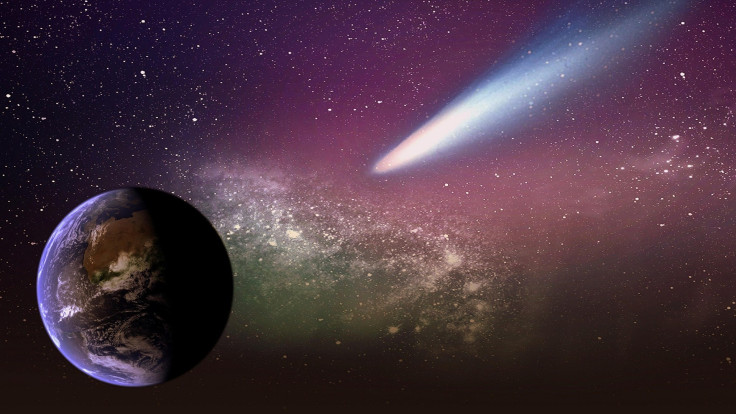
A rare interstellar visitor stunned observers with an extraordinarily bright emerald glow over Egypt, offering scientists new clues about the mysterious composition of comet 3I/ATLAS and reigniting global interest in one of the most remarkable cosmic events of 2025.
The interstellar object known as 3I/ATLAS lit up the night sky above Egypt with a brilliant green hue that astrophotographers and researchers described as 'shockingly vivid.' Amateur astronomer Osama Fathi captured multiple long-exposure images from Egypt's Black Desert showing the comet's bright coma and faint tail against a backdrop of stars, revealing a colour not typically associated with known interstellar comets. These observations coincide with intensifying scientific scrutiny by space agencies as the comet makes a rare passage through the solar system.
Despite widespread public fascination, scientific data confirm that 3I/ATLAS presents no threat to Earth, passing at a safe distance of approximately 270 million kilometres (170 million miles) on 19 December 2025.
Unexpected Brightness Captured Over Egypt
High-resolution astro-photography from the night of 10 December 2025 shows 3I/ATLAS glowing an intense emerald green, a phenomenon that has left astronomers both excited and puzzled. The vivid green colour contrasts with earlier observations by space telescopes, which captured the comet with faint blue or neutral tones as it approached the inner solar system.
Scientists caution that the green glow does not indicate alien technology or artificial constructs, but instead likely arises from chemical processes in the comet's coma, including fluorescence of specific molecules when irradiated by sunlight. Cometary displays of green light are known in solar system comets due to excited diatomic carbon (C₂) and other molecules, but the intensity observed in 3I/ATLAS is unusual, given its interstellar origin and expected low activity levels at its distance from the Sun.
The extraordinary photographs have galvanised the scientific community, prompting renewed analysis of existing spectroscopic data to identify the specific drivers of this bright emission, and to determine whether 3I/ATLAS's chemistry reflects formation conditions in a distant star system.
🚨: Photographer captures interstellar comet 3I/ATLAS glowing brilliantly over Egypt's Black Desert!🌌 pic.twitter.com/0UGUp2kpit
— All day Astronomy (@forallcurious) December 10, 2025
Interstellar Visitor: Rare, Fleeting, and Scientifically Priceless
3I/ATLAS, formally designated C/2025 N1, was first detected on 1 July 2025 by the Asteroid Terrestrial-impact Last Alert System (ATLAS) survey telescope in Chile. The object's trajectory and high velocity confirmed it as the third known interstellar visitor to our solar system, following 1I/ʻOumuamua and 2I/Borisov.
NASA's official facts page reports that the comet is not bound by the Sun's gravity and is merely passing through before continuing its journey back into interstellar space. It will not return to the inner solar system.
The comet's highly hyperbolic orbit and retrograde trajectory mark it as an object from beyond our solar neighbourhood, offering scientists a rare opportunity to investigate material from a distant star system. Its path has brought it close to Mars and Venus before swinging back into deep space without posing any danger to Earth.
Scientists have mobilised an unprecedented array of spacecraft and telescopes to observe 3I/ATLAS across multiple wavelengths and vantage points. NASA's Mars Reconnaissance Orbiter (MRO) and MAVEN spacecraft observed the comet near Mars, capturing close-range images of its coma, while the Hubble Space Telescope, ESA's Jupiter Icy Moons Explorer (Juice), and the James Webb Space Telescope have each contributed valuable observations of its structure and activity.
These coordinated campaigns have allowed researchers to build a comprehensive profile of the comet, even as its physical characteristics continue to surprise them. Recent data indicate that 3I/ATLAS maintains a substantial coma, a cloud of gas and dust surrounding its nucleus, despite its considerable distance from the Sun relative to more active solar system comets.
Scientific Pursuits and the Chemistry Behind the Glow
Spectroscopy from infrared observations by the James Webb Space Telescope suggests that the coma of 3I/ATLAS may be dominated by carbon dioxide (CO₂), a trait that sets it apart from many known comets in our own solar system. These results indicate a CO₂-rich composition with significant outgassing of water, carbon monoxide (CO), and other volatiles, implying that the comet formed in a very different environment before being ejected into interstellar space.
The unique composition inferred from spectral data may help explain the comet's striking appearance, although researchers emphasise that direct links between CO₂ dominance and green fluorescence require further study. The process by which specific molecules absorb and re-emit sunlight, especially in a non-typical chemical milieu, remains a key question for astrophysicists analysing the phenomenon.
The unexpected emerald brightness has also prompted renewed public interest in cometary science and its broader implications for understanding planetary formation and the distribution of organic compounds across the galaxy. Each interstellar visitor offers a unique snapshot of matter from beyond our solar system, and the data harvested from 3I/ATLAS will fuel research for years to come.
New photos show interstellar comet 3I/ATLAS, nicknamed the “Emerald of the Nile,” glowing a bright green as it approaches Earth’s vicinity later this month, likely due to gas emissions in its coma.#3IATLAS #UFO/#UAP/#USOhttps://t.co/tTDsMVOnnC
— Mark Bowron (@MarkBowron420) December 11, 2025
Bridging Public Awe and Scientific Discovery
Observations like Fathi's images over Egypt have transformed what might have been a routine astronomical event into a global phenomenon, capturing the imagination of skywatchers and researchers alike. While professional and amateur astronomers alike have contributed observations, the scientific community remains diligent in separating verifiable data from speculation, ensuring that each claim is grounded in empirical evidence and peer-reviewed analysis.
As 3I/ATLAS recedes into the depths of space, leaving behind a trove of data that advances human understanding of interstellar matter, astronomers will continue to parse its anomalies, including the recently observed intense green glow. This vibrant cosmic display underscores the enduring importance of collaborative observation and analysis in revealing the secrets of the universe.
The emerald spectacle over Egypt may be fleeting, but its implications for planetary science and interstellar chemistry are likely to reverberate throughout the scientific community for years.
© Copyright IBTimes 2026. All rights reserved.