

Latest 3I/ATLAS Update Raises Questions as to Whether Interstellar Comet is Harmless
Avi Loeb says the ratio of methanol to hydrogen cyanide left by 3I/ATLAS poses a question if the comet is harmful
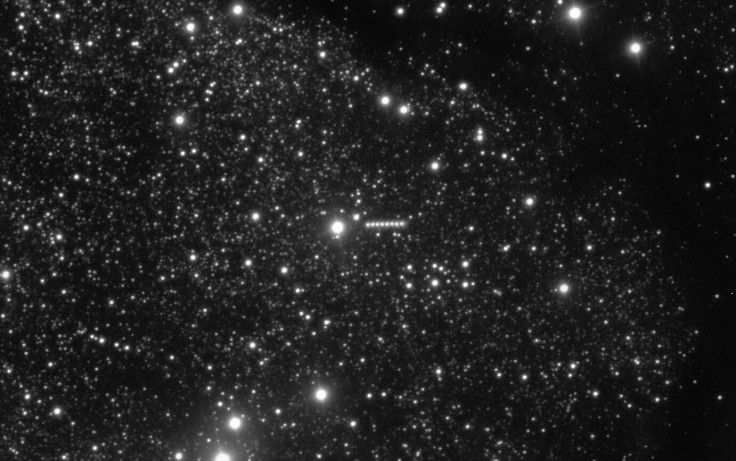
Harvard scientist Avi Loeb has offered a provocative analysis of the interstellar comet 3I/ATLAS, suggesting its chemical composition raises questions about whether such objects could seed life on planets or deliver poison. His comments follow the release of new images and data as the comet continues its journey through the inner solar system.
Loeb's analysis focuses on the recently measured ratio of methanol to hydrogen cyanide in the comet's gas cloud. While he concludes the comet is likely harmless, his questions frame the visitor as a fascinating scientific mystery: a potential source of life's building blocks, or a carrier of cosmic danger.
A 'Blind Date' with an Interstellar Visitor
Loeb used the metaphor of a blind date to describe the scientific encounter, stressing the need for caution and observation. 'On'On a blind date with an interstellar visitor, it is prudent to observe the dating partner and decide whether it could have seeded life on Earth,' he said, 'Or whether it represents a serial killer spreading poison – like an intergalactic cyanide tablet.'
His comments follow the latest images of 3I/ATLAS released by the European Space Agency (ESA), which show the comet with two tails and releasing a large amount of gas after its closest approach to the Sun.
The night skies have some special gifts for you this December:
— NASA (@NASA) December 1, 2025
- The peak of the Geminid meteor shower
- The closest approach of 3I/ATLAS to Earth (at about 170 million miles)
- A Jupiter-Moon conjunction
Get more details on this month’s celestial sights: https://t.co/wmmYGYDqgb pic.twitter.com/hpm5fyOmTc
The Chemical Building Blocks of Life—and Poison
In a post on his personal blog, Loeb analysed the comet's chemical composition, citing observations from the Atacama Large Millimetre/Submillimetre Array in Chile. The radio telescope detected significant amounts of both methanol and hydrogen cyanide.
Loeb explained that methanol is 'a building block for amino acids and sugars that are used for organic chemistry of life.' However, he also noted the presence of poisons. 'Hydrogen cyanide at large concentrations is poison,' he stated. In addition to cyanide, 3I/ATLAS also contained amounts of hydrogen sulfide, a gas used as a chemical weapon during World War I.
Loeb's Conclusion: A 'Friendly' Visitor That Could Seed Life
Despite the presence of poisonous compounds, Loeb concluded that the comet is very likely 'friendly' because of its high methanol-to-hydrogen-cyanide ratio, one of the highest ever observed. He theorised that such objects may have played a role in the origins of life in our own solar system.
'If the Solar System didn't have the building blocks, it could have gotten them from visits of objects like 3I/ATLAS in the early Solar System,' said Loeb.
Loeb previously shared that he found an '' on the comet in another post on Medium, made up of a 'swarm of objects.' The scientist theorised that if 3I/ATLAS was made up of these objects that don't share its non-gravitational acceleration, they would appear closer to the Sun than the actual comet. Loeb said that this was because '3I/ATLAS is pushed away from the sun relative to the objects through its non-gravitational acceleration.'
Loeb has also pointed to other unusual features of the comet, including what he calls an 'anti-tail' potentially made up of a 'swarm of objects.' He theorised that if these objects do not share the comet's non-gravitational acceleration, they would appear to follow a slightly different path as they are pushed away from the Sun at different rates.
© Copyright IBTimes 2026. All rights reserved.