

Elon Musk's Greatest Talent Is Not Invention but 'Stock Pumping', Documentary Filmmaker Claims
Alex Gibney's nearly four-hour Venice documentary 'Musk' recasts Elon not as a lone inventor but, in his words, a 'stock pumping' master of narrative, power and fear
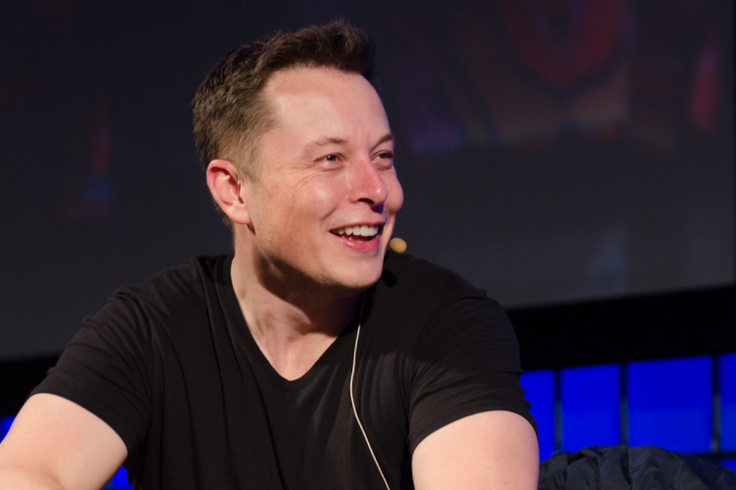
Elon Musk is the focus of a new nearly four-hour documentary having its world premiere this week at the Venice Film Festival, in which award-winning filmmaker Alex Gibney argues that Musk's greatest talent lies not in invention but in what he calls 'stock pumping' and promoting a compelling story about the future.
Gibney is not some pundit lobbing takes from the sidelines. He has built a career dissecting powerful institutions and controversial figures, from Enron to Theranos founder Elizabeth Holmes, as well as Scientology and abuses at Bagram and Abu Ghraib.
Yet he says nothing he has tackled before matches the sheer reach and clout of Musk, whose influence now stretches from electric cars and rockets to social media and, increasingly, politics.
The film, simply titled Musk, was shot over more than a year and runs to about 225 minutes. It debuts in Venice ahead of an October theatrical release via distributor Bleecker Street.
According to Gibney, the project began in early 2023 when producers approached him with the idea. He initially hesitated, until a friend framed Musk as the perfect prism through which to examine '21st-century power.' That, he admits, was hard to resist.
Elon Musk, 'Stock Pumping' and the Power To Sell a Future
Once he plunged into the research, Gibney says his view of Musk started to shift. The popular image of Musk is that of a hands-on engineer and entrepreneur. Gibney, known for his forensic style, came away with a different conclusion.
'His genius, if there is a genius, is that he is not an inventor; he's an investor,' Gibney said. 'His genius is stock pumping.'
Gibney's point, as he describes it, is not that Musk has built nothing of substance, but that Musk's ability to promote a compelling vision of the future has been central to his influence and the valuation of his businesses.
The documentary examines instances in which, Gibney argues, Musk's public promises and his companies' soaring valuations outpaced what their technology had actually delivered, and it lingers on that uneasy space where optimism shades into hype.

Gibney also stresses what separates Musk from some of his most notorious past subjects. Unlike Theranos, Tesla and SpaceX are established operating companies with large engineering and executive teams. Rockets do launch. Cars do roll off production lines. That is precisely what makes the story more complicated, and more interesting, than a simple tale of smoke and mirrors.
Gibney describes Musk's trajectory through the concept of 'noble cause corruption', an idea used to explain how people who believe they are serving a higher mission can start to rationalise dubious behaviour as necessary.
He argues that a belief in goals such as combating climate change or colonising Mars can make questionable conduct easier to justify, at least in the minds of those involved.
'Nothing compares to this in terms of the scope of his power,' Gibney said of Musk's reach across industries and public life.
How Elon Musk's Politics and Legal Woes Intersect
The documentary also examines Musk's political shift towards President Donald Trump, a move that surprised some early admirers who had viewed the Tesla chief as a champion of clean energy. Gibney argues that the shift was partly driven by the reliance of Musk's businesses on federal funding and their exposure to government scrutiny.
'He goes where the federal government money is,' Gibney said, pointing to what he sees as Musk's extensive dealings with the US government and the regulatory oversight that comes with them.
Gibney links Musk's evolving political stance to investigations he says have targeted his companies, including what he described as a criminal investigation into Tesla, which he cites as a factor in Musk's calculations.
Musk previously joked that he could face prison under a Kamala Harris administration, a remark Gibney cites in discussing Musk's concerns about federal scrutiny. Gibney says he initially underestimated how important the prospect of continued government scrutiny was to Musk's political calculations. The film leans into that tension, asking whether the world's richest man is trying to shape politics partly to shape the legal and regulatory environment around him.
It is heavy stuff, and Gibney does not pretend otherwise. He draws explicit parallels between Musk and the figures he examined in his Enron and Theranos films, particularly around what he sees as a willingness to make expansive claims in pursuit of a larger ambition.
The crucial difference, he notes, is that Musk's companies actually work, at least in operational terms. That tension, between functioning empires and the temptation to keep stretching reality, is where Musk seems determined to live.
Fear, Access and a Billionaire Who Would Not Sit Down
One of the most striking threads in Gibney's account is the level of anxiety he says he encountered while reporting on Musk. The filmmaker wanted Musk on camera and says he began the project as an admirer who was genuinely curious, not as someone out to land a hit. Musk declined to participate.
From there, access proved messy. Gibney says some people who knew or worked with Musk were reluctant to appear on camera, including some of Musk's supporters. According to the director, several potential interviewees insisted they would not speak without Musk's explicit permission.
Gibney says some potential interviewees, including employees and critics, were concerned about how Musk might react if they were seen to be on the wrong side of his wrath.
'They were just terrified of Elon,' Gibney said. 'I thought, wow, for such a big and powerful person, that seems awfully weak.'
Musk has dismissed the documentary as a 'hit piece'. Gibney pushes back on that characterisation, arguing that the film simply follows the evidence and ends up challenging what he calls the myth of Musk as a modern Leonardo da Vinci. Whether audiences buy that framing, or see it as just another round of elite sniping at a tech icon, will likely depend on how they feel about Musk going in.
Despite the heavy subject matter and the epic running time, Gibney says Musk is designed to be watchable and even fun. It is, after all, a story about money, power, space rockets and the internet, all swirling around one man who has become difficult to ignore. In 2026, that mix is catnip, and also a little terrifying, which may be exactly the point.
© Copyright IBTimes 2026. All rights reserved.