

Ex-Prince Andrew's 'Creepy' Code Exposed: How Disgraced Royal Allegedly Snuck Young Women Into Palace
The scandal is not just what a prince is accused of it is how many people learned to say 'yes sir' and move on.
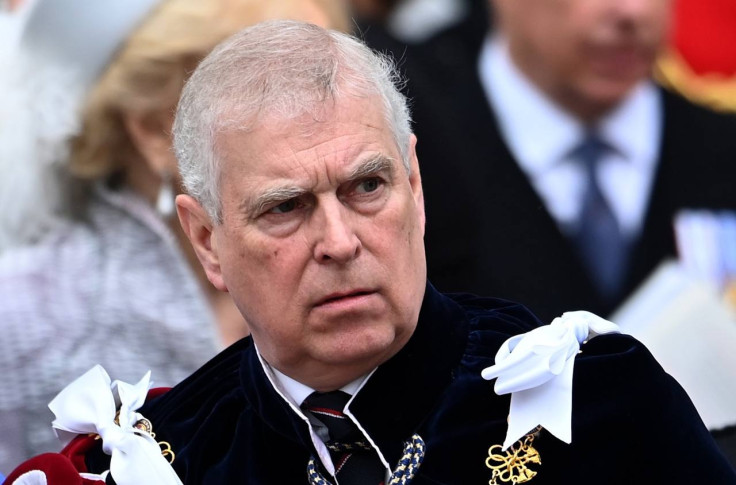
The code, if it existed as described, is almost comically simple: 'Mrs. Windsor will arrive shortly, please let her in and show her up.' But there is nothing funny about what that sentence implies when it is spoken down a palace line by Andrew Mountbatten-Windsor an instruction designed, allegedly, to make questions evaporate before they are even formed.
OK! Magazine reports that a former Buckingham Palace employee described the phrase as a kind of backstage pass, used when Andrew wanted 'young women' sent to his room 'without questions.' Andrew, now 65, allegedly invited women to the palace and relied on the wording as a signal for staff to grant 'unvetted access.' It is an image that sits uncomfortably with the monarchy's polished front of house: all velvet ropes and ceremonial choreography, until it is remembered that power does not always need a crown to be exercised.
The insider quoted in the report claimed it was 'common knowledge' that Andrew 'liked to have young women visit Buckingham Palace,' and that it was 'always via one of the out‑of‑sight staff entrances.' It was so frequent that staff used to roll their eyes and say 'yes sir,' the source said. The line conveys the weary professionalism required — the learned habit of not making a fuss when the person asking has spent a lifetime being indulged.

Andrew Mountbatten-Windsor and the Palace's Quiet Compliance
If this story has a chilling element, it is not only the alleged 'code' itself, but the suggestion that the palace machine — staffed by people trained to anticipate needs and smooth over awkwardness — might also have been trained to look away. Another insider, quoted in the same OK! report, alleged that 'few details, if any, were taken because of his status within the Royal Household,' and that it was 'regularly discussed by courtiers but nothing was ever done to challenge it.'
The account is also unflattering about how Andrew treated those tasked with guarding him. 'It went on for years,' the source said, adding: 'The royal protection officers hated being assigned Andrew as he was so unpleasant and dismissive.' Even without the lurid inferences, what remains is a portrait of entitlement being operationalised: the expectation that doors open, that paperwork can wait, and that other people's discomfort is simply part of the service.
That matters because Britain's argument with the monarchy is no longer just about cost or ceremony. It is about accountability and, increasingly, about whether royal status has functioned as a kind of social anaesthetic, numbing institutions into inaction.
In October 2025, that tension became more concrete when King Charles III moved to strip Andrew of his 'prince' title and other royal connections, and he was expected to leave Royal Lodge. Buckingham Palace also indicated he would be referred to as Andrew Mountbatten‑Windsor.

Why Andrew Mountbatten-Windsor Still Haunts the Monarchy
The palace 'code' allegation emerges in a landscape already shaped by the Jeffrey Epstein scandal and the civil case brought by Virginia Giuffre. Giuffre alleged she was trafficked and forced into sex with Andrew on three occasions when she was 17, claims Andrew has repeatedly denied.
In February 2022, Andrew reached a settlement with Giuffre in her US civil lawsuit for an undisclosed sum, avoiding a public trial. The figure was never officially confirmed, though Time reported estimates of roughly £12 million (about $16.3 million) at the time. OK! separately described the settlement as 'reported to be around $15 million.'
Giuffre died aged 41 in April 2025, with her family stating she took her own life at her farm in Western Australia. Her memoir, Nobody's Girl, was scheduled for release on Oct. 21, 2025.
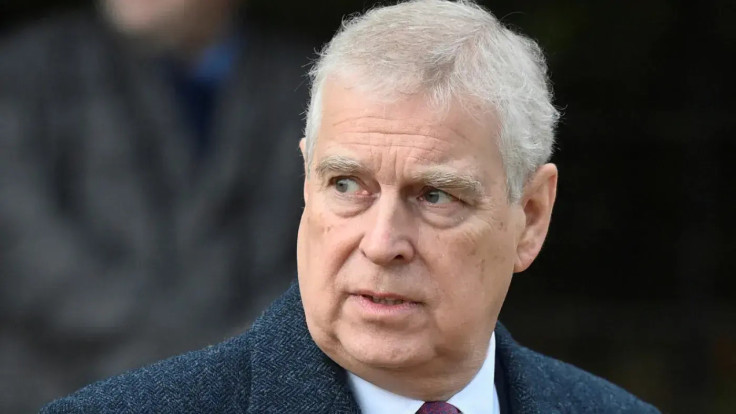
OK! quotes passages attributed to the book in which Giuffre described Andrew as 'friendly enough, but still entitled, as if he believed having s-- with me was his birthright.' The report also cites her claim that Epstein paid her $15,000 for servicing the man the tabloids called 'Randy Andy.' In another quoted section, Giuffre said she felt like a 'toy' who was there 'to be passed around,' before adding: 'But I was still a human being with feelings and emotion and sadness... And to know that this man had daughters, that he was still capable of abusing me. It just doesn't make sense.'
The story does not end with printed pages. OK! reports that in November 2025 the BBC aired a previously unseen clip from Giuffre's 2019 Panorama interview, in which she recalled being told by Ghislaine Maxwell after a nightclub trip in 2001: 'Ghislaine tells me that I have to do for Andrew what I do for Jeffrey, and that made me sick... I just didn't expect it from royalty.'
It is tempting, in royal scandal season, to treat each new detail as just another grim headline. But what cannot be ignored is the cumulative picture: not merely a man accused, but a system that again and again appears to have mistaken deference for duty.
© Copyright IBTimes 2026. All rights reserved.