Alien Hunt Explodes: Drake Equation Rewritten as 10 Billion Rocky Planets Discovered
New estimates suggest there are billions of Earth-like planets in the Milky Way, refining the search for extraterrestrial life.
There are few ideas in science that capture the imagination quite like the search for extraterrestrial life. From Mars missions and exoplanet surveys to SETI's decades-long hunt for signals, researchers have steadily expanded humanity's understanding of the universe, moving closer to answering one of its most enduring questions: Are we alone?
The Universe Is Hiding an Extra Dimension, Scientists Say https://t.co/xe4wh3VjE2
— Popular Mechanics (@PopMech) May 27, 2026
Yet despite decades of investigation, no confirmed evidence of life beyond Earth has ever been found. Scientists have examined a wide range of possibilities, from potential microbial life on Mars to unexplained radio signals and earlier claims of alien megastructures, only for subsequent analysis to rule out or significantly weaken those interpretations.
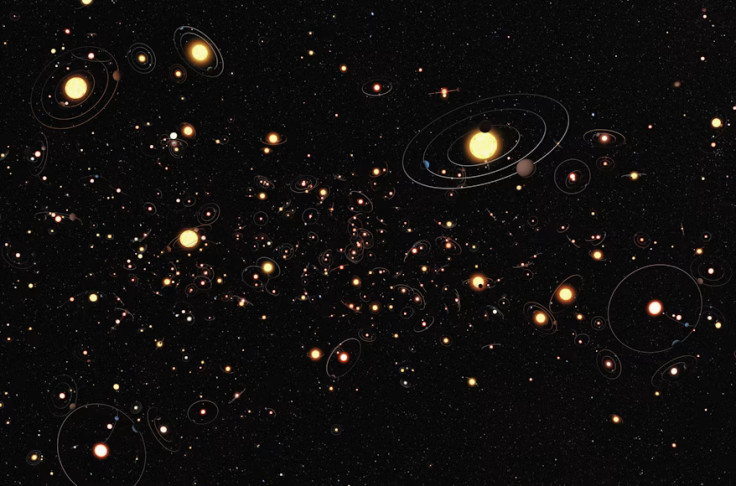
Now, however, the statistical picture may be shifting. Astronomers estimate that there could be around 10 billion rocky, Earth-like planets in the Milky Way alone. This does not mean those worlds are inhabited, but it does significantly expand the number of environments where life could potentially emerge under the right conditions.
Why the Drake Equation Matters
The new estimate feeds directly into the framework of the Drake equation, the well-known formula introduced by astronomer Frank Drake to estimate the number of technologically advanced civilisations that might exist in the Milky Way galaxy. While the equation has historically contained large uncertainties, many of its components are now becoming more measurable thanks to advances in astronomy, including improved star counts, exoplanet detection and better understanding of planetary formation.
The Drake equation is a probabilistic argument used to estimate the number of active, communicative extraterrestrial civilizations in the Milky Way Galaxy.
— The Scientific Lens (@LensScientific) May 26, 2026
N = R* × fp × ne × fl × fi × fc × L
N = number of civilizations with which humans could communicate
R_* = mean rate of star… pic.twitter.com/E4id09gfgp
What makes the latest estimate important is not that it changes the equation itself, but that it refines one of its key variables: the number of potentially habitable rocky planets. The more Earth-like worlds scientists identify, the more robust the statistical argument becomes that life may have had multiple opportunities to arise elsewhere in the galaxy.
What Counts as Earth-Like
In scientific terms, 'Earth-like' does not mean an identical twin of our planet. Instead, it generally refers to rocky planets that are similar in size, mass and composition to Earth, and that orbit within a star's habitable zone — the region where temperatures may allow liquid water to exist on a planet's surface.
There was a time, not long ago, when we knew of only one world with oceans, mountains, storms, and children who looked up at the night.
— Prof. Carl Sagan (@ProfCarlSagan) May 25, 2026
Ours.
A small blue planet, turning quietly around an ordinary star, in the suburbs of an ordinary galaxy.
But now the darkness has begun to… pic.twitter.com/4BhCQ2utT7
Even within that definition, however, habitability is not guaranteed. A planet can sit within the right orbital zone yet remain entirely lifeless due to atmospheric conditions, radiation levels, geological inactivity, or the absence of key chemical ingredients necessary for biology to begin.
This is why astronomers distinguish between potentially habitable worlds and confirmed biological activity. The former is now increasingly common in exoplanet catalogues; the latter remains unobserved beyond Earth.
How Life Might Begin
Scientists studying the origin of life generally agree that the transition from chemistry to biology likely requires a series of rare but not impossible steps. Simple organic molecules must first form and then organise into more complex structures capable of self-replication, metabolism and eventually evolution.
From there, additional hurdles must be overcome. Life must survive environmental instability, avoid extinction-level events, and persist long enough to develop complexity. Only then could intelligent life — and potentially technological civilisation — emerge.
This layered chain of probability is one reason the search remains unresolved. Even if habitable environments are common, the emergence of life itself may still be extremely rare. The significance of the 10 billion estimate is therefore statistical rather than evidential: it increases the number of 'chances' the universe has to produce life.
Best Places to Look
At present, scientists pursue three main strategies in the search for life beyond Earth.
The first focuses on the Solar System. Robotic missions continue to examine Mars for past or present microbial life, while icy moons such as Europa and Enceladus are considered strong candidates due to their subsurface oceans. Venus, despite its extreme surface conditions, is also studied for possible chemical signatures in its atmosphere.
The second strategy involves exoplanet observation. Using techniques such as transit spectroscopy, astronomers analyse starlight passing through distant planetary atmospheres. In the future, more advanced telescopes may allow direct imaging of Earth-sized planets, potentially revealing atmospheric gases such as oxygen, methane, or ozone — which, in certain combinations, could indicate biological processes.
The third approach is the search for technosignatures, meaning signs of advanced technology rather than biological life. This includes radio signals, laser emissions, artificial light patterns, or other indicators of engineered activity. Programs such as SETI continue to monitor the skies for such signals, although none have yet been confirmed.
No Evidence Yet, But Stronger Odds
The key takeaway from the latest estimate is not that scientists are close to discovering extraterrestrial life, but that the statistical conditions for its possible existence are becoming more favourable. As telescope technology improves and exoplanet catalogues expand, researchers are steadily moving from broad speculation toward increasingly testable hypotheses.
🚨 QUANTUM ASTRONOMY COULD MAKE TELESCOPES BIGGER AND BETTER THAN EVER BEFORE.
— TheNewPhysics (@CharlesMullins2) May 27, 2026
Scientists are now exploring how quantum physics can link distant telescopes together effectively creating virtual observatories the size of entire continents or even the Earth itself.
Instead of… pic.twitter.com/DD2vaqsSOh
The most significant breakthrough would come with the discovery of a second planet confirmed to host life. Until that moment arrives, estimates such as the 10 billion rocky planets in the Milky Way serve as an important reminder that the universe may contain far more potentially life-supporting worlds than previously thought — even if the question of whether they are actually inhabited remains unanswered.
© Copyright IBTimes 2026. All rights reserved.
- Recommended For You