Elon Musk Won't Get Paid His New SpaceX Bonus Until 1 Million People Move to Mars
SpaceX's IPO filing reveals Musk's bonus is tied to a $7.5 trillion valuation and a million-person Mars colony.
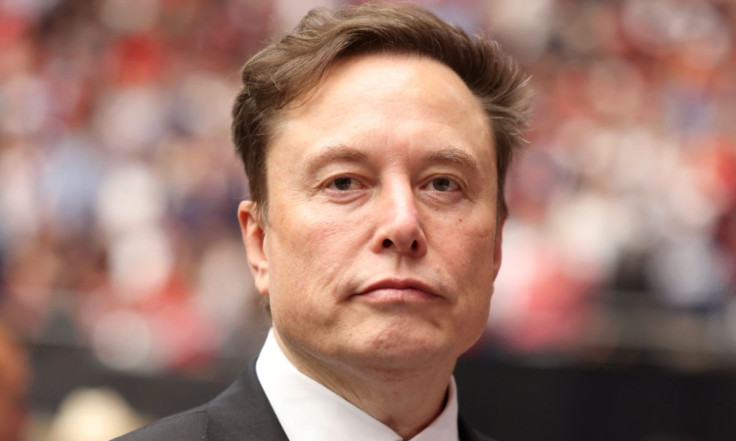
Elon Musk won't get paid his new SpaceX bonus until 1 million people move to Mars, according to SpaceX's long‑awaited IPO prospectus filed in the US, which ties the largest pay package in corporate history to the company reaching a $7.5 trillion valuation and helping establish a permanent human colony on Mars of at least one million people.
The new filing is the first detailed look at how Musk plans to fuse his rocket company with his AI start‑up xAI and social media platform X, which he controversially rolled into SpaceX three months before the IPO paperwork was lodged. That internal merger valued SpaceX at $1 trillion and xAI at $250 billion, creating a hybrid business that looked, even to some on Wall Street, like a stitched‑together experiment in empire‑building.
To unlock his full compensation, Musk must help establish a million-person colony on the Red Planet. https://t.co/bzPH5cUdGF
— Business Insider (@BusinessInsider) May 21, 2026
The prospectus now sets out a grand unifying theory for the deal, positioning everything from rockets to satellites to AI supercomputers as infrastructure for one project, getting humanity off Earth. Under the package, SpaceX's board has granted Musk one billion restricted Class B shares on top of his existing stake of around five billion shares.
At the company's expected $1.75 trillion flotation valuation, that current stake is priced at roughly $700 billion. The new block of stock could add another $600 billion or more to his wealth, but only if the company clears two colossal hurdles that read more like science fiction milestones than normal corporate targets.
The first is financial. SpaceX must hit a peak market capitalisation of $7.5 trillion. The second is explicitly planetary. The company says those shares will vest only if there is a 'permanent human colony on Mars with at least one million inhabitants.' Even by Musk's standards, it is an audacious line to draw under a bonus package.
SpaceX Bonus Tied To Mars: A Company Built Around One Goal
The news came after years of Musk insisting that SpaceX's true purpose is to make humanity 'multiplanetary,' a phrase that has often sounded more like branding than a business model. The S‑1 filing goes out of its way to show that, in the minds of SpaceX's leadership at least, this is not a metaphor.
'For the entirety of its existence, human civilization has lived on a single celestial body, Earth,' the document states. 'The current paradigm, in which human civilization is confined to one planet, exposes humanity to existential threats that are unpredictable and uncontrollable on a planetary scale.' A few lines later, it adds bluntly, 'We do not want humans to have the same fate as dinosaurs.'
Musk’s massive pay package depends on human colonization of Mars. The secrets revealed in SpaceX’s IPO filing. https://t.co/adpo7LWbb9
— WSJ Markets (@WSJmarkets) May 20, 2026
That sort of language is not standard fare in a flotation document aimed at pension funds and mutual funds. It is, however, remarkably on brand for a chief executive whose childhood obsession with Isaac Asimov and Mars colonisation has long been part of his personal mythology. Here, that mythology is treated as a core business risk and a defining objective in one stroke.
The filing makes clear that rockets alone will not get one million people living, working and eating on a frozen desert that is constantly trying to kill them. It sketches a much broader 'Mars‑supply stack' Musk wants to build.
That includes robots to assemble habitats, grow food, produce fuel and maintain life support. Those robots, in turn, need AI systems capable of running locally on Mars because the delay in communicating with Earth makes real‑time control impossible. Sitting underneath all of it is an enormous requirement for capital, because, as the prospectus concedes, much of the necessary technology simply does not exist yet at the required scale.
Why Elon Musk Won't Get Paid His New SpaceX Bonus Any Time Soon
This is where the controversial merger kicks in. xAI on its own, the filing acknowledges, was heavily indebted and in no position to raise the staggering sums required to build out such AI infrastructure. SpaceX, meanwhile, had rockets and the fast‑growing Starlink internet constellation, but no serious AI business. By shoving xAI and X under the SpaceX umbrella, Musk has effectively turned Starlink's cash flows and the launch division's profits into a subsidy pool for AI research and hardware.
The prospectus is explicit that Starlink revenues and the existing launch business will be used to help fund development of space‑based AI data centres and what it calls 'orbital AI compute satellites.' SpaceX says it plans to start deploying these solar‑powered platforms from 2028, in orbit rather than in terrestrial data halls.
Investors are being invited to bankroll the rest. On paper, the core rocket and satellite operations do not need public cash. Starlink alone generated more than $11 billion in revenue last year, and both it and the launch business remained profitable in the latest quarter, according to the filing. The money raised from the IPO is earmarked instead for the parts of the Mars plan that have barely begun.
Musk could receive 200 million super-voting restricted shares (Class B, with 10x voting power) if @SpaceX achieves a $7.5 trillion market valuation and establishes a permanent human colony on Mars with at least 1 million people. No fixed deadline, as long as Musk remains… https://t.co/mJrtYMAzsU pic.twitter.com/y9O4gcvipt
— The Tectonic (@thetect0nic) May 21, 2026
Public capital, SpaceX says, will be needed to ramp up mass production of Starship, the giant rocket intended to shift millions of tonnes of cargo to Mars and to build out the AI satellite network. The company pegs the total addressable market for this suite of technologies at $28.5 trillion, roughly the size of the current US economy, with $26.5 trillion of that in AI. The traditional 'space and connectivity' activities people most associate with SpaceX, by its own count, represent less than $2 trillion.
The gulf between those ambitions and present‑day reality is sizeable. In the first quarter alone, the combined company reported a net loss of $4.3 billion. The AI segment, folded in via the February merger, generated $818 million in revenue but lost $2.5 billion on operations, while ploughing $7.7 billion into capital spending, largely on Nvidia GPUs leased from a SpaceX board member.
An additional $1.9 billion accounting charge came from paying off xAI's old debt early, leaving Starlink and the launch arm profitable but dragged down by the AI unit's balance sheet.
Outside experts are openly sceptical about the Mars timetable implied in Musk's rhetoric, which ranges from several decades to an unspecified future. Paul Sutter, a NASA adviser and research scientist at Johns Hopkins, wrote in Scientific American that Musk's Mars schedule 'doesn't correspond to a real plan,' likening it to announcing a camping trip without any gear and with your car not only in the shop but already exploded.
Elon Musk can boost his overall compensation if SpaceX succeeds in building colonies on Mars and data centers in space, according to a US SEC filing https://t.co/HYQGAPxtat
— Bloomberg (@business) May 21, 2026
The risk section of the S‑1 nods to that uncertainty. Nothing about a one‑million‑person colony, let alone the precise conditions that would allow Musk's record‑breaking bonus to vest, is confirmed or independently verifiable, and the company effectively concedes that investors are being asked to underwrite a long‑shot.
For now, Elon Musk won't get paid his new SpaceX bonus until 1 million people move to Mars remains not just a headline but a reminder that the world's most valuable private space firm is betting its future on a target that may sit somewhere between improbable and unreachable.
At the top of the filing, above all the risk factors and revenue tables, sits a short epigraph from Musk. 'You want to wake up in the morning and think the future is going to be great,' he writes, 'and that's what being a space-faring civilization is all about.' Whether that sentiment is enough to justify a trillion‑dollar punt on Mars is now a question for public markets, not just Musk's imagination.
© Copyright IBTimes 2026. All rights reserved.
- Recommended For You