Alien Civilisations Handed 400,000-Fold Boost to Locate Humans, Experts Warn
By mapping our own space chatter, researchers fear we may have made it far easier for any watching civilisation to know we are here.

Alien civilisations may have just been given a 400,000-fold boost in their chances of finding humans, according to a new study of where Earth sends its strongest deep-space radio signals. The analysis, carried out by scientists at Penn State University and NASA's Jet Propulsion Laboratory and published in Astrophysical Journal Letters on 21 August, examined how and where those transmissions travel.
For years, SETI researchers have used Earth as a model for how a technologically advanced civilisation might reveal itself. Rather than scanning the sky at random for artificial signals, they have increasingly asked a more practical question: if someone were listening for us, what would they hear, and from which direction?
How The Signals Travel
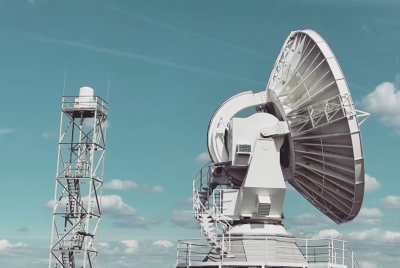
The new study puts numbers on that idea. The team analysed 20 years of operational logs from NASA's Deep Space Network, a global system of large antennas used to communicate with spacecraft far beyond Earth. These dishes send some of the loudest and most persistent radio signals humans produce into space.
Lead author Pinchen Fan, a graduate researcher at Penn State, and his colleagues mapped where those beams were directed. They found that most transmissions follow the ecliptic plane, the flat orbital path around the Sun shared by the planets, including Earth and Mars.
'Humans are predominantly communicating with the spacecraft and probes we have sent to study other planets like Mars,' Fan said.
Учёные NASA и Penn State изучили 20 лет сигналов Deep Space Network.
— Xalabuda (@mister_xal) May 24, 2026
Вывод: передачи Земли к аппаратам у Марса могут быть заметны извне во время выравнивания планет. В модели шанс перехвата — до 77%. pic.twitter.com/0keBGRSKWg
Mars, however, only blocks part of the signal. The rest continues travelling through space.
'A planet like Mars does not block the entire transmission, so a distant spacecraft or planet positioned along the path of these interplanetary communications could potentially detect the spillover,' Fan explained.
The key factor is timing. When Earth and Mars are aligned from an outside observer's perspective, the chances rise sharply. The researchers found that an extraterrestrial civilisation watching during such an Earth Mars conjunction would have a 77 per cent chance of catching at least one DSN transmission.
That figure represents a 400,000-fold increase compared with the odds of a random observer at a random time detecting those signals. Other planetary alignments also help, though less dramatically, with about a 12 per cent chance of interception. Outside those windows, the spillover quickly fades.
The study does not prove that alien civilisations exist, or that any are listening. It does show, however, that if they are out there and looking from the right direction at the right moment, Earth is far easier to detect than many may have assumed.
A Roadmap For SETI
The Deep Space Network is not designed to broadcast humanity's presence. It is, as JPL project scientist Joseph Lazio put it, the 'crucial link between Earth and its interplanetary missions like the New Horizons spacecraft and the James Webb Space Telescope'.
Even so, those routine communications act like bright beacons for anyone aligned with their narrow path.
The team estimated that an average DSN transmission could be detected by radio telescopes similar to ours from as far as 23 light years away.
That gives researchers a practical target. Planetary systems that appear edge on from Earth are the same systems that would see our Solar System in a similar alignment. Those are the places most likely to sit along the route of our Earth Mars and other interplanetary signals.
The study suggests SETI projects should focus on those systems and time observations around known conjunctions or occultations, when planetary alignments are most likely to reveal technosignatures.
Fan said that considering 'the direction and frequency of our most common signals gives insights into where we should be looking to improve our chances of detecting alien technosignatures'.
Astronomers already time many exoplanet observations for transits, when planets pass in front of their stars. NASA's Nancy Grace Roman Space Telescope is expected to find hundreds of thousands of new exoplanets, which should greatly expand the number of edge-on systems available for SETI research.
Jason Wright, professor of astronomy and astrophysics at Penn State, said humans are still 'pretty early in our spacefaring journey', and that our deep-space traffic is likely to grow as more probes and crewed missions head further into the Solar System.
The wider point, he suggested, is that geometry may matter more than luck. By studying our own transmissions, researchers hope to make future SETI searches more efficient and more targeted.
The paper also hints at how communication may evolve. The current analysis focuses on radio, but NASA is already testing laser links for interplanetary data.
A more advanced civilisation may have moved on to lasers long ago. They produce tighter beams and less spillover, which would make accidental detection harder.
For now, though, it is Earth's radio traffic, concentrated along planetary routes and amplified during alignments, that quietly raises the odds that someone, somewhere, may already know we are here.
The study does not show that any alien civilisation has actually picked up our signals. Until there is a confirmed detection of an alien technosignature, claims about what extraterrestrial observers can see of us remain speculative.
© Copyright IBTimes 2026. All rights reserved.
- Recommended For You