

World War 3 Fears: Kim Jong Un Tests AI-Controlled Weapons Aimed at 'Complete Collapse' of Rivals
Kim Jong Un's latest tests of AI-controlled, nuclear-capable missiles have intensified concerns over escalating tensions on the Korean Peninsula.
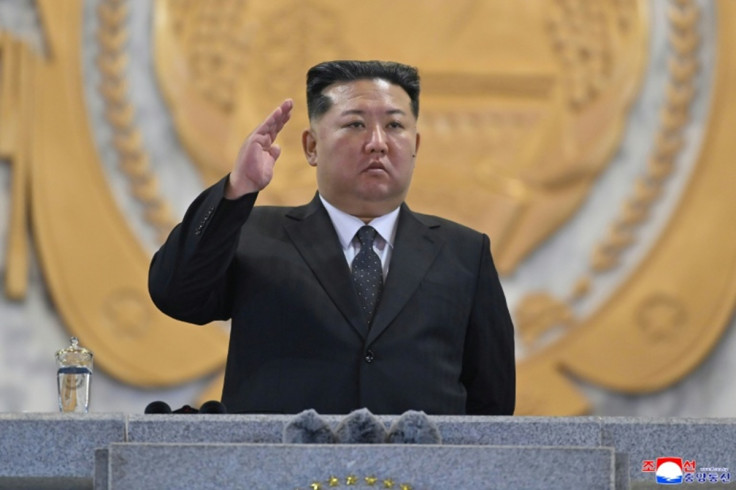
North Korea has tested artificial intelligence-controlled missiles and nuclear-capable artillery in exercises overseen by Kim Jong Un this week, according to state media, fuelling fresh World War 3 fears in Seoul and beyond.
The launches, reported by the Korean Central News Agency (KCNA), were said to involve AI-guided cruise and ballistic missiles as well as upgraded rocket artillery, with Kim reportedly 'satisfied with the results.'
Tensions on the Korean Peninsula have been steadily climbing since talks between Kim and US President Donald Trump collapsed in 2019 without agreement on sanctions relief or nuclear disarmament.
Since then, Pyongyang has poured resources into long-range missiles, tactical nuclear weapons and new naval platforms while methodically dismantling what little remained of inter-Korean engagement. South Korea is now formally labelled the North's 'most hostile enemy,' and direct communication lines have been cut.
KCNA said the latest drills showcased a range of 'ultra-modern' and AI-supported systems designed to prepare the North Korean military for 'modern warfare.'
Among them was a nuclear-capable cruise missile that, according to state reports, Kim intends to deploy near the heavily militarised border with South Korea. The agency also described ballistic missiles fitted with a 'special mission warhead,' a phrase it has previously used to hint at battlefield nuclear roles.
The same drills included 240mm multiple rocket launchers upgraded with 'ultra-precision' navigation equipment and automated launch systems.
State media claimed the weapons had been successfully adapted to 'suit the proper conditions of modern warfare so as to enhance their application to combat,' suggesting the regime wants to showcase battlefield autonomy and accuracy rather than just raw explosive power.

Kim used the tests to order yet another push to modernise North Korea's artillery and missile forces, insisting they must be strengthened to a level where 'no one can match' their destructive strength.
That kind of absolutist language is hardly new from Pyongyang, but when paired with references to AI-controlled systems it lands differently, hinting at a leadership that is keen to be seen not merely as dangerous, but technologically sophisticated.
World War 3 Fears Deepen
The anxiety around World War 3 fears is not purely rhetorical. The latest demonstration came just a day after South Korea's military detected what it called a 'barrage' of projectiles, including at least one suspected short-range ballistic missile, fired into waters off the country's west coast.
Officials in Seoul said the missile travelled about 80km before falling into the sea. They declined to detail the other systems involved, a familiar reticence when it comes to North Korean tests that may still be under technical assessment.
South Korean and US analysts are now likely to study imagery, telemetry and KCNA announcements to determine how much of the AI-related claim reflects genuine capability and how much is propaganda.
At this stage, there is no independent verification of the sophistication or reliability of the North's supposed AI control systems, so all such claims should be treated with caution until corroborating evidence emerges.
Still, even if the 'AI' label is partly theatrical, the direction of travel is unmistakable. Over the past year, Kim has repeatedly warned that he could 'completely destroy' South Korea and has said the 'complete collapse' of the South 'cannot be ruled out.'
Those are the sorts of phrases that would set off alarm bells even if they were not being paired with ever more advanced missiles and nuclear-capable artillery.
Just last week, Kim convened an emergency meeting with senior commanders to discuss reinforcing frontline units and turning the inter-Korean border into what state media called 'an impregnable fortress.'
It is a phrase that implies defensive intent but in practice means more artillery, more missile units and more hair-trigger systems stationed within striking distance of Seoul.
AI Missiles, Russia Ties and Shrinking Diplomatic Space
The timing of these AI-guided missile tests is not happening in a vacuum. North Korea has been drawing closer to Russia, backing Vladimir Putin's war in Ukraine with what Western officials say are large quantities of artillery shells, rockets and even troops.
The article notes that 'thousands' of North Korean soldiers and significant ammunition shipments have already been sent to support Moscow, a move that gives Pyongyang both hard currency and political cover.
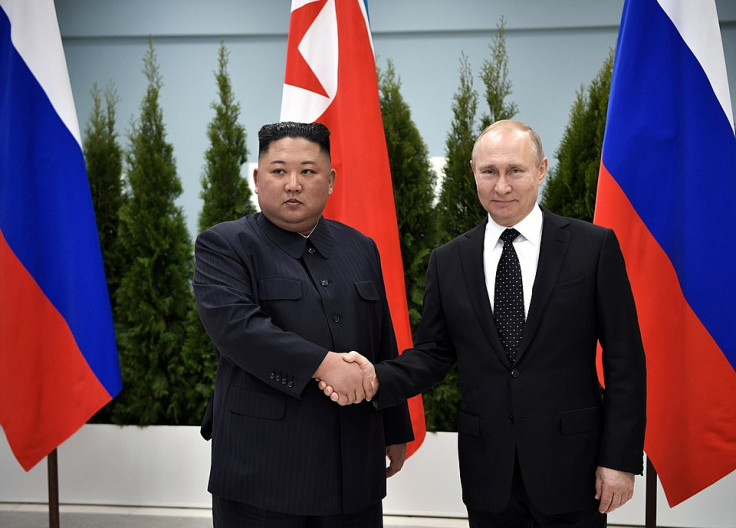
At the same time, Kim has redoubled efforts to cement ties with China, the country that keeps North Korea's battered economy afloat. Beijing's support, however tacit, gives Kim more room to gamble militarily and diplomatically, secure in the knowledge that any UN action will run into resistance at the Security Council.
This tightening triangle between Pyongyang, Moscow and Beijing narrows the diplomatic space for Washington and its allies. While Donald Trump has signalled he would like to revive his personal diplomacy with Kim, KCNA has been cool to the idea.
Pyongyang insists that the US must abandon its demand for denuclearisation before any talks can take place. In other words, Kim wants recognition as a nuclear power first, discussion later.
The danger, and the reason those World War 3 fears stubbornly linger, is that each new North Korean test makes miscalculation a little easier. AI-controlled weapons, if they function as advertised, add another layer of complexity.
If they do not, they add another layer of risk. In either case, the peninsula is becoming more heavily armed, more automated and less predictable by the month.
© Copyright IBTimes 2026. All rights reserved.
- Recommended For You


