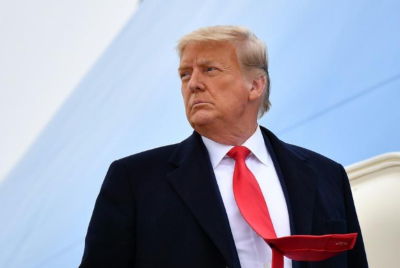
Donald Trump 'Severe' Sleep Snaps Spark Dementia and Brain Decline Warning From Doctor
CNN analyst highlights concerns over Donald Trump's daytime sleepiness amid political debate.

Donald Trump's health has returned to the centre of political debate after a CNN medical analyst warned that the president's apparent sleepiness in public could point to something more clinically significant. Dr. Jonathan Reiner said Trump's repeated bouts of drowsiness were unusual for a man approaching 80 and suggested the pattern could be linked to severe daytime somnolence, a condition that can in some cases affect concentration and cognitive performance in older adults.
BREAKING: Trump could be forced to resign or be removed in a matter of weeks.
— PoliticsVideoChannel (@politvidchannel) May 26, 2026
Doctor says Trump is VERY SICK
DOCTOR: TRUMP has “severe daytime somnolence… Chronic insomnia is a severe illness. It can result in an increase in risk of dementia, decrease in cognitive effects in… pic.twitter.com/d4bs5LOnOt
The renewed scrutiny comes after Trump, who turns 80 next month, underwent a medical examination at Walter Reed National Military Medical Centre and later said everything had 'checked out perfectly.' The White House has released limited details about the visit, while questions continue to circulate over his visible fatigue, age and ability to maintain the demands of office.
Moments of Drowsiness
The debate has been fuelled by several public appearances in which Trump appeared to struggle to stay fully alert. He was seen with his eyes closed during a Memorial Day ceremony at Arlington National Cemetery, while other reported instances include a White House event and a cabinet meeting earlier in the year.
@DanaBashCNN I can no longer watch you because Donald Trump FALLS ASLEEP at every opportunity he gets, even yesterday at the Memorial Day service and yet you’re GASLIGHTING your audience about his faux energy, it’s DISGUSTING! pic.twitter.com/Som5ZAA1ci
— Brooklyn Flowers (@BrooklynFlowe15) May 26, 2026
Those images quickly circulated on social media and cable news, intensifying scrutiny over his stamina and fitness. Reuters reported earlier that Trump dismissed similar footage, saying he was bored rather than asleep during a cabinet meeting. The explanation, however, has not fully settled wider public discussion about his energy levels during official events.
Doctor Flags Concerns, Not Diagnosis
Appearing on CNN with Brianna Keilar and Kate Bolduan, Dr. Reiner said the pattern warranted attention but stopped short of offering any formal diagnosis. He described Trump as showing signs consistent with severe daytime somnolence and said the White House should clarify whether appropriate medical evaluation has been conducted to determine the cause.
Reiner also noted that chronic insomnia and excessive daytime sleepiness can, in some cases, be associated with broader health risks in older adults, including reduced cognitive function and increased vulnerability to conditions such as cardiovascular disease. However, he did not state that Trump has any diagnosed neurological disorder.
MUST WATCH: Dr Jonathan Reiner on Sleepy Don: “The president has severe daytime somnolence… Chronic insomnia is a severe illness. It can result in an increase in risk of dementia, decrease in cognitive effects in older people.”
— Neo Jane (@Neo_Jane8) May 26, 2026
pic.twitter.com/lw917WJJim
'It's a real problem,' Reiner said, adding that Trump appears to struggle to remain alert during daytime public engagements. He suggested that sleep hygiene, including late-night activity and social media use, could potentially be contributing factors, but stressed that only a full medical assessment could determine the underlying cause.
What Hypersomnia Means
Daytime somnolence, also known as hypersomnia, refers to an excessive or uncontrollable urge to sleep during waking hours. According to the Cleveland Clinic, the condition does not have a single cure but can often be managed through improved sleep routines, medication and treatment of any underlying medical issues.
Symptoms can include persistent fatigue, difficulty maintaining alertness, long naps that are not refreshing, and reduced concentration. In some cases, it may be linked to sleep disorders, medication side effects, depression, or other health conditions rather than a single identifiable diagnosis.
Importantly, medical experts emphasise that daytime sleepiness alone is not evidence of dementia or brain decline. While it can sometimes appear alongside neurological or age-related conditions, it is not in itself a diagnostic indicator. Any cognitive assessment would require far broader clinical testing.
White House Response
The White House has strongly rejected suggestions that Trump's health is deteriorating. Spokesperson Davis Ingle said the president remains in excellent health and described him as the sharpest and most accessible president in American history, working continuously to advance his policy agenda.
Trump's medical team has previously addressed other visible concerns, including bruising on his hands, swelling in his legs and a red rash on his neck. Officials have attributed these issues to benign or treatable causes, but the limited disclosure has continued to fuel public speculation and media attention.
The recent examination at Walter Reed has therefore become more than a routine check-up. It now sits within a broader political debate about transparency, presidential health and how much medical information should be made public when it concerns the oldest sitting president in US history.
Age and Fitness Questions
Trump's age has made every visible moment of fatigue more politically sensitive. At nearly 80, he is under continuous scrutiny not only because of the demands of the presidency, but because any public sign of tiredness tends to feed into wider debates about endurance, cognitive sharpness and leadership capacity in later life.
Dr. Reiner's comments have added to that discussion, even without establishing any diagnosis. His warning focused on the idea that repeated episodes of daytime sleepiness should be evaluated carefully rather than dismissed, particularly when they occur during high-profile public duties.
Dr. Reiner on Trump’s exam today: “If they repeat scans from the last year, that means they’re surveilling something — and that’s never been disclosed to us.” Almost 80, multiple Walter Reed visits, swollen legs. What are they hiding? pic.twitter.com/PWGlInZlG5
— Lesley Abravanel 🪩 (@lesleyabravanel) May 26, 2026
For now, the White House maintains that there is no cause for concern and that the president continues to perform his duties without limitation. However, the combination of public incidents, a closely watched medical examination and renewed medical commentary has ensured that Trump's sleep habits remain part of a broader national conversation about health, ageing and presidential fitness for office.
© Copyright IBTimes 2026. All rights reserved.
- Recommended For You