Kevin O'Leary Predicts Who Will Control the Strait of Hormuz After the Middle East War Subsides
'Shark Tank' star foresees a 'Panama Canal' style policing model to secure the Strait after Iran's missile 'reign' isolates the regime from its neighbours

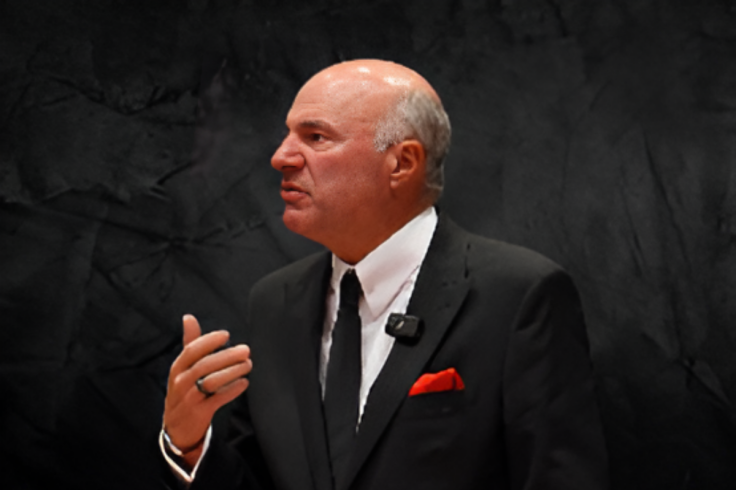
'Shark Tank' star Kevin O'Leary believes a permanent multinational policing coalition will take control of the Strait of Hormuz once the current conflict subsides, effectively ending Iran's unilateral grip on the waterway.
Speaking on Fox Business on Thursday, 19 March 2026, the O'Leary Ventures chairman compared the future of the chokepoint to the Panama or Suez Canals, suggesting that Iran's recent missile strikes on its own neighbours have made the regime a regional pariah.
The prediction comes as global oil prices teeter near $118 per barrel following devastating strikes on energy infrastructure across Qatar, Kuwait, and Saudi Arabia.
A 'Panama Canal' Model For Regional Security
O'Leary argues that the sheer economic cost of the current disruption, where nearly 20% of global oil supply has been blockaded, will force a radical restructuring of maritime authority. 'Iran is raining missiles on their own neighbours,' O'Leary told The Claman Countdown. 'The neighbours of Iran have said, "OK, this isn't going to work for us. We can't include you in the circle of friendship in any way."'
According to O'Leary, the nations that depend on these commodities will likely fund a permanent, high-tech security presence to prevent future blockades. While he acknowledged the transition would be 'expensive', he insisted that the cost of policing is a fraction of the trillions lost to global inflation and supply chain collapse. For investors, O'Leary remains optimistic that the post-war landscape will be 'a much more stable place' as domestic policies shift toward total supply chain insulation.
US Weighs 'Unsanctioning' Iranian Crude To Cap Prices
As the blockade enters its third week, US Treasury Secretary Scott Bessent has proposed a tactical 'U-turn' to prevent a global depression. On 19 March, Bessent revealed that Washington is considering lifting sanctions on approximately 140 million barrels of Iranian oil currently 'on the water' in stranded tankers.
'In the coming days, we may un-sanction the Iranian oil that's on the water,' Bessent stated. 'We will be using the Iranian barrels against the Iranians to keep the price down.' This 'ghost armada', originally destined for China, could provide a 10-to-14-day supply buffer to markets currently facing a 14-million-barrel-per-day deficit. However, critics argue this move effectively funds the Iranian war effort at a time when Israeli and US forces are conducting 'Operation Epic Fury' to dismantle the regime's economic lifelines.
Infrastructure In Ashes: The Toll On Gulf Energy
The shift toward a policing model is driven by the unprecedented damage to the region's 'crown jewels'. On 18 March, an Israeli airstrike targeted Iran's South Pars gas field—the world's largest—triggering immediate retaliatory strikes from the IRGC.
- Qatar: The Ras Laffan Industrial City, the world's largest LNG export hub, suffered 'extensive damage' from Iranian missiles, forcing a total production halt.
- Kuwait & UAE: Refineries at Mina al-Ahmadi and the Habshan gas facility were hit, with experts warning repairs could take years.
- Saudi Arabia: The Samref refinery was targeted, further tightening a market already suffering from the Hormuz closure.
From Supply Chain Problems To A Total Supply Crisis
Dan Pickering, founder of Pickering Energy Partners, warned that the world is moving beyond a mere logistical bottleneck. 'You fix supply chain problems quickly,' Pickering noted. 'If you start changing the ability to produce, whether it's LNG or oil... this is an escalation.'
With Israel's Benjamin Netanyahu now coordinating with Washington to 'break' the blockade, the focus has shifted from containment to a permanent military and economic solution. As O'Leary concluded, the end of this conflict will likely see the Strait of Hormuz transition from a sovereign Iranian asset to a globally managed utility, a move that would fundamentally rewrite the rules of Middle Eastern geopolitics for the 21st century.
Disclaimer: Our digital media content is for informational purposes only and not investment advice. Please conduct your own analysis or seek professional advice before investing. Remember, investments are subject to market risks and past performance doesn't indicate future returns.
© Copyright IBTimes 2026. All rights reserved.
- MOST POPULAR IN Personal Finance