Lottery Winner Opts To Get $1,000 A Week Instead Of $1 Million Lump Sum - Wise Move Or Lost Opportunity?
Brenda Aubin-Vega's decision to opt for a weekly lottery payout over a lump sum reignites discussions on financial strategies


People are once again arguing over a famous move made by a young woman in Canada who struck it lucky. Rather than taking a $1 million (about £740,000) cheque all at once, she walked away from the bulk sum to ensure $1,000 (£736) would land in her bank account every single week for as long as she lives.
The move has resurfaced in online discussions, reigniting arguments over whether guaranteed weekly payments outweigh the potential gains of investing a large windfall. For many, the case highlights the tension between financial security and long-term wealth creation.
A Digital Deep Dive Into Payout Strategies
The conversation gained new life today when a thread on the r/theydidthemath subreddit asked for a breakdown of which payout strategy actually makes more sense. Users began comparing the merits of a guaranteed weekly income against the potential growth of a single, large investment.
It didn't take long for hundreds of people to weigh in, with commenters looking closely at how things like rising prices, tax laws, and the self-control needed to manage money affect someone's wealth over time.
The Story Behind Aubin-Vega's Big Decision
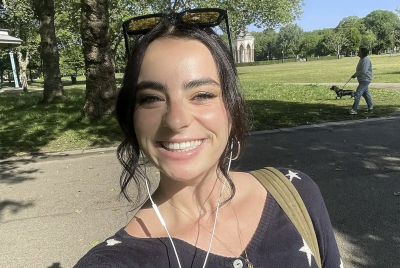
At the heart of the latest debate is Brenda Aubin-Vega, who was only twenty when she hit the jackpot on a 'Gagnant à vie' scratch card. Her win through Loto-Québec put her in the spotlight, forcing the young woman to decide exactly how she wanted to receive her newfound fortune.
She ultimately turned her back on the offer of $1 million (£740,000) in hand, deciding instead that a recurring payment of $1,000 (£736) every week for the rest of her days was the better way to go.
Brenda Aubin-Vega Wins $1 Million… But Chooses $1,000 a Week for Life Instead
— Marco Watts (@MarcoWatts_) December 12, 2025
🤑 SHE WON $1 MILLION… AND SAID “NOPE.”
Meet Brenda Aubin-Vega, a 20-year-old from Montreal who shocked everyone by choosing $1,000 a week for LIFE instead of taking the $1,000,000 cash payout. pic.twitter.com/Df1fk2fbOy
Speaking to Yahoo Finance earlier this year, Aubin-Vega confessed that she was absolutely stunned the moment she saw she'd won, famously saying, 'I couldn't believe my eyes!' She apparently kept staring at the card to make sure it wasn't a mistake before calling her dad and eventually telling the lottery officials that she'd be passing on the $1 million (£740,000) to take the weekly instalments instead.
Calculated Wealth Versus the Security of Certainty
A lot of people on Reddit pointed out that grabbing the full amount right away and putting it into the market would likely build a much bigger fortune as the years go by. One user, Yxig, suggested that 'if she keeps re-investing every payout and the interest rate is around 7% annually. If she invested the full $1 million with the same interest rate it would grow to almost $15 million in the same time.'
Comment
by u/Chiggnnugget from discussion
in theydidthemath
That same commenter also mentioned a fear that the firm responsible for the payments might go bust or hit a similar snag, noting that these kinds of collapses have actually taken place in the past.
Psychology and the Risk of Sudden Fortune
Shifting the focus away from pure mathematics, one person pointed out that 'this isn't necessarily about financial literacy, though,' as Daisy-Turntable argued, it is 'more about self-knowledge. If this person knows that they would not be able to resist the temptation of just spending the lump sum recklessly, then the weekly option is much better.'
Comment
by u/Chiggnnugget from discussion
in theydidthemath
'The $15 million is a hypothetical amount that only comes into existence if a very narrow set of behaviours are followed. There are a great many lottery winners that end up in poverty because they can't follow those behaviours,' they added.
Comment
by u/Chiggnnugget from discussion
in theydidthemath
Adding another layer to the potential risks of a one-time payout, Bewilderling noted 'And in the US, there are many lottery winners who are smart with their money and end up broke anyway because they become a target for frivolous lawsuits.'
Personal Peace of Mind in an Uncertain Market
The debate over whether a windfall should be taken as a single mountain of cash or a slow, steady stream continues to divide opinion. While the math might lean toward the potential of a large investment, many believe the real value lies in the safety net a weekly payment provides. As Reddit user Evipicc noted, 'An extra $1k a week is enormous for 99% of people, and you can plan around it. If you screw up, there's always next week.'
Comment
by u/Chiggnnugget from discussion
in theydidthemath
Comment
by u/Chiggnnugget from discussion
in theydidthemath
For others, the decision is less about the numbers and more about surviving the social pressure that comes with a sudden fortune. Keeping a lower profile with a recurring income can be a way to protect relationships, with user dravenonred arguing that 'the difference between $1M worth of investment income and $1000/week is the cost of saying "No."' Ultimately, whether it is a strategic move or a missed opening, the choice remains a deeply personal one, weighing long-term wealth against immediate peace of mind.
© Copyright IBTimes 2026. All rights reserved.
- Recommended For You