Chicago Man Told to Take Money Out of Bank of America by Fake US Marshals After Apple Call — Loses $69,000
A Chicago man's ordeal highlights the growing threat of AI-enhanced scams
Scams have grown rampant of late with innocent people getting robbed of their hard-earned money. The emergence of artificial intelligence (AI) has provided scammers with additional tools to enhance the credibility of their operations.
A man from Chicago fell prey to this kind of scam back in March. The man later shared the incident but requested anonymity because of the nature of the ordeal. His son, Tony, helped explain what his father had to go through.
The Modus Operandi
At the time, the male victim allegedly got a phone call from an unknown number but had a caller ID that read 'Apple.' Probably thinking it was safe and urgent, the man answered and was told that there were suspicious activities involving his account.
The caller, a woman, advised the man to take immediate action to protect his assets. He was transferred to another person, this time a man who identified himself as a certain US Marshal, Silas V. Darden. To convince the Chicago man he was authentic, an official-looking identification badge was shown.
After convincing the victim, the scammer gave instructions to the man to head to the bank and transfer the money to a couple of Wells Fargo accounts that the man thought were under his name.
'He says, go to the bank. I'll give you the number to transfer the money,' Tony said in a report by CBS News Chicago.
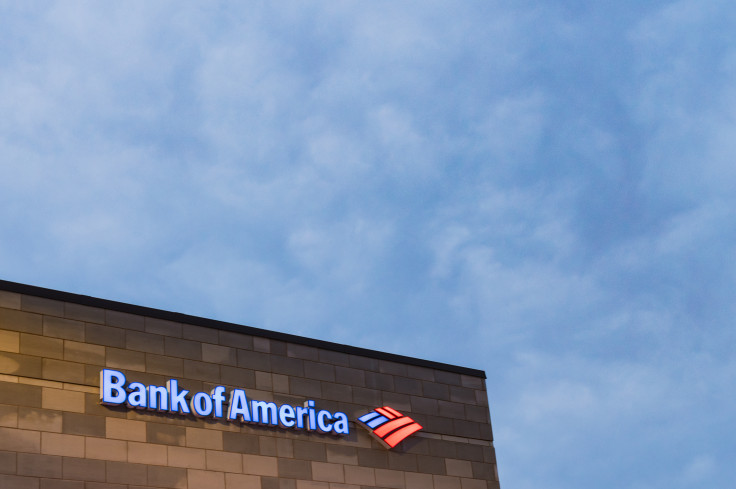
Acting with urgency, the Chicago man went to a Bank of America branch in Woodridge and requested a transfer of $24,000 (£17,000) to one of the Wells Fargo accounts. The transfer was completed.
The calls did not stop after that initial money transfer. The same scammer continued to call the Chicago man with the intent of drawing more cash out of the unidentified male victim. The man would go back to the same bank and transfer another $45,000 (£33,280), this time to the second account at Wells Fargo, which was also successfully transferred.
Uncovering the Scam
It was only after the second deposit that the man thought of heading over to the nearest Wells Fargo bank to check on his money. To his surprise, the accounts where he transferred his money were not under his name. Worse, both had been closed, meaning he had lost a total of $69,000 (£51,000) to scammers.
'For him, it's more than 40% of his total lifetime cash liquid savings,' Tony said.
After that discovery, Tony tried to search for Silas V. Darden online. It appeared in press releases, referring to Darden as a deputy director, albeit a real person.
CBS News Chicago later contacted the U.S. Marshals Service to verify the identity. The agency confirmed that Darden was no longer affiliated with the service and had left several years earlier.
With regard to the identification badge with a photo, it was found that the one in the picture was not actually Darden but was an image generated by AI, according to Deputy Chief in the Office of Public Affairs for the USMS, Brady McCarron.
'That was completely generated by AI,' McCarron explained. 'Law enforcement will never call you. We will never ask for any money.'
McCarron added that scammers are increasingly using technology, including AI-generated images, to make fraudulent schemes appear more convincing to unsuspecting victims.
How to Avoid Being Scammed
As far as the case of Tony's father, it remains unclear whether the financial institutions involved can provide restitution. The banks declined to provide specific details, citing financial privacy laws.
A bill that could potentially address and prevent future incidents or scams is currently at the House of Representatives. This is in reference to House Bill No 4767 or the Adult Protective Services Act.
This bill covers all financial institutions, allowing any bank to place temporary holds on accounts of adults with disabilities or elderly people if a bank employee suspects financial exploitation. The hold would be in place for several days. If the concerned financial institution suspects the involvement of fraud, law enforcement will be notified.
HB4767 was re-referred to the Rules Committee on April 17, 2026, with the bill proposing an effective date of January 1, 2027.
© Copyright IBTimes 2026. All rights reserved.
- Recommended For You