

Harvard Forced To Pay $53M Settlement Over Sick Morgue Manager Trafficking Donated Corpses Online
University agrees to compensate families affected by morgue manager's trafficking scheme
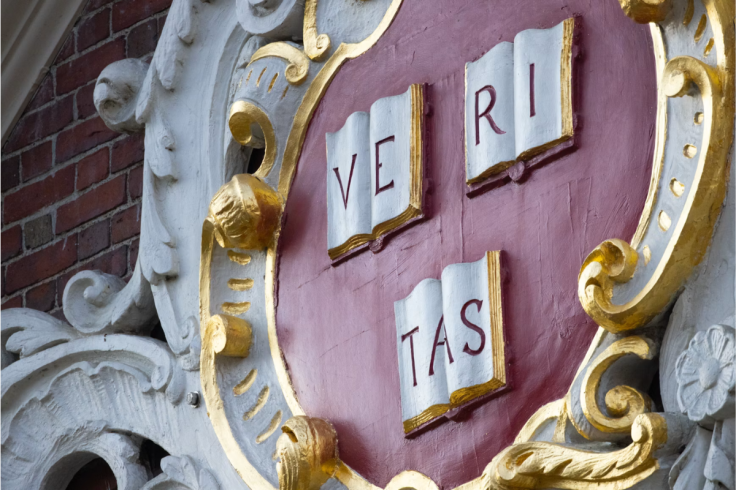
Harvard University has agreed to pay £39.3 million ($53 million) to settle lawsuits brought by families whose relatives' remains were stolen from its medical school morgue and sold across state lines.
A Suffolk Superior Court judge granted preliminary approval to the settlement on 18 Aug 2026, clearing the way for two class action funds to compensate roughly 438 donor families potentially affected, according to Harvard Medical School's own account of the agreement.
The deal follows the criminal case against Cedric Lodge, the former manager of the Harvard Medical School morgue, who was sentenced in December 2025 to eight years in federal prison for stealing organs, skin, brains and other remains from donated cadavers and selling them to buyers around the country, the US Department of Justice said.
The Morgue Manager's Decade of Trafficking
Lodge managed the Harvard Medical School morgue for close to three decades before his conduct came to light.
According to the US Attorney's Office for the Middle District of Pennsylvania, he removed organs, brains, skin, hands, faces and dissected heads from cadavers donated through the school's Anatomical Gift Programme between 2018 and at least March 2020, taking the parts after they had already served their research and teaching purpose but before they could be cremated as promised to donor families.
He then transported the remains to his home in Goffstown, New Hampshire, and arranged sales to buyers in Massachusetts, Pennsylvania and elsewhere by phone and social media.
Prosecutors said Lodge and his wife, Denise, at times allowed buyers, including Katrina Maclean and Joshua Taylor, into the Harvard morgue to choose which body parts to purchase directly from the cadavers, federal charging documents state.
Many of the remains were resold again for further profit down the chain. Assistant US Attorney Alisan Martin told the sentencing court that Cedric Lodge had treated 'beloved human beings as if they were baubles to be sold for profit'.
Cedric Lodge pleaded guilty in May 2025 to interstate transport of stolen human remains and was sentenced on 16 Dec 2025 by Chief US District Judge Matthew W. Brann to 96 months in prison, the Justice Department confirmed. Denise Lodge received 12 months and a day for her role in the scheme.
At least six other people connected to the trafficking network have also pleaded guilty or been sentenced in related cases, including buyers based in Pennsylvania and Minnesota.
Separately, a former Arkansas crematorium worker, Candace Chapman-Scott, was sentenced to 15 years in federal prison after stealing remains from her own employer and selling them into the same network, according to court records.
A Court Ruling That Stripped Harvard's Immunity
Families of donors first sued Harvard in 2023, arguing the university had breached its duty to protect remains entrusted to it under the Massachusetts Uniform Anatomical Gift Act.
A Suffolk Superior Court judge dismissed those claims in February 2024, ruling that Harvard had acted in good faith and could not be held responsible for Lodge's conduct.
The Massachusetts Supreme Judicial Court reversed that decision on 6 Oct 2025, ruling unanimously that Harvard's 'extraordinary failure to adequately supervise the morgue's operations' could amount to a lack of good faith under state law, the court's opinion states.
The ruling stripped Harvard of the broad immunity it had claimed and cleared 12 lawsuits, brought by 47 relatives of donors, to proceed towards trial.
With the immunity defence gone, Harvard and the plaintiffs reached the settlement announced on 17 Aug 2026, structured as two class action funds totalling £39.3 million ($53 million).
The funds are intended to cover donor families whose relatives passed through the morgue between 2018 and March 2023. A third party administrator will notify eligible claimants and manage individual payouts, a process Harvard says could take several months.
Beyond the money, the settlement commits Harvard Medical School to hold a live webinar for affected families, at which officials will confirm that Lodge's actions were morally reprehensible and outline the safeguards added to the Anatomical Gift Programme since 2023.
Starting in the 2027 to 2028 academic year, the school will also fund an annual scholarship for medical students, which it says is intended 'in appreciation and in honour of all of our anatomical donors'. Final court approval of the settlement is scheduled for December 2026.
Harvard's Response and the Wider Trade in Remains
In their letter to the Harvard Medical School and Harvard School of Dental Medicine communities, Daley and Chang wrote that although Lodge's sentencing closed the criminal case, the process of recovering from the incident continues.
Since Lodge's 2023 indictment, Harvard has commissioned an independent panel of three outside experts to review the Anatomical Gift Programme's governance, security and communication with donor families. The university says every recommendation from the panel's 2023 report has since been implemented.
The case has drawn wider attention to an underground trade in donated human remains that extends beyond Harvard. Investigators traced parts of the same network to a separate scheme at an Arkansas crematorium, where stolen remains, including foetal remains, were sold to a Pennsylvania buyer also linked to Lodge's operation, prosecutors said.
For the hundreds of families still waiting to learn whether their loved ones were among those affected, Wednesday's settlement closes a legal chapter, though Harvard itself admits the process of recovering from it is far from over.
© Copyright IBTimes 2026. All rights reserved.