Online Trade in Mummified Remains Exposes Buyers to Arsenic, Mercury and Deadly Spores, Study Finds
Study reveals health risks in the online trade of mummified human remains
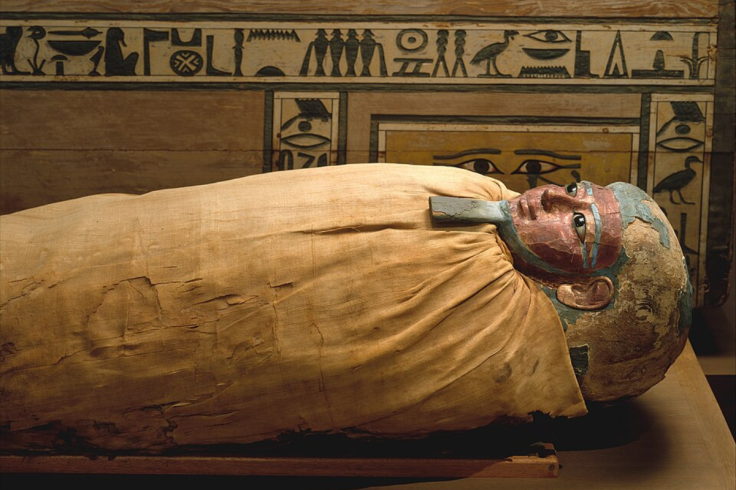
A peer-reviewed study has found that people buying and selling mummified human remains online, including shrunken heads, hands and feet, are being exposed to toxic preservatives and dormant fungal spores with almost no safety warnings attached to the sales.
The paper, published in the International Journal of Cultural Property, examined 128 listings across Meta platforms, e-commerce sites, web stores and auction houses. Titled 'The Real Mummy's Curse: Health Risks Associated With the Sale and Trade of Mummified Remains', it appears online with Cambridge University Press.
Arsenic, Mercury and Fungal Spores
The authors describe a 'semi-clandestine, often illicit' trade that has grown through social media, personal websites and auction platforms. They say sellers and buyers appear to have little understanding of how they are being exposed to various risks.
Isolated body parts, particularly hands and feet, were the most common items for sale. Whole or partial mummified heads made up 51.6 per cent of the sample, including tsantsas, the shrunken heads traditionally produced by the Shuar people of northern Peru and eastern Ecuador.
Many of the listings showed visible signs of biodeterioration. Sellers frequently used standard postal services to ship the remains, with no protective packaging guidance offered to handlers along the way.
Hidden Toxins Inside Mummified Remains
Mummification, deliberate or accidental, depends on chemical processes designed to slow decomposition. Historically, this involved heavy metals including arsenic, mercury and lead, which remain hazardous long after the preservation process itself has ended.
Alongside these chemical risks, the remains can also harbour dormant microorganisms for centuries. Fungal spores, in particular, can become airborne the moment a specimen is moved or disturbed.
Scientific Explanation for a Cultural Myth
The paper points to two well-documented historical cases. Ten of the twelve conservation scientists who opened the tomb of King Casimir IV of Kraków in the 1970s later died, a fatality rate the researchers link to inhaled Aspergillus spores.
Researchers have offered the same explanation for Lord Carnarvon's death, the financial backer of the 1923 excavation of Tutankhamun's tomb. His death that year helped cement the popular myth of the 'mummy's curse', a phrase historians have since traced through decades of British popular culture surrounding Egyptian archaeology.
Kirsty Squires, professor of human bioarchaeology at the University of Staffordshire and one of the paper's authors, said sellers appeared largely unaware of the danger. She said some listings referenced a 'mummy smell', which she linked to biodeterioration, while some images showed remains displayed without protective cases in ordinary domestic rooms.
It didn't look like it was temperature-controlled, the appropriate storage conditions required for human remains,' Squires said.
Postal Workers Unwittingly Carry Deadly Fungi
The research does not stop at collectors. The authors note that warehouse staff, drivers, transport hub workers and customs officials handling these packages are unlikely to be wearing protective equipment, since they have no way of knowing what a parcel contains.
That risk exists at every stage of the supply chain, from the point of sale through to final delivery. None of the safeguards used in professional archaeological or museum settings are in place.
A Gap in Regulation
The findings highlight a gap. Mummified remains in regulated institutions are handled with protective equipment. But on ordinary consumer platforms, none of those safeguards exist.
With online marketplaces making these items easier to find and buy than ever, the study suggests the risk is likely to grow rather than fade. Sellers continue to rely on standard postal networks with no biohazard labelling required, placing unsuspecting handlers at risk at every stage of delivery.
© Copyright IBTimes 2026. All rights reserved.
- Recommended For You