

'Here Is Where It Gets Completely Nuts': Analyst Slams Supreme Court Ruling on White House Ballroom
When a president can swing the wrecking ball faster than the courts can answer the door, even the White House starts to look disturbingly fragile

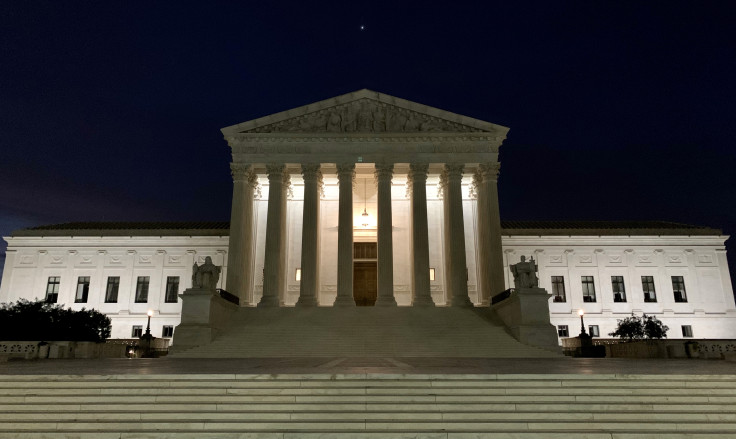
Donald Trump was allowed by the US Supreme Court on Tuesday to keep demolishing part of the White House to build a new East Wing ballroom in Washington, after a tight 5–4 ruling that has alarmed legal analysts and historic preservationists.
The court's conservative majority allowed construction to continue, even while stopping short of saying the Trump project is lawful.
The case reached the Supreme Court after an architectural historian and the National Trust for Historic Preservation sought an emergency order to halt demolition works on what they argued was historic fabric of the White House complex.
Lower courts had been weighing whether the president could legally build a new East Wing ballroom on public property without explicit authorisation from Congress, when the nation's highest court abruptly stepped in on procedural grounds.
Donald Trump Ballroom Ruling Leaves Key Legal Questions Unanswered
In a podcast episode released on Tuesday, progressive political commentator David Pakman tore into the Supreme Court's handling of the dispute, calling the majority's reasoning 'bizarre' and 'nuts.'
He pointed out that the justices did not rule that Trump was acting within the law, only that the people challenging him probably had no right to bring the case in the first place.
'Here is where it gets completely nuts,' Pakman said, quoting from the unsigned majority order. 'The majority explicitly says, We are not saying Trump's ballroom is actually legal.'
The challengers, as Pakman explained, included an architectural historian and the National Trust for Historic Preservation, both involved in safeguarding America's landmark buildings.
The Supreme Court concluded they probably lacked the legal standing needed to seek an injunction, because they could not show a direct, concrete injury to themselves personally, rather than a more general objection to the loss of history.
'Maybe what Trump's doing is illegal,' Pakman said. 'These aren't the people who can stop him, though.'
The White House has argued in court filings that the president retains wide discretion over the internal configuration of the executive mansion and surrounding complex, and that the East Wing work sits within that authority.
There was no immediate fresh statement from Trump's team in response to the latest ruling cited in the report.
Chief Justice Roberts Breaks With Conservatives On Donald Trump Project
The narrow 5–4 split was not between conservative and liberal blocs in the usual way. Chief Justice John Roberts sided with the court's three liberal justices in a strongly worded dissent, warning that his colleagues' approach was no victory for the separation of powers or for public heritage.
According to Pakman's summary, Roberts stressed that Congress had never explicitly authorised Trump, or any president, to build a new ballroom on what remains public property.
By brushing aside the challenge on a standing technicality, he argued, the court had failed to protect the separation of powers.
Roberts wrote that the decision represented 'no victory for the separation of powers,' a line Pakman described as 'an extraordinary sentence coming from the conservative chief justice.'
Pakman's concern was not limited to one lavish White House room. 'This now creates a much bigger problem than the ballroom specifically,' he said, warning that, in his view, the ruling effectively creates a loophole in preservation law whenever the president himself is the one doing the demolishing.
Under the logic of the majority, as he framed it, the harder it is to find a person with a concrete, personal injury, the easier it becomes for a president to bulldoze irreplaceable sites before anyone can get into court. Once a historic façade is gone, appeals can start to look pretty academic.
Fears of a Wild New Precedent for National Landmarks
An earlier hearing in a lower court had already floated a stark hypothetical. If a president announced, 'I'm going to tear down the Statue of Liberty,' Pakman recalled, judges and lawyers were forced to confront the question of who, exactly, would be allowed to sue in time to stop it.
That scenario resurfaced in Pakman's analysis of the Trump case. The problem, he said, is that once a president acts fast enough, there may be no practical remedy. 'Once you demolish a historic building, you can't later issue an injunction and go, 'It must be undemolished,'' he warned.
Ordinary Americans, however outraged, do not automatically qualify as plaintiffs. 'If you, as a plaintiff, go, 'Well I'm an American. I'm a stakeholder. The tearing down of the Statue of Liberty, the ripping down of part of the White House, aesthetically, it's damaging.' That doesn't give you standing,' Pakman said.
Legal purists might say this is how standing doctrine has worked for decades. But it lands very differently when the target is not some obscure office block, but the White House itself, under active construction by a sitting president.
What is clear from the record described by Pakman is that the Supreme Court chose not to resolve whether Trump's project is legal at all, and for critics of expansive executive power, that silence may be the most worrying part.
© Copyright IBTimes 2026. All rights reserved.