

ICE Accused Of Building Vast Surveillance Databases To Track Protesters Behind The Scenes
Former officials and investigators warn of hidden databases and powerful tech quietly reshaping protest policing
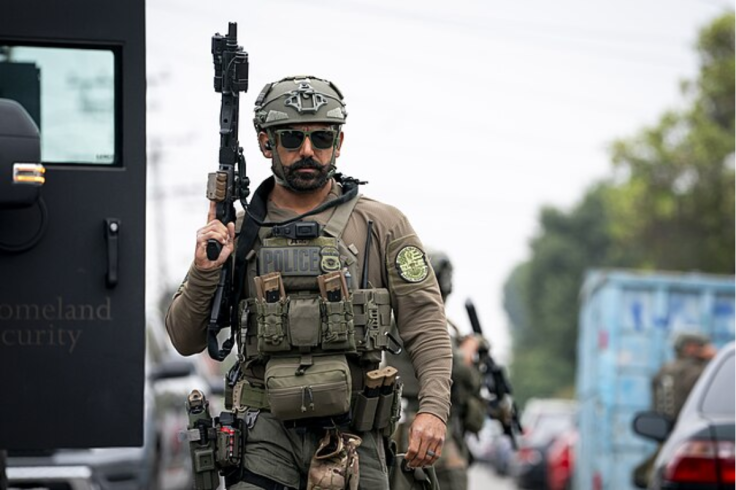
It looks like a protest on the street, but behind the scenes critics say something far more sophisticated is unfolding. US Immigration and Customs Enforcement is facing serious accusations that it has built vast surveillance databases capable of identifying and tracking protesters, not just undocumented immigrants.
Former officials and investigative journalists warn that what the public sees during raids and demonstrations may be only the surface of a much larger system operating quietly in the background.
How ICE Allegedly Identifies Protesters In Real Time
ICE has increasingly relied on advanced digital tools to monitor protests in cities like Minneapolis. These include facial recognition software, licence plate readers, social media monitoring, and location based tracking methods such as geofencing. Together, these tools allegedly allow agents to identify individuals attending demonstrations and link them to personal data.
Facial recognition technology can match images captured at protests with photos pulled from government records or online platforms. Gait recognition, which analyses the way a person walks, can identify individuals even when their faces are obscured. Critics argue that anonymity, once a basic protection at protests, has become almost impossible.
One widely shared comment summed up the concern, warning that facial recognition, geofencing, and vehicle data are now 'sure ways to be identified'. Civil liberties advocates say this technology changes the nature of protest itself, turning public dissent into a data generating activity.
The Databases Critics Say Power The Surveillance
At the heart of the controversy are claims about massive databases quietly compiled and shared across agencies and private contractors. On a recent podcast, an investigative journalist alleged that ICE is using a database originally assembled by DOGE and later passed to Palantir. The database reportedly contains names, addresses, photographs, and employment information.
According to these claims, agents can select a location and instantly retrieve details of immigrants who live or work there. Other commenters allege that ICE also accesses ITIN tax filings and verified data from the Treasury, health agencies, and education departments. These agencies were reportedly accessed physically by DOGE teams in the past, many of which were linked to Palantir.
While ICE has not publicly confirmed these details, experts say such data sharing would represent a significant expansion of surveillance capabilities. Critics argue that databases built for administrative purposes are being repurposed for enforcement and intelligence gathering without public debate.
Why Protesters And Journalists Are Alarmed
Civil rights groups say the alleged surveillance goes far beyond immigration enforcement. By tracking protesters, journalists, and activists, ICE risks chilling constitutionally protected speech. Several commenters noted that before 9/11 and the Patriot Act, this level of surveillance would have been politically unthinkable.
One user wrote that the shift towards a surveillance state has been 'insidious', happening gradually until it now feels normal. Others drew darker historical parallels, warning that governments making lists of dissenters has rarely ended well. One comment bluntly stated that automated lists are replacing human informants, making surveillance faster and harder to escape.
Journalists have also expressed concern, pointing to cases abroad where reporters were tracked and removed using similar tools. The fear is that technologies developed for border control are now being used to monitor domestic political activity.
The Legal And Ethical Questions Now Being Raised
The accusations against ICE raise urgent legal and ethical questions. The right to protest is protected under the US Constitution, yet critics argue that mass surveillance undermines that protection in practice. Knowing that attendance at a protest could place someone in a government database may discourage people from exercising their rights.
Privacy advocates also question oversight. If multiple agencies and private firms are sharing data, accountability becomes blurred. Who controls the databases, who can access them, and how long information is stored remain largely unanswered questions.
ICE has previously stated that it operates within the law, but the growing volume of allegations has intensified calls for transparency. Lawmakers and watchdog groups are now being urged to investigate how surveillance tools are used and whether safeguards are sufficient.
For many observers, the concern is not just what ICE is doing today, but what the infrastructure allows tomorrow. As one widely shared post warned, what happens behind the scenes may be more frightening than anything happening in public view.
© Copyright IBTimes 2026. All rights reserved.