ICE Detention Deaths Hit Highest Level Since Pandemic as Custody Numbers Surge Nearly 70%
At least 57 people have died since January 2025, as medical and suicide-prevention concerns grow across a rapidly expanding system
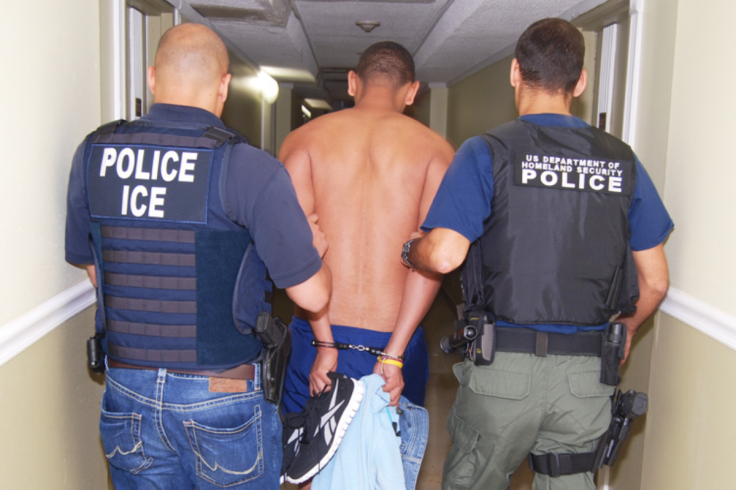
At least 57 people have died in Immigration and Customs Enforcement (ICE) custody since Donald Trump returned to the White House, according to ICE death notifications cited by CNN. By July 2026, nearly 66,000 people were held in ICE custody, almost 70% more than when Trump took office in January 2025.
The increase has produced a troubling mismatch: detention has expanded dramatically, while the death rate has risen faster than population growth. Independent reviews have also identified apparent suicides and cases where doctors found that delayed or inadequate treatment may have contributed to deaths.
Death Rate Rose Faster Than Detention
Human Rights Watch analysed 52 deaths recorded during the first 500 days of Trump's second administration, through 4 June 2026. It found that the mortality rate was nearly four times the rate during Joe Biden's presidency and more than twice the rate during Trump's first term. The organisation said the trend-level rate was also higher than during the Covid-19 pandemic.
The detention population grew by about 77% between January 2025 and January 2026, reaching more than 71,000 before falling later in the year. Suicides are a particularly stark part of the increase. Human Rights Watch and Physicians for Human Rights identified seven apparent suicides among 39 deaths examined during Trump's first year back in office, compared with one in 2024.
An Associated Press investigation into 10 ICE detainee suicides found that seven of those men had no record of violent crimes in the US. That finding complicates the administration's portrayal of its enforcement campaign. DHS has said nearly 70% of ICE arrests involve people who have been convicted or charged with a crime, including pending charges. Critics have argued that counting pending charges alongside convictions creates a broader definition of 'criminal' arrests.
Named Cases Show Medical Risks
Individual cases put the statistics into sharper focus. Maksym Chernyak, a 44-year-old Ukrainian man, suffered a stroke after showing signs of a serious medical emergency while detained. Human Rights Watch and Physicians for Human Rights concluded that delays in transferring him to higher-level care almost certainly contributed to his death.
Ismael Ayala-Uribe, a 39-year-old Mexican citizen, developed a severe infection while detained. The San Francisco Chronicle found that repeated attempts to obtain treatment for an infected abscess were mishandled before he died.
The Chronicle reviewed 32 ICE death cases and consulted 14 doctors. In at least 17 cases, multiple doctors concluded that medical delays or failures might have prevented deaths, although opinions were not unanimous in every case.
The cases do not prove that every death was preventable. They do, however, explain why staffing, emergency response, and access to medical treatment have become central concerns.
Detention Growth Tests ICE Infrastructure
The expansion creates another question: whether ICE's infrastructure can safely absorb tens of thousands of additional detainees. The agency relies on federal, state, local, and privately operated facilities. Increasing capacity places additional demands on healthcare, transportation, security, staffing, and oversight.
Previous Government Accountability Office reviews have identified weaknesses in some of those systems. A 2018 review found errors and inconsistencies in ICE's detention-cost calculations, including a $129 million underestimation in one fiscal-year budget request.
A 2022 GAO review also identified weaknesses in ICE's oversight of documentation for medical treatment provided outside detention facilities. The agency later implemented changes addressing that recommendation.
Those reviews do not establish that current deaths resulted from earlier problems. They show, however, that oversight has been a recurring challenge as ICE manages its detention network.
Death Reporting Change Limits the Picture
The official death tally also has a new limitation. In June 2026, ICE ended its previous requirement to report deaths occurring within 30 days after a detainee's release. Deaths after release therefore fall outside the same reporting system used for people who die while still in custody.
DHS has rejected allegations of widespread medical neglect, saying detainees receive medical, dental, and mental-health care. The department has also described suicide deaths as extremely rare.
But with nearly 66,000 people in custody and the administration seeking additional detention capacity, the data present a clear challenge. The government is holding substantially more people while the mortality rate has reached its highest level in years.
The 57 deaths therefore represent more than a raw tally. The rising mortality rate, suicide cases, and documented medical concerns raise questions about whether the safeguards inside an expanding detention system are keeping pace with its growth.
© Copyright IBTimes 2026. All rights reserved.
- Recommended For You