FBI Investigates Journalist Who Leaked Kash Patel's Branded Bourbon, Gifts and Drinking Problem
Controversy surrounds FBI Director Kash Patel's conduct and the bureau's investigation into journalist Sarah Fitzpatrick.

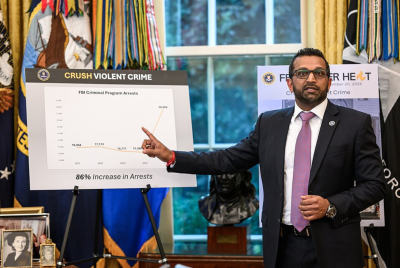
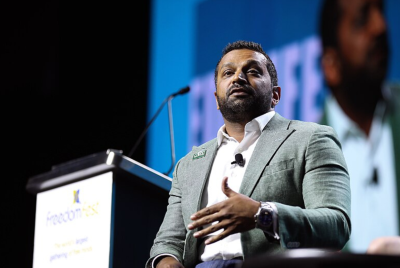
The FBI is facing mounting scrutiny after reports emerged that agents may have opened a leak investigation linked to a journalist who published damaging allegations about Director Kash Patel's conduct inside the bureau. What makes the episode remarkable is not simply the target of the reporting, but the apparent willingness to scrutinise the reporter herself over disclosures that were not classified.
According to sources cited by MS NOW, the bureau's insider threat unit in Huntsville, Alabama, has been examining leaks connected to Atlantic journalist Sarah Fitzpatrick, whose recent reporting detailed claims of heavy drinking, erratic behaviour and a growing culture of fear around Patel's leadership. FBI spokesperson Ben Williamson flatly denied that any such investigation exists.
Still, the allegations have intensified concerns already swirling around Patel's increasingly controversial tenure at the bureau. The dispute now sits at the intersection of press freedom, government secrecy and the politicisation of federal law enforcement under Donald Trump's administration.
Kash Patel's Bourbon Bottles and 'Ka$h' Merchandise Deepen Questions Over FBI Image
Kash Patel's personalised bourbon bottles have become more than an internal curiosity inside the FBI. They are now central to a growing backlash over whether the bureau's director has blurred the line between public office, personal branding and political celebrity in ways few modern FBI leaders ever attempted.
According to reporting by Fitzpatrick, Patel has distributed customised bottles of Woodford Reserve bourbon engraved with 'Kash Patel FBI Director,' complete with an FBI-style shield, an eagle emblem and his preferred stylised nickname, 'Ka$h.' Some bottles reportedly included his signature alongside '#9', referencing his place in the bureau's leadership history.
The details matter because they point to something larger than novelty gifts. Multiple current and former FBI employees told the magazine they viewed the bottles as symbolic of a culture shift under Patel, one where branding and personality increasingly dominate an institution historically obsessed with restraint and uniformity.
The Bourbon Bottles Becoming A Problem - And His Drinking, Too
The 750-millilitre bottles were reportedly handed out to FBI staff, Department of Justice officials and civilians Patel encountered at official events. Sources told The Atlantic the bourbon travelled with Patel on government aircraft, including during an Olympics-related trip to Milan earlier this year.
One bottle was allegedly left behind in a locker room during the trip. Another later surfaced for sale online after Patel's drinking habits became the subject of national headlines.
The FBI did not deny the existence of the bottles. Officials instead argued that commemorative gifts have long existed within federal law enforcement culture and said Patel personally paid for any gifts he distributed. The bureau declined, however, to provide examples of previous FBI directors circulating personalised liquor bottles bearing their own names.
That distinction has become impossible to ignore for many former agents.
Several FBI veterans told The Atlantic they had never seen an FBI director openly distribute self-branded alcohol while serving in office. One former senior official reportedly laughed when asked whether similar conduct existed under previous administrations.
What makes the criticism sharper is the FBI's own historic posture toward alcohol. Bureau employees can face disciplinary action for alcohol misuse both on and off duty. Former agents quoted in the report said Patel's behaviour appeared to create two standards inside the organisation, one for ordinary personnel and another for the director himself.
A Director Building The 'Ka$h' Brand
The bourbon controversy sits alongside a much broader merchandising operation linked to Patel's public image.
Based Apparel, a website co-founded by Patel, continues to sell branded merchandise more than 15 months into his tenure as FBI director. The online store includes $35 beanies, $35 T-shirts, $65 orange camouflage hoodies and $25 trucker caps. Among the more striking items are 'Government Gangsters' playing cards sold for $10 and a 'Fight With Kash' Punisher-themed scarf priced at $25.
The branding itself has drawn attention inside Washington because it leans heavily into Patel's political identity rather than the institutional image traditionally maintained by FBI directors.
Patel has long cultivated a highly visible public persona tied closely to Donald Trump's political movement. Before taking over the bureau, he regularly appeared on conservative podcasts, promoted merchandise carrying the 'Ka$h' nickname and sold pro-Trump apparel through affiliated ventures.
The Atlantic also reported that Patel previously distributed branded merchandise boxes containing socks, hats and Punisher-themed accessories before he was formally confirmed to lead the FBI.
Critics argue the merchandising reflects a deeper transformation of the bureau into an extension of partisan culture wars. Supporters see it differently, portraying Patel as a populist outsider breaking with what they describe as the FBI's insular political culture.
Still, what makes the situation striking is how openly the branding overlaps with official authority. The personalised bourbon bottles reportedly include FBI imagery alongside Patel's name and title. Former officials told the magazine they feared that symbolism risked turning the bureau's leadership into a personality cult.

Agents Describe Growing Unease Inside The Bureau
The concerns are no longer confined to optics.
According to multiple former agents and attorneys cited in the report, some FBI employees have privately worried that Patel's conduct could damage the bureau's credibility in courtrooms and investigations. One former agent said integrity remains the core currency of FBI work because agents depend on professional credibility when testifying.
Another described the bourbon bottles as 'demoralising.'
The Atlantic also detailed claims that Patel reacted furiously after at least one bottle reportedly disappeared during a training event at Quantico involving UFC fighters and FBI personnel. Attorneys representing current and former agents said staff sought legal advice after fears emerged over possible loyalty tests and polygraphs tied to the missing bottle.
Patel has denied broader allegations surrounding his behaviour, including claims of excessive drinking. He has already filed defamation litigation against The Atlantic over previous reporting.
Yet the controversy surrounding the bourbon and merchandise operation continues to grow because it cuts directly against the image the FBI traditionally tries to project. Quiet professionalism has long been central to the bureau's mythology.
Garland's Protections Have Already Been Rolled Back
The legal backdrop matters here.
During Joe Biden's presidency, then Attorney General Merrick Garland imposed strict limits on federal prosecutors seeking journalists' phone records, testimony or communications during leak investigations. The reforms followed backlash over revelations that the Justice Department under Trump's first administration secretly seized records from reporters at CNN, The Washington Post and The New York Times.
Garland argued at the time that aggressive tactics against journalists threatened the constitutional role of a free press.
Those safeguards did not survive long after Trump returned to office.
Attorney General Pam Bondi repealed Garland's policy in April 2025, significantly lowering the threshold for pursuing reporters' records in federal investigations. Bondi's revisions still described subpoenas against journalists as a 'last resort,' though critics warned the rollback opened the door to broader surveillance of reporters covering politically sensitive stories.
That context hangs heavily over the Patel matter. If investigators were authorised to pursue phone metadata, digital communications or social media contacts connected to Fitzpatrick's reporting, it would mark one of the clearest tests yet of the administration's new posture toward the press.
Jeffrey Goldberg, editor-in-chief of The Atlantic, issued a sharply worded response after the reports surfaced.
'If true, this would be an outrageous, illegal, and dangerous attack on the free press and the First Amendment,' Goldberg said. 'We will defend Sarah and all of our reporters who are subjected to government harassment simply for pursuing the truth.'
© Copyright IBTimes 2026. All rights reserved.
- Recommended For You