War, Shutdown, Sleeper Cells: Is US Air Travel Entering a Risky Phase?
Experts say aviation remains safe, but geopolitical tensions and an unpaid security workforce are raising concerns

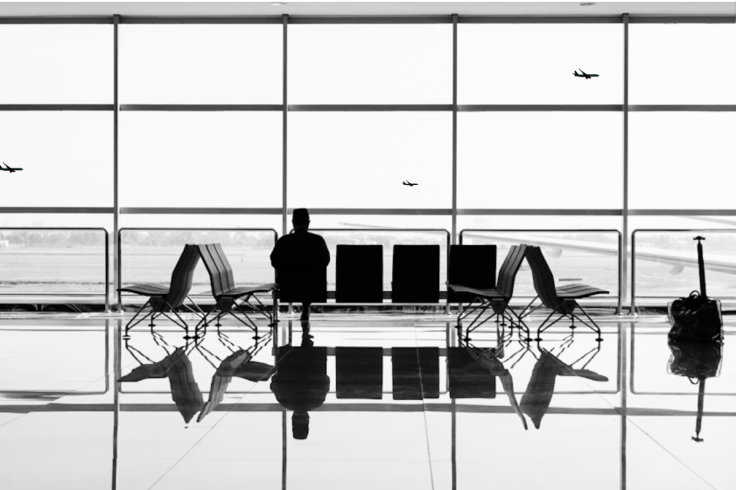
As Americans head into the hectic spring travel season, a mix of global conflict, domestic political gridlock, and security warnings is raising new questions about the safety of air travel in the United States. Federal officials say flights remain safe. But experts warn that several unusual pressures are converging at the same time, including a partial government shutdown, rising tensions with Iran and renewed concerns about terrorism. The situation has left some travellers uneasy, even as aviation specialists emphasise that the overall risk to passengers remains very low.
TSA Officers Working Without Pay
One of the most immediate concerns stems from the ongoing partial government shutdown affecting the Department of Homeland Security. About 50,000 Transportation Security Administration (TSA) officers are continuing to work without regular pay after Congress failed to pass funding legislation.
According to reports, TSA officers received partial pay cheques on 28 February but missed their first full pay cheque on 13 March as the shutdown approached the one-month mark. Former Secretary of Homeland Security Jeh Johnson, who served during the Obama administration, warned that the situation is unfolding during what he described as a 'heightened security threat environment.'
'These are the people we depend upon to look for bombs and explosive devices on the aeroplane you're about to get on with your family,' Johnson told CNBC. TSA officers are responsible for screening passengers and luggage using X-ray machines, full-body scanners and other security technology at airports across the country. Experts say financial uncertainty and long hours can affect morale within a workforce already known for demanding conditions.
White House officials say the administration is closely monitoring intelligence and security conditions despite the funding lapse.
War With Iran Raises Terrorism Concerns
Security analysts say the ongoing conflict involving Iran could increase the risk of terrorist activity inside the United States. Robert Pape, a political science professor at the University of Chicago who studies global terrorism trends, said prolonged conflicts aimed at influencing another country's political system often trigger retaliatory campaigns.
'The longer this war goes on, the greater the risk,' Pape said. He pointed to seven or eight violent incidents across the United States since late February, including a bar shooting in Austin, Texas, and an attack at a synagogue in Michigan. Authorities have not linked those incidents directly to aviation.
Still, experts say international conflicts can inspire extremist violence or motivate individuals who were already considering attacks.
The Threat of Lone Actors
Another concern highlighted by security analysts is the threat from so-called lone-wolf attackers. These individuals operate independently rather than as part of organised terrorist networks, making them harder for intelligence agencies to detect.
According to experts, such attackers often rely on simple weapons, including firearms or improvised explosive devices. The United States has faced similar incidents before. High-profile examples include the 2016 nightclub shooting in Orlando carried out by Omar Mateen and the 2015 mass shooting in San Bernardino by Syed Farook and Tashfeen Malik.
Those attacks illustrated how individuals living seemingly ordinary lives can plan large-scale violence.
'Sleeper Cell' Warnings
Concerns about 'sleeper cells' have also resurfaced. Speaking to reporters in Miami, Donald Trump said Iran has been attempting 'for a long time' to activate dormant operatives inside the United States.
Security specialists say sleeper cells do not always operate as highly organised networks. Even loosely connected groups can attempt attacks if they are motivated or inspired by geopolitical developments. Pentagon chief Pete Hegseth said the military remains prepared to respond if such threats emerge.
'We've seen those types of folks before, and the American people can rest assured that we're vigilant,' he told reporters.
Aviation Still Considered Highly Secure
Despite the concerns, many experts stress that US aviation remains one of the most secure transportation systems in the world. Elizabeth Stephens, managing director of Geopolitical Risk Advisory, said the probability of a successful attack on a US aircraft remains 'very, very low.'
That is because modern aviation security relies on multiple layers of protection, including intelligence gathering, passenger screening, behavioural detection and restricted airport access. 'Staff shortages and long lines increase risk by only a fraction of a percent because the security at US airports is of such a high standard,' Stephens said.
Delays More Likely Than Danger
The most visible effect of the shutdown may be longer wait times at security checkpoints. The TSA previously warned that passengers at some major airports have experienced lines of up to three hours during peak travel periods. Staffing shortages could also worsen delays if officers decide not to report for work. Still, aviation safety experts say inconvenience should not be mistaken for danger.
Hassan Shahidi, president and chief executive of the Flight Safety Foundation, recently travelled through Hartsfield‑Jackson Atlanta International Airport and said the security system continues to function effectively. Delays, he said, may frustrate passengers, but the underlying safety structure remains strong.
© Copyright IBTimes 2026. All rights reserved.
- MOST POPULAR IN National