Illinois' Little-Known Special Prosecution Unit Faces New Allegations of Misconduct and Conflicts of Interest
An investigation examines allegations involving major cases, political connections and the transparency of the state agency handling conflicts for local prosecutors
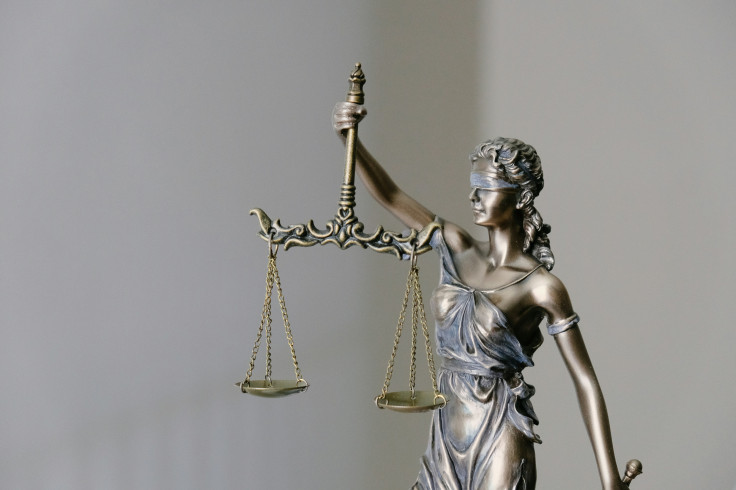
Illinois turns to a group of government lawyers when local prosecutors have a political, professional or personal conflict that prevents them from handling a criminal case.
But a recent Injustice Watch investigation has raised questions about whether the state's Special Prosecution Unit, which provides independent review in such cases, has itself faced allegations of misconduct, political entanglements and limited public oversight.
The Special Prosecution Unit sits within the Illinois State's Attorneys Appellate Prosecutor, or ILSAAP. The agency says the unit provides independent prosecution when a county state's attorney has a conflict of interest, or specialist assistance when a case is particularly complex.
Injustice Watch reported that the unit handled more than 1,000 cases in 2024 while operating with less direct electoral accountability than elected county prosecutors.
A Prosecution Scrutinised
The reporting examined allegations arising from the murder prosecution of Curtis Lovelace, a former Adams County assistant state's attorney. Lovelace was charged in 2014 over the death of his wife, Cory Lovelace, but the local state's attorney's office had a conflict because of his previous work there.
Injustice Watch reported that special prosecutors failed to disclose potentially exculpatory information concerning efforts to find a forensic pathologist who would support the prosecution's theory that Cory Lovelace had been murdered.
Lovelace's first trial ended with a deadlocked jury, while he was acquitted at a 2017 retrial after previously undisclosed material was turned over to his defence.
The prosecution was followed by a civil lawsuit against the Quincy Police Department and Adams County.
Injustice Watch reported that local authorities settled for $4.5 million while denying wrongdoing, and that a federal appellate court issued an opinion addressing allegations involving investigator Adam Gibson, deputy coroner James Keller and special prosecutor Edwin Parkinson.
The case does not establish misconduct by every prosecutor involved or a formal finding against the Special Prosecution Unit as a whole. But it raised questions about evidence disclosure in a prosecution brought by an agency intended to provide independence.
Lovelace told Injustice Watch that the lack of an obvious external check distinguished the unit from local elected prosecutors. 'When it comes to the state Special Prosecution Unit, you don't even have that,' he said.
Questions Over Independence
One report focused on Pietro Mautino, whose 2014 criminal case was transferred to the Special Prosecution Unit because of connections between his father, then-state Rep. Frank Mautino, and local prosecutors.
Injustice Watch reported that a political action committee sharing the unit's address and leadership had previously donated to Frank Mautino's campaign.
Mautino's charges stalled for three years before a special prosecutor offered a plea deal under which he received 24 months of special probation and avoided prison. The case file was later expunged, according to Injustice Watch.
Another report examined the 2016 death of Megan Wells in a Rock River boat crash. Injustice Watch reported that special prosecutor Dave Neal initially upgraded the case to seven felony charges but later abandoned six and offered defendant Marc Mongan a plea to a single charge that did not include allegations of alcohol consumption.
Injustice Watch also reported that Neal had previously arranged for Ogle County State's Attorney Eric Morrow, whom he replaced in the Wells case, to serve as a special prosecutor in neighbouring Lee County. These are case-specific concerns, not proof that political relationships determined an outcome.
Injustice Watch reported that legislation in 2010 described the agency as a judicial agency of state government, a designation that became central to litigation over its exemption from Illinois' Freedom of Information Act.
An Illinois courts spokesperson told Injustice Watch that there is no provision in the Illinois State's Attorneys Appellate Prosecutor Act requiring the Administrative Office of the Illinois Courts or the Illinois Supreme Court to provide oversight of ILSAAP. Individual prosecutions remain subject to court procedures and legal and ethical rules.
An Unresolved Accountability Question
ILSAAP says its Special Prosecution Unit provides independent assistance when local prosecutors cannot act. Its guidance says the unit is available when a conflict requires an 'independent, detached review and prosecution' or specialist assistance because of a case's complexity.
Injustice Watch reported that Special Prosecution Unit leaders declined to comment for its series and did not respond to detailed questions about the Lovelace case. The investigation raises questions about oversight of a prosecution system designed to operate independently when local prosecutors face conflicts of interest.
© Copyright IBTimes 2026. All rights reserved.
- Recommended For You