'The Choice Is Ours': UN Chief Warns as Survey Finds 36% Expect Major War's Impact Within a Year
The 2026 Global Risk Report, based on 1,300 stakeholders, also identifies climate inaction as the world's top assessed risk and highlights growing concerns over AI
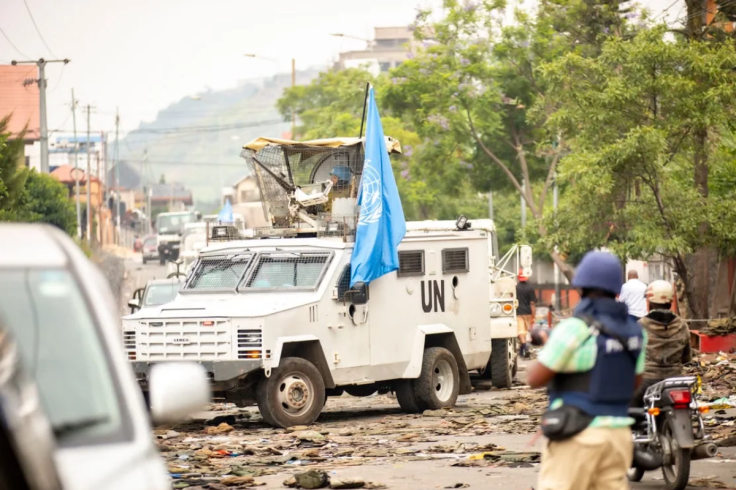
More than a third of stakeholders surveyed by the United Nations expect large-scale war to have a significant impact within the next twelve months, according to a sweeping new United Nations Global Risk Report based on responses from 1,300 stakeholders across 155 countries.
The 2026 Global Risk Report found that 36 per cent of respondents expect large-scale war to have a significant impact within a year, while 76 per cent expect it to do so within seven years. Secretary-General António Guterres said the findings leave the world with a stark choice to make, writing that 'the choice is ours'.
War Risk Climbs 16 Places in Two Years
The UN Global Risk Report found that large-scale war climbed sixteen places since the first such survey in 2024 in its assessment of imminence, the single largest upward shift recorded across all 28 risks assessed.
It is now viewed as one of the most interconnected risks, alongside geopolitical tensions, meaning respondents see it as both a driver and a consequence of other global crises.
Guterres, writing in the report's preface, said the world is 'living through a period of deep geopolitical turbulence' and that joint government action is viewed by respondents as the most effective means of prevention.
'The global risk landscape has grown more complex and more crowded,' he wrote. 'No country, no company, no institution can face these risks alone . . . We owe it to present and future generations to use this knowledge wisely, and to act while cooperation can still shape a safer course.'
AI and Frontier Tech Risks Surge as Preparedness Lags
Concerns over artificial intelligence and 'frontier technologies', including the risk of power becoming increasingly concentrated through technological control and influence, rose sharply compared with 2024.
The report found significant preparedness gaps around technology-related risks, with inadequate data and information identified as a major barrier.
Six years after the Covid-19 pandemic, meanwhile, concern about biorisks and new pandemics has fallen, with both risks declining in perceived importance.
The report's authors were careful to note that a risk should not necessarily be considered resolved simply because it has fallen in perceived importance.
The 2026 UN Global Risk Report shows that large-scale war is now seen as the world's greatest vulnerability, while concerns about AI & political risks are rising rapidly.
— United Nations (@UN) September 15, 2026
Respondents point to one clear solution: stronger international cooperation.
Read: https://t.co/3oambe4LHl pic.twitter.com/WRT4BQqs8o
Climate Inaction Remains the Top Risk Despite Geopolitical Concerns
Despite the surge in geopolitical and technological anxiety, climate change inaction remains the single most important risk of the 28 assessed, the report found, even as environmental risks as a category slightly declined in perceived importance overall. v
The report's authors were careful to note that perception does not always match conditions.
A risk should not be considered resolved simply because it has fallen down the rankings, they wrote, since political will and resources can follow where attention goes rather than where the danger actually lies.
The UN's findings echo the World Economic Forum's Global Risks Report 2026, which ranked geoeconomic confrontation as the top risk for a material global crisis in 2026, followed by state-based armed conflict.
Both reports point to heightened concern over armed conflict as a near-term risk.
That shift is also visible in spending patterns, with global military expenditure reaching a record $2.9 trillion in 2025, the eleventh consecutive year of growth, according to the Stockholm International Peace Research Institute, while military spending rose by 14 per cent in Europe and 8.1 per cent in Asia and Oceania.
The UN's findings come as governments continue to increase defence spending across several regions, while the report identifies large-scale war as a significant global risk.
It also identifies joint action between governments as the approach respondents consider most effective for addressing global risks, highlighting cooperation as a key response to a more complex risk landscape.
© Copyright IBTimes 2026. All rights reserved.
- Recommended For You