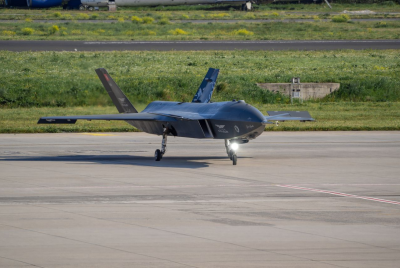
Japan's £81m Global Hawk Presumed To Have Crashed After Vanishing From Radar off Tottori
Debris and oil were found after the unmanned aircraft disappeared from radar, while officials investigate the cause of the incident

Japan's Air Self-Defense Force says one of its ¥17 billion (about £81 million) Global Hawk surveillance drones is presumed to have crashed into the sea off Tottori Prefecture, after it developed communications problems and vanished from radar about 50 kilometres off the coast on Tuesday, 15 September.
The missing RQ-4B was one of only three Global Hawks operated by Japan's air force from Misawa Air Base in Aomori Prefecture. Debris and oil were later spotted in the area where contact was lost, although officials said the cause remained under investigation.
Japan Global Hawk Lost Contact After Leaving Misawa
The unmanned reconnaissance aircraft took off from Misawa Air Base at about 10.20am. Problems connecting with its communications equipment began after 12.55pm, and its radar track disappeared at about 12.58pm.
Its last known position was over waters about 50 kilometres north of Tottori Prefecture, on Japan's north-western side. The nature of the mission has not been disclosed, and officials released no immediate details suggesting an external cause for the incident that day.
A fighter jet and a Japan Coast Guard patrol ship were sent to the area. Later on Tuesday, crews reported floating objects and oil on the sea surface, while photographs of debris were examined by the Air Self-Defense Force.
After reviewing those images, the service said it believed the Global Hawk had crashed shortly after disappearing from radar. No injuries or damage connected to the incident had been reported.
Officials said there was no immediate indication of external interference, and the cause remains under investigation.
Global Hawk Loss Could Reduce Japan's Surveillance Fleet
The missing aircraft represented one-third of Japan's small Global Hawk fleet. The Air Self-Defense Force operates three of the drones, all assigned to Misawa Air Base. If the presumed loss is confirmed, it would leave Japan with two remaining Global Hawks.
The aircraft has been valued at about ¥17 billion, according to Japanese reporting. The remotely operated aircraft can remain in the air for up to 36 hours and fly at about 60,000 feet, or 18.3 kilometres, allowing long-range warning and surveillance missions over wide areas.
The aircraft's long endurance allows Japan to conduct extended surveillance missions over wide areas.
The drones can monitor areas across the Asian mainland, including North Korea and China, without placing an aircrew on board.
Their range also makes them useful for persistent surveillance far from their home base.
The Air Self-Defense Force said this was the first time one of its Global Hawks had gone missing. Whether the remaining two aircraft face any operational restrictions has not been stated.
Japan Global Hawk Incident Comes During Wider Defence Shift
The loss comes as Japan is reshaping its defence planning around drones, artificial intelligence and other forms of modern warfare. Under a five-year strategy established in 2022, the country has doubled defence spending to about 2 per cent of gross domestic product while expanding the role and capabilities of the Self-Defense Forces.
Prime Minister Sanae Takaichi's government is also preparing new security and defence strategies expected later this year. China has criticised Japan's defence build-up, describing it as 'new militarism'.
The Global Hawk incident does not yet indicate how Japan's wider drone strategy may be affected. For now, authorities are continuing their investigation into the presumed crash and working to establish why the aircraft lost communications and disappeared from radar.
© Copyright IBTimes 2026. All rights reserved.
- Recommended For You