

Jason Collins Reveals Stage 4 Brain Cancer — What to Know About Deadly Glioblastoma
Jason Collins is battling Stage 4 Glioblastoma that has a prognosis of 'only 11 -14 months'
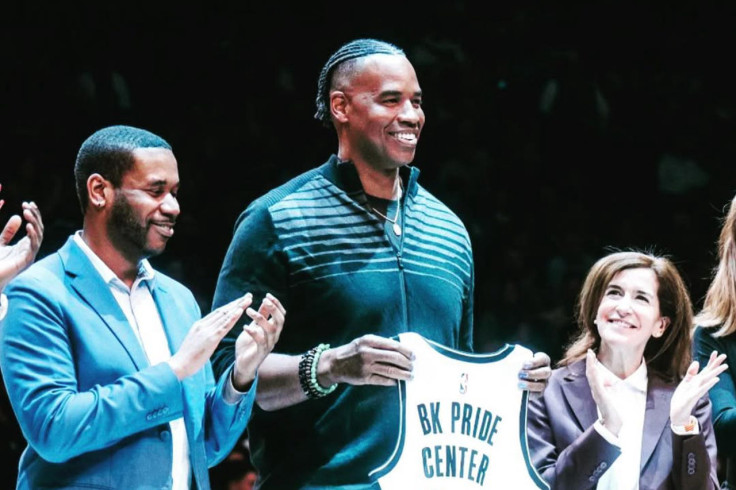
NBA veteran and first active openly gay player in NBA history, Jason Collins, who played for six teams across his 13-year basketball career, has revealed that he is battling stage 4 cancer called glioblastoma. Here is everything to know about glioblastoma and its deadliness.
The veteran NBA player, now 47 years old, has told ESPN that he is battling stage 4 brain cancer, glioblastoma, and is receiving treatment for it. He is going solely with the 'standard of care.'
Given the nature of his cancer, it could not be fully removed without Collins coming out of surgery 'different.'
Collins also shared that the prognosis for cancer like his is 'only 11 -14 months.'
'Because my tumor is unresectable, going solely with the 'standard of care' — radiation and TMZ — the average prognosis is only 11 to 14 months. If that's all the time I have left, I'd rather spend it trying a course of treatment that might one day be a new standard of care for everyone.'
He added, 'Currently I'm receiving treatment at a clinic in Singapore that offers targeted chemotherapy — using EDVs — a delivery mechanism that acts as a Trojan horse, seeking out proteins only found in glioblastomas to deliver its toxic payload past the blood-brain barrier and straight into my tumors.'
In September, Collins' family released a statement on his social media revealing his diagnosis, as he said he was mentally unable to speak for himself.
The former Nets centre shared that around August, he was experiencing 'weird symptoms' that caused him and his husband, Brunson Green, to miss a flight.
'We were supposed to go to the US Open, just as every year, but when the car came to take us to the airport, I was nowhere near ready. And for the first time in decades, we missed the flight because I couldn't stay focused to pack,' Collins said.
Collins also shared how he became like an NBA player version of 'Dory' from Disney's animated film Finding Nemo because of the cancer.
He said, 'According to my family, in hours, my mental clarity, short-term memory, and comprehension disappeared — turning into an NBA player's version of "Dory" from "Finding Nemo."'
What is Glioblastoma?
Glioblastoma, also known as glioblastoma multiforme (GBM), is considered to be the deadliest and most aggressive form of brain cancer
It develops from astrocytes, supportive cells in the brain, and is classified as a Grade IV tumour, meaning it grows rapidly and infiltrates surrounding tissue, and it is often unresectable, meaning surgery cannot remove it entirely.
According to The Brain Tumour Charity, Glioblastoma carries a poor prognosis, with a median survival of around 12–18 months and a five-year survival rate of just 5–10%, even with standard treatment such as surgery, radiation, and chemotherapy
Collins told ESPN how dangerous glioblastoma is, as it grows within the very finite, contained space of the skull, and is highly aggressive, making his case particularly difficult.
He said, 'In my case is that it's surrounded by the brain and is encroaching upon the frontal lobe, which is what makes you, "you."'
His glioblastoma, he said, is 'multiforme' with a 30% growth factor and a 'wild type,' making it more deadly and difficult to treat, but the former NBA player pledged to explore innovative treatments to help himself or others with Stage 4 glioblastoma.
Jason Collins On Finding Out His Diagnosis
According to Collins, when the doctor was explaining the diagnosis, he was 'totally out of it' and that everything was explained to his husband and family.
Lastly, Collins shared how he is the same but at the same time different from his grandmother, who was also diagnosed with cancer.
'When my grandmother got sick with Stage 4 stomach cancer, she didn't like people saying the word "cancer." She never wanted that word being spoken. I am on the opposite end of the spectrum.'
He continued, 'I don't care if you say the word. I have cancer, but just like my grandmother fought it, I'm going to fight it.'
© Copyright IBTimes 2026. All rights reserved.