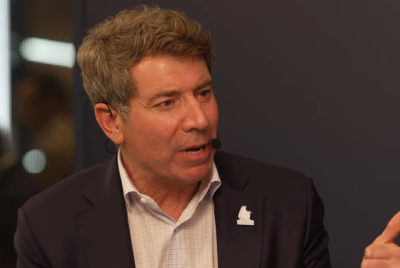
Kevin O'Leary Predicts the Strait of Hormuz Crisis Will be Resolved in The Next 30 Days
O'Leary believes oil prices at $93 per barrel for a quarter could trigger a global catastrophe


Amid reports that Iran could keep the Strait of Hormuz closed for up to six months, Shark Tank star Kevin O'Leary believes data from his Abu Dhabi office indicates that the issues surrounding the blockage could be addressed in 30 days.
In a recent interview with CNN, O'Leary said he liked history as his guide and that for the Hormuz blockage to really impact the US economy and drive sustained inflation, oil prices must be at least $93 per barrel for at least three months.
He added that the markets are not pricing in a resolution of the Hormuz problem in 6 months, but only in 30 days, and a prolonged situation could be a global catastrophe for the US and the world.
Oil Essential For Every US Sector
'The one thing about this commodity is that it is the input to every sector. We have 11 sectors. Every single sector requires a reasonably priced energy source,' O'Leary said, adding that the duration of closure matters more than headlines because limited oil supply could keep crude elevated, eventually squeezing businesses and consumers.
The entrepreneur stated that when oil holds above $93 for a quarter, every major slice of the US economy starts to deteriorate, where higher energy costs spread beyond transportation and into broader demand.
'What matters is opening up that two-mile-wide spigot, at the thinnest of the Hormuz. You have to guarantee that it stays open. I anticipate that the Japanese, and even the Chinese, will fund that insurance program going forward. It could cost billions of dollars, but that's a fraction of what it is worth,' O'Leary explained.
He also singled out Japan's vulnerability, noting that a major chunk of inbound supplies is exposed if flows are interrupted. O'Leary put that exposure at 70% of Japan's imports being at risk.
What Can US Do To Lower Oil Prices?
In response to a question about what the US can do to bring down oil prices in the short term, O'Leary said a multinational strategy using the latest technology to keep the 2-mile stretch in the Hormuz open could bring prices down to as low as $70 in a very short span.
Earlier, O'Leary had cautioned that higher oil prices for longer durations could affect American consumers, describing energy as the 'grandaddy issue' for the upcoming midterms. He had warned that oil prices between $90 and $100 per barrel could drive up gasoline prices sharply, directly affecting every US household
However, US President Donald Trump's 48-hour ultimatum to Iran to open the Strait and Iran's defiant response, targeting every US energy asset in the Middle East, have pushed markets to the edge, with US stock futures declining early Monday in tandem with gold prices.
The International Energy Agency's executive director, Fatih Birol, said that at least 40 energy assets across Middle East countries have been 'severely or very severely' damaged since the beginning of the conflict, and that it would take some time to repair damages to oil and gas fields, refineries, and pipelines across the Middle East.
Birol believes the Strait of Hormuz blockade is creating the largest supply disruption in the global oil market. LNG supply worldwide has also tanked by 20% since the conflict began on 28th February.
Disclaimer: Our digital media content is for informational purposes only and not investment advice. Please conduct your own analysis or seek professional advice before investing. Remember, investments are subject to market risks and past performance doesn't indicate future returns.
© Copyright IBTimes 2026. All rights reserved.
- MOST POPULAR IN Invest