Why Did Iran Close the Strait of Hormuz Hours After Donald Trump Said It Was Open?
In a few volatile hours, the world's most sensitive oil corridor became a stage for clashing claims, hard power and the limits of Donald Trump's word.

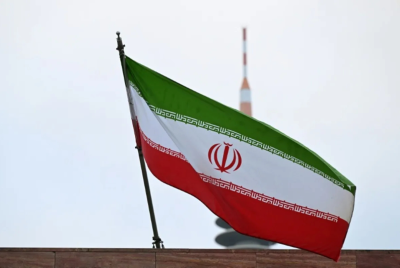
Donald Trump was left wrong-footed on Saturday 18 April after Iran's military leadership declared that control of the Strait of Hormuz had reverted to 'its previous state,' just hours after Trump had publicly claimed Tehran had agreed never to close the vital waterway again.
This followed a flurry of overnight statements from both sides that, taken together, read less like a carefully choreographed diplomatic breakthrough and more like a public tug of war over who is really calling the shots in the world's most sensitive shipping lane.
For those not following every twist, the dispute centres on a US blockade of Iranian ports, Iran's retaliatory squeeze on oil traffic through the Strait, and a US president who insists he has secured concessions that Iranian officials do not recognise.
Iran Pushes Back After Trump Boasts of Victory
In its Saturday announcement, Iran's joint military command said 'control of the Strait of Hormuz has returned to its previous state ... under strict management and control of the armed forces.' It explicitly warned that it would continue to restrict transit through the channel for as long as the US blockade of Iranian ports remained in place.
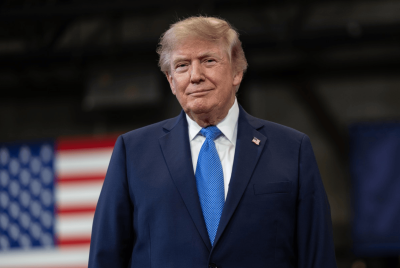
That directly undercut Trump's triumphant message on his Truth Social platform posted earlier. Trump told his followers that 'Iran has agreed to never close the Strait of Hormuz again. It will no longer be used as a weapon against the world.'
At this stage, there is no supporting evidence from Tehran or any joint communiqué to back that claim, and Iranian officials appear to be saying the opposite. Nothing has been confirmed beyond the duelling statements, so any suggestion of a firm agreement remains unverified.

Iran's military position hardened after Trump said the American blockade 'will remain in full force' until Tehran reaches a new agreement with Washington, including on its nuclear programme. The idea that the Strait was on its way to being fully reopened, at least on US terms, did not survive until daybreak.
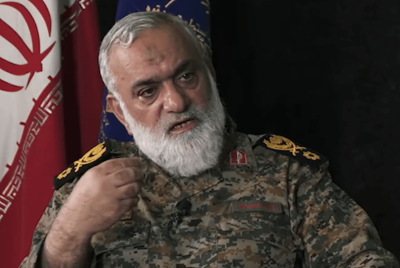
In a separate intervention, Ebrahim Azizi, head of Iran's National Security Committee, set out what Iranian authorities say will now happen in the Strait of Hormuz. According to his statement, only commercial vessels with specific authorisation from the Islamic Revolutionary Guard Corps (IRGC) Navy will be allowed to pass, and only after paying what he described as 'required tolls.'
Azizi declared, 'The time has come to comply with a new maritime regime for the Strait of Hormuz.' He also issued a pointed warning that 'if the US attempts to create any disturbance for Iranian ships this situation can be easily changed,' signalling that Iran sees the waterway as leverage so long as US restrictions on its ports remain.

Strait of Hormuz Row Entangles Trump's China Plans
The diplomatic theatre around Trump did not stop with Iran. In his posts, the president also drew China's leader into the drama, insisting that President Xi Jinping was pleased with the supposed progress.
'President Xi is very happy that the Strait of Hormuz is open and/or rapidly opening,' Trump wrote, again without corroboration from Beijing. He went on to say, 'Our meeting in China will be a special one and, potentially, historic. I look forward to being with President Xi — much will be accomplished!'
Azizi, for his part, claimed he had made Xi 'very happy' with the earlier announcement of a reopening of the Strait ahead of what he called a 'historic' meeting. That account is now muddied by the rapid reversal and Iran's insistence that it will keep a tight grip on maritime traffic while the US blockade stands. There is no independent confirmation of Xi's private reaction, and both men appear to be invoking the Chinese president's satisfaction to bolster their own narratives.
For Washington, the episode underlines how public messaging from Trump can clash with on the ground reality in contested regions. The president's assertion that Iran had agreed never again to weaponise the Strait of Hormuz sits awkwardly beside an Iranian military statement that amounts to a renewed show of control, complete with tolls, permissions and the threat of further escalation.
For Tehran, the reversal sends a different message. By snapping back to tougher rules just after Trump vowed to maintain the US blockade, Iranian commanders are making clear they view the Strait not as a neutral corridor but as a pressure point. The reference to a 'new maritime regime' suggests officials intend to extract both political and financial concessions from any shipowner hoping to move oil through the narrows while sanctions continue.

Commodity traders and governments will be left to parse these conflicting declarations, with little verifiable detail and no sign yet of a mutually acknowledged deal. Until either side produces something more concrete than social media posts and state statements, the status of the Strait of Hormuz will remain as contested as the claims surrounding Trump's role in it.
© Copyright IBTimes 2026. All rights reserved.
- Recommended For You