'Completely Unacceptable': Strait of Hormuz Could Take 6 Months to Fully Open But Pentagon Dismisses Report
Amid escalating tensions, the Pentagon refutes reports of a prolonged closure of the vital Strait of Hormuz.

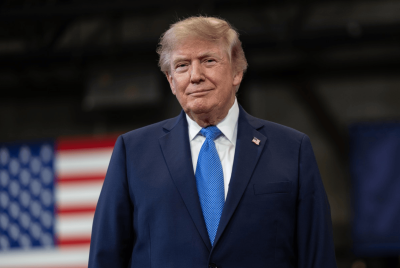
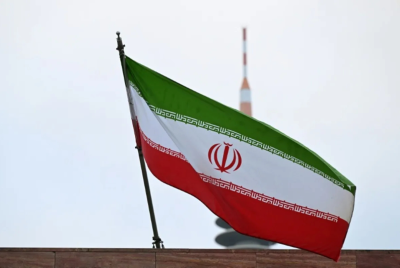
The world has been waiting for Iran to reopen the Strait of Hormuz amid its conflict with the United States, which has led to a gas price hike. President Donald Trump has been actively working on reopening it and soothing the broadening conflict with Iran. However, according to a new report, the administration failed to tell the public that it would actually take half a year to fully open the Strait of Hormuz once the two nations reconcile.
High-level briefings with lawmakers suggest a prolonged maritime blackout in one of the world's most vital sea lanes. However, the Pentagon chief spokesperson has denied the claim.
Pentagon Dismisses Claims of a Prolonged Maritime Crisis
A recent report by The Washington Post alleged that the Pentagon informed Congress that clearing mines and fully reopening the Strait of Hormuz could take up to six months. This assessment has caused significant alarm in international markets, as the waterway serves as the primary artery for global energy supplies.
The outlet cited three officials, who reportedly spoke on the condition of anonymity, saying lawmakers were told Iran likely seeded the Strait of Hormuz with at least 20 naval mines, threatening the stability of a primary global energy corridor. To circumvent American surveillance, Tehran reportedly utilised a mix of small watercraft and advanced, GPS-guided floating technology to position the explosives.
Although these tactical manoeuvres complicate detection efforts, Pentagon officials have notably avoided clarifying the potential duration required to neutralise the threat and restore safe passage to the waterway.
However, Sean Parnell, the Pentagon's chief spokesperson, dismissed the claim, calling it 'inaccurate'. According to him, the report is 'cherry picking leaked information, much of which is false'.
Parnell further clarified the military's stance on the feasibility of such a long-term disruption. He added, 'as we said in March, one assessment does not mean the assessment is plausible, and a six-month closure of the Strait of Hormuz is an impossibility and completely unacceptable'.
He also issued a scathing remark against the publication for the report.
'By deciding to publish this these false claims, the Washington Post has made clear they care more about advancing an agenda than truth,' he said in a statement.
So apparently the government believes it'll take six months to fully open the Strait of Hormuz once the Iran war actually ends, but Trump won't admit that to the American people. This is going to be really bad,. pic.twitter.com/r67nayJYxa
— Mike Nellis (@MikeNellis) April 23, 2026
Iran Targets Merchant Vessels Despite Ceasefire Extension
The tension regarding the waterway's accessibility comes amid a sharp escalation in naval hostilities. President Donald Trump recently declared an extension to a standing ceasefire, yet Iranian forces appear to have ignored the diplomatic gesture entirely.
On Tuesday, Iranian units fired upon three cargo ships and successfully seized two. This aggressive posture followed the US seizure of the Iranian-flagged cargo vessel, the Touska, which was intercepted during the purported ceasefire period.
The White House has remained largely silent on the specific details of these naval skirmishes. This lack of communication has increased uncertainty about the rules of engagement currently in place in the Persian Gulf.
Strategic Risks to Global Energy and Trade Arteries
The significance of the Strait of Hormuz cannot be overstated. According to the International Energy Agency's 2025 report, about 34 per cent of global crude oil trade passes through the Strait of Hormuz. Any sustained closure would likely trigger a dramatic increase in gas prices.
Experts warn that the conflict could soon expand to other regional chokepoints. Zahra Kharazmi, an assistant professor in the Faculty of World Studies, suggested that Iran could also close the Bab al-Mandeb Strait amid the ongoing conflict.
Such a move would effectively blockade the Red Sea, forcing global trade to reroute around the entire African continent. This dual-front maritime crisis would place unprecedented strain on international shipping and global economic stability.
The US Navy has countered regional aggression by implementing a blockade. US President Trump has also ordered the Navy to 'shoot and kill any boat' seeding mines in the strait.
'There is to be no hesitation. Additionally, our mine 'sweepers' are clearing the Strait right now,' Trump wrote on Truth Social.
© Copyright IBTimes 2026. All rights reserved.
- Recommended For You