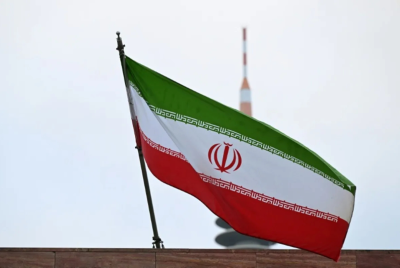
Global Oil Prices Collapse as Iran Flashes Green Light at Hormuz, but Trump Refuses to Blink on Naval Blockade
A narrow waterway may be open again, but the political currents swirling around Donald Trump, Iran and the wider Middle East remain as treacherous as ever.

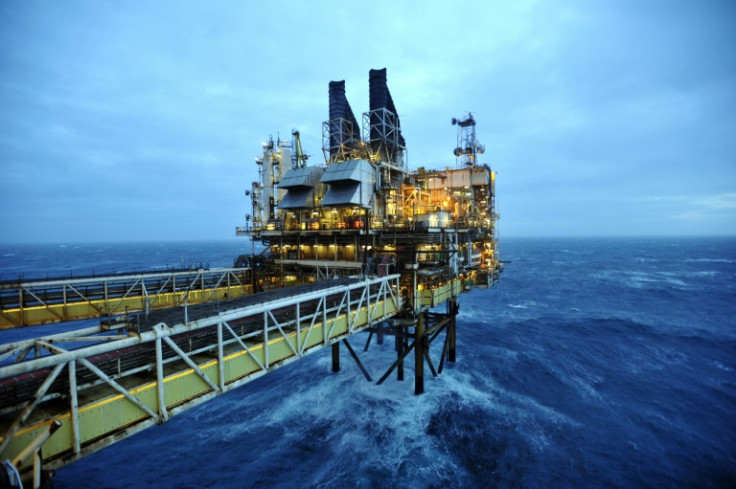
Global oil prices tumbled on Friday after Donald Trump confirmed that Iran had reopened the Strait of Hormuz to commercial shipping during a fragile Middle East ceasefire, even as he insisted a US naval blockade of Iranian ports would stay firmly in place.
Tehran's move follows a 10-day ceasefire agreed on Thursday between Israel and Lebanon, starting at 5 p.m. ET, aimed at pausing Israel's military campaign against Hezbollah, the Iran-aligned militant group embedded in southern Lebanon. That conflict has repeatedly complicated attempts by Washington and Tehran to strike any broader deal, and the Strait of Hormuz has become the most visible pressure point.
Iran's foreign minister, Seyed Abbas Araghchi, announced on social media that 'in line with the ceasefire in Lebanon' the passage for all commercial vessels through the strait was now 'completely open' for the remainder of the truce. Ships, however, are required to sail along what he called a 'coordinated route' laid down by Iranian maritime authorities, a condition that effectively keeps Tehran in control of traffic patterns even as it signals cooperation.
In line with the ceasefire in Lebanon, the passage for all commercial vessels through Strait of Hormuz is declared completely open for the remaining period of ceasefire, on the coordinated route as already announced by Ports and Maritime Organisation of the Islamic Rep. of Iran.
— Seyed Abbas Araghchi (@araghchi) April 17, 2026
The fine print matters. Before the war, roughly a fifth of the world's crude oil supplies moved through this bottleneck between the Persian Gulf and the open seas. Its near closure in recent weeks has produced what officials and analysts describe as the largest oil supply disruption in modern history, driving prices sharply higher and rattling governments already wrestling with inflation. On Friday, the pendulum swung the other way, with crude prices plunging more than 11% in the hours after Iran's announcement.
Trump, never shy about claiming credit, publicly thanked Iran for reopening the strait in his own social media post. Yet he immediately drew a red line, stressing that the US naval blockade of Iran's ports would remain in force until a broader agreement with Tehran is signed. That stance leaves global shipping in an uneasy in‑between state: tankers can move through Hormuz again, but Tehran's export lifelines stay squeezed.
Donald Trump, Iran And A Deal Under Strain
To recall, Trump had already agreed to a two-week ceasefire with Iran on 7 April. In exchange, according to both sides, Tehran was to fully reopen the Strait of Hormuz. On paper, the understanding looked straightforward. In practice, it has been anything but.
Iran's parliamentary speaker, Mohammad Bagher Ghalibaf, has accused Washington of breaching the spirit of that deal by 'allowing' Israel to continue its campaign in Lebanon. From the Iranian side, the logic is blunt: how can there be a meaningful ceasefire arrangement if its ally Hezbollah remains under fire?
US officials, for their part, have not accepted that framing, and Trump has shown no inclination to treat Israeli military decisions as a lever in talks with Tehran. The result has been a stand-off in which both claim the moral high ground while oil tankers sit idle or creep through Hormuz in tiny numbers.
Despite the formal ceasefire, the strait has been almost entirely shut for most commercial shipping during the US–Iran pause, with only a handful of vessels making the passage each day. Friday's declaration by Araghchi appears to be Tehran's attempt to signal compliance with the April deal on its own terms, even as it keeps up the rhetorical pressure on Washington over Lebanon.
Hormuz Reopens, But Blockade Keeps Pressure On Donald Trump
The awkward reality for Donald Trump is that this partial breakthrough on Hormuz has not yet translated into a broader strategic win. The US president insists the naval blockade of Iranian ports will continue until there is a comprehensive settlement to 'end the US war with Iran', but the diplomacy keeps stalling at the last hurdle.
Negotiations between US Vice President JD Vance and Ghalibaf last weekend in Pakistan failed to produce a permanent agreement. The talks were billed as a serious attempt to end hostilities and stabilise the region's energy flows. Instead, they ran aground over familiar disputes on sequencing, guarantees and the role of Israel's campaign in Lebanon.
Trump has floated the possibility that US and Iranian negotiators could return to Pakistan for a second round of talks as soon as this weekend. As ever with this White House, the timing and scope remain hazy, and nothing is confirmed yet, so everything should be taken with a grain of salt. What is clear is that oil markets are trading almost minute by minute on political hints and half-signals.
The latest price slide reflects traders' belief that, for now at least, tankers can resume a more normal transit through Hormuz. But the US blockade means Iran's own ability to export remains throttled, and the ceasefire on which the reopening rests is only 10 days long. Any renewed fighting between Israel and Hezbollah, or a breakdown in US–Iran talks in Pakistan, could see the strait weaponised again.
Officials on all sides are keeping their public comments cautiously upbeat while hedging their bets. Iran has framed the reopening of Hormuz as a responsible step tied to the Lebanon ceasefire. Trump has framed his thanks as conditional, bound up with a wider demand for concessions from Tehran. In the middle sit shipping companies and energy-importing states, attempting to plan around a conflict whose rules seem to change every few days.
For now, the green light at Hormuz has offered a brief reprieve to consumers and policymakers watching fuel prices, but with the blockade unresolved and the ceasefire clock already ticking down, the calm looks more like a pause than a peace.
© Copyright IBTimes 2026. All rights reserved.
- Recommended For You