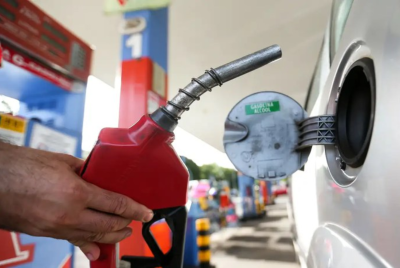
When Are Gas Prices Going to Drop Below $3? Chris Wright Warns Relief Is Coming—Just Not as Expected
Despite stabilizing energy markets, motorists face prolonged high fuel costs due to geopolitical tensions

Energy markets shaken by months of geopolitical tension are beginning to steady, according to Chris Wright, who says the surge in gas prices linked to the Iran conflict has already 'peaked'. Yet while that signals a turning point, the relief many households are hoping for — particularly a return to prices below $3 (£2.23) a gallon — may take longer than anticipated.
According to a New York Post article, Wright, speaking on State of the Union, struck a measured tone, suggesting that although pressures at the pump are easing, the pace of change will be gradual. For families already stretched by high living costs, the warning is clear: prices may fall, but not fast enough to ease the burden immediately.
Gas Prices 'Peaked'—But the Road Down Is Uneven
Figures from GasBuddy show average gas prices climbed to $4.16 (£3.09) per gallon earlier this month before beginning to stabilise. While that marks a slowdown in the upward trend, it still leaves motorists paying well above what many consider affordable.
Wright emphasised that the peak came amid what he described as 'the largest interruption' to global energy flows, largely driven by instability in the Middle East. Despite that disruption, prices have not surpassed previous highs seen in 2022, a detail Wright pointed to as evidence that the situation, while serious, has been contained.
'Prices have likely peaked, and they'll start going down,' he said, adding that any decline will unfold over weeks rather than days. Data from the American Automobile Association shows national averages still hovering above $4 (£2.98) per gallon, underscoring how limited the immediate relief may be.
Why the Drop Below $3 May Take Time
Although the direction of travel appears positive, Wright cautioned that a return to sub-$3 (£2.23) gas prices is not imminent. Before the Iran conflict escalated earlier this year, fuel costs had dipped below that level, making its absence particularly noticeable for consumers.
'That might not happen until next year,' he noted, pointing to broader economic factors and the lingering effects of supply disruptions. Even as prices begin to edge down, they remain elevated enough to impact daily life—from commuting expenses to the cost of goods transported across the country.
Global Tensions Still Shape Local Prices
At the heart of the issue is the vulnerability of global oil supply routes, particularly the Strait of Hormuz, through which a significant share of the world's oil passes. Disruptions in this corridor have had ripple effects across international markets, tightening supply and pushing prices higher.
Efforts to stabilise the situation have included coordinated action by the International Energy Agency, which released approximately 400 million barrels of oil to offset shortages. These measures helped prevent sharper spikes, but have not fully reversed the upward pressure on prices.
The United States has also encouraged allies to diversify supply sources, contributing to easing immediate pressure on global markets.

A Fragile Path to Stability
Recent developments, including a temporary ceasefire between the US and Iran, have raised cautious optimism that tensions may ease further. Wright suggested that a lasting resolution would accelerate the downward trend in gas prices, offering more meaningful relief to consumers.
'Certainly, with a resolution of this conflict, you'll see prices go down,' he said, linking future stability directly to diplomatic outcomes.
However, the situation remains fluid. Any renewed escalation could quickly disrupt supply chains again, reversing recent gains and prolonging high costs for motorists.
What This Means for Motorists Now
For everyday motorists, the outlook is a mix of reassurance and restraint. The worst of the price surge may be behind them, but the benefits of that shift are unlikely to be felt immediately. Commuters, delivery drivers, and small businesses dependent on fuel are still navigating elevated costs that affect both budgets and pricing decisions.
Wright made his remarks on CNN's State of the Union on Sunday, 19 April 2026. The US-Iran ceasefire is due to expire on 21 April 2026. Wright's department has not issued a formal timeline for when prices are expected to fall below $3 (£2.23) a gallon.
In practical terms, Wright's message is one of tempered expectations. The drop is coming—but not in the swift, dramatic way many might hope. Instead, motorists are likely to see a gradual easing of pressure, with true affordability still some distance away.
© Copyright IBTimes 2026. All rights reserved.
- Recommended For You