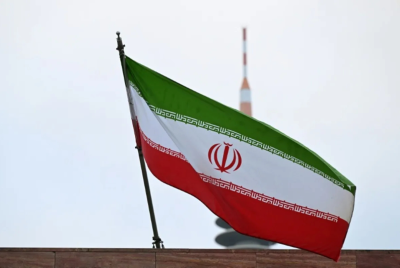
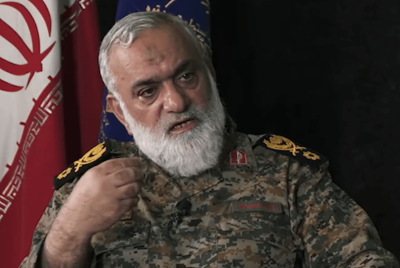
Iran Issues Urgent 30-Day Ultimatum to End War as Tehran Unveils Bold 14-Point Peace Proposal to Trump
Tehran demands a swift resolution to the conflict, challenging US preferences for a prolonged ceasefire

Tehran has drawn a sharp line in the sand: resolve the war within 30 days, or the path back to diplomacy grows narrower by the hour.
Iran submitted a comprehensive 14-point peace proposal to the United States via Pakistani intermediaries on 1 May 2026, rejecting Washington's preference for a prolonged two-month ceasefire and demanding full resolution of the conflict within a month. President Trump told reporters on Saturday he is reviewing the new plan, though he expressed doubt it would lead to a deal. The proposal arrives on day 65 of a conflict that has reshaped the Middle East, battered global energy markets, and left two nuclear-capable powers locked in an increasingly fragile standoff.
A War That Began With a Funeral Pyre in Tehran
On 28 February 2026, Israel and the United States launched airstrikes against Iran, killing its supreme leader and many other officials, destroying military and government targets, and killing civilians. Iran responded with missile and drone strikes against Israel, US bases, and US-allied countries across the Middle East, and by closing the Strait of Hormuz, disrupting global trade.
A two-week ceasefire brokered by Pakistan followed on 8 April 2026, after Iran rejected a 45-day two-phased framework and proposed its own 10-point peace plan. That truce has since been extended but remains deeply fragile, punctuated by naval skirmishes, ship seizures, and a dual blockade choking one of the world's most vital maritime corridors.
🚨IRAN NEW THREE STAGE PEACE PLAN
— Sulaiman Ahmed (@ShaykhSulaiman) May 3, 2026
Stage 1:
✅ End War in 30 Days Including in Lebanon
✅ Gradual Opening of the Strait of Hormuz,
✅ Lift U.S Blockade
✅ U.S. Military Withdrawal from Iran's Borders
✅ Iran to clear mines.
Stage 2:
✅ Complete Freeze on Uranium Enrichment… pic.twitter.com/qBMZeIEtEv
What Tehran Is Actually Demanding
Iran's 14-point proposal is, in essence, a rebuttal to a nine-point framework previously tabled by Washington, and it goes far beyond a simple ceasefire extension. It calls for guarantees against future attacks, a US troop withdrawal from around Iran, the release of frozen assets worth billions of dollars, the lifting of sanctions, war reparations, an end to all hostilities, including in Lebanon, and a new mechanism for the Strait of Hormuz.
Tehran also wants its uranium enrichment rights guaranteed under the Non-Proliferation Treaty, but Trump has made the nuclear issue a 'red line'. Iran's Deputy Foreign Minister Kazem Gharibabadi stated after delivery: 'Now the ball is in the United States' court to choose the path of diplomacy or the continuation of a confrontational approach.'
The reparations demand carries particular weight. Iranian government spokesperson Fatemeh Mohajerani put losses from the US-Israeli campaign at around $270 billion (£216 billion), with the Washington-based Foundation for Defense of Democracies, a think tank that has advocated for sustained pressure on Iran, placing the figure at roughly $150–$300 billion (£120–£240 billion). Iran's central bank has warned President Masoud Pezeshkian that rebuilding the war-damaged economy could take more than a decade.
The Strait of Hormuz: The War's Most Dangerous Fault Line
No issue is more intractable, or more consequential, than the Strait of Hormuz. Iran has largely blocked shipping through the strait since 28 February, with the IRGC forbidding passage, attacking merchant ships, and laying sea mines. Since 13 April, the US has blockaded Iranian ports, creating a 'dual blockade' across a waterway that carries around 20 million barrels of oil per day, roughly 20 per cent of global seaborne oil trade, according to the US Energy Information Administration.
Kenneth Katzman, a senior fellow at the Soufan Center in New York, told Al Jazeera that Iran's deep mistrust of Trump remains the principal obstacle. 'The issue is that Iran really mistrusts Trump and does not want to move into full discussion until this blockade is lifted. That's a problem that could lead to US escalation,' he said.
🇮🇷🇺🇸 Iran is quietly pushing a 30-day roadmap to end the war, and the details are where it gets interesting…
— Mario Nawfal (@MarioNawfal) May 3, 2026
The proposal was relayed to the U.S. by Pakistan and breaks down into 3 short phases:
Phase 1: De-escalation
Iran would reopen the Strait of Hormuz, take charge of… https://t.co/ip1kT7k8yI pic.twitter.com/BVqAt5NiR4
Trump's Response: Sceptical, But Not Closed
Trump acknowledged the proposal publicly on Saturday but with characteristic wariness, writing on Truth Social that he 'can't imagine that it would be acceptable in that they have not yet paid a big enough price for what they have done to Humanity, and the World, over the last 47 years.' He warned Washington could restart air strikes if Tehran 'misbehaves.'
TRUMP SAYS HE HAS NOT REVIEWED IRAN PLAN
— Sulaiman Ahmed (@ShaykhSulaiman) May 2, 2026
“I will soon be reviewing the plan that Iran has just sent to us, but can’t imagine that it would be acceptable in that they have not yet paid a big enough price for what they have done to Humanity, and the World, over the last 47 years.… pic.twitter.com/SAqrFH48wG
Paul Musgrave, an associate professor of government at Georgetown University in Qatar, offered a measured read of Tehran's posture. 'There is a slight softening in the proposal,' he told Al Jazeera, noting Iran may have dropped its precondition that the US lift its distant blockade before talks begin. 'But on the two biggest issues, enrichment of uranium and transferring its highly enriched uranium, the US and Iran remain far apart.'
With the International Monetary Fund projecting Iran's economy will shrink by 6.1 per cent in 2026, with inflation running at 68.9 per cent, Tehran's urgency is not merely strategic; it is existential. Whether Washington treats this 30-day window as a genuine diplomatic opening or allows it to expire in the fog of mutual suspicion will define not only the fate of this conflict but the shape of the Middle East for a generation.
© Copyright IBTimes 2026. All rights reserved.
- Recommended For You