Trump Turned to China for Hormuz Help After NATO Allies Flatly Refused to Get Involved
Amid NATO's refusal, the US seeks China's assistance to reopen a critical oil shipping lane

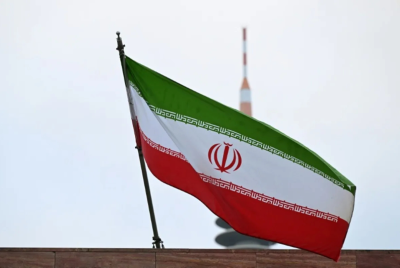
Washington's appeal to Beijing over the Strait of Hormuz has highlighted the contradictions in Trump's foreign policy. After a prolonged trade dispute with China, the United States has turned to the same rival for help reopening one of the world's most critical oil shipping lanes, following refusals from America's traditional NATO partners.
Trump demanded that NATO and China help reopen the Strait of Hormuz, which had been effectively closed since late February when Iran shut it down in retaliation for US and Israeli strikes, NBC News reported. The appeal marked a significant pivot — one made all the more notable given the years of tariffs, threats and diplomatic friction that have defined Washington's relationship with Beijing.
Allies Draw the Line
The response from NATO was swift and direct. German Defence Minister Boris Pistorius told reporters: 'This is not our war. We have not started it.'
A spokesman for German Chancellor Friedrich Merz went further, saying: 'This war has nothing to do with NATO. It is not NATO's war. Participation has not been considered before the war and is not being considered now.' Officials in Italy, Japan and Australia also confirmed their countries would not take part.
British Prime Minister Keir Starmer made clear he would not be drawn into 'the wider war,' and said any Hormuz mission should be a broader effort rather than something for NATO. Japan and Australia said they had no plans to send ships. Even the EU's foreign policy chief, Kaja Kallas, responded coolly, saying the strait is 'out of NATO's area of action,' adding there was 'no appetite' for expanding naval operations in the region.
Trump wrote on social media: 'I always considered NATO, where we spend Hundreds of Billions of Dollars per year protecting these same Countries, to be a one way street. We will protect them, but they will do nothing for us, in particular, in a time of need.'
Beijing Stays Silent
With traditional allies having refused, Washington's attention shifted toward China — despite the two countries being locked in an ongoing trade dispute. China remained publicly silent after Trump urged Beijing to help reopen the strait. Chinese officials declined to directly address Trump's request when asked during a daily briefing, instead reiterating Beijing's broader call for de-escalation.
Beijing's silence carries its own weight. In 2024, an estimated 84% of crude oil shipments through the strait were destined for Asian markets, with China receiving a third of its oil via the strait. China has an enormous economic stake in the waterway, but has stopped short of any military commitment.
China has instead called the US blockade of Iranian ports a 'dangerous and irresponsible act' that risks undermining an 'already fragile ceasefire situation.' Foreign Ministry spokesman Guo Jiakun stated that 'only by achieving a comprehensive ceasefire and ending the war can we fundamentally create conditions for easing the situation in the strait.'
🚨 🇺🇸JUST IN: The US just asked China to help reopen the Strait of Hormuz.
— Brian Allen (@allenanalysis) May 4, 2026
The same China Trump has been in a trade war with.
The same China an Iranian supertanker just delivered $220 million in oil to — bypassing the blockade.
The same China Lindsey Graham said he wanted to… pic.twitter.com/99UeZm80LR
A Coalition Excluding China
The diplomatic picture became more complicated when the State Department moved to formalise its outreach. According to an internal memo seen by NBC News, the State Department sought to create a new coalition called the 'Maritime Freedom Construct' — but diplomatic posts were explicitly told not to reach out to 'US adversaries, including Russia, China, Belarus, and Cuba.' China, the very country Trump had personally appealed to, was explicitly excluded from the formal effort.
Abdul Khalique, a professor at Liverpool John Moores University, told Al Jazeera that 'rising geopolitical rivalry' is increasingly 'spilling into maritime chokepoints, from the Panama Canal to the Strait of Hormuz,' warning of 'higher baseline risk, politicised shipping lanes, and more frequent disruptions to commercial flows.'
The Strait of Hormuz is not a peripheral concern. Around 20% of global petroleum and 20% of liquefied natural gas traverses the strait each year, with vessel numbers now standing at around 5% of pre-conflict levels. The ongoing blockade has pushed global oil and gas prices sharply higher, with cascading effects on consumers and economies far beyond the Middle East. Whether Washington can find willing partners — or whether it must go it alone — will have consequences felt well beyond the Persian Gulf.
© Copyright IBTimes 2026. All rights reserved.
- Recommended For You