

Leaked Photos of Pam Bondi's Binder Show Epstein-Related Search History of Congress Members
House hearing photos that appear to show search records from unredacted Epstein files stir accusations of unlawful tracking by DOJ.
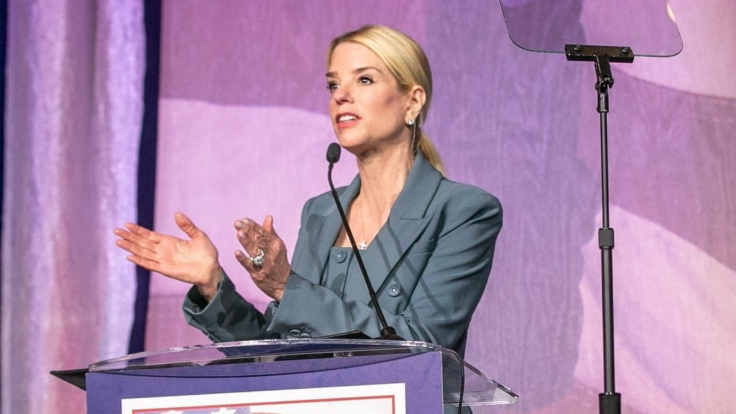
Photographs from a heated congressional oversight hearing reveal a note in Attorney General Pam Bondi's binder labelled with a US lawmaker's search activity within the Department of Justice's (DOJ) unredacted Jeffrey Epstein files.
The images, captured on Wednesday during a House Judiciary Committee hearing in Washington, DC, show Bondi holding a document titled 'Jayapal Pramila Search History' that appears to list specific files accessed by Democratic Representative Pramila Jayapal during her review of unredacted material from the Epstein files.
Lawmakers described the disclosure as a clash over executive-legislative oversight, with some accusing the DOJ of 'surveillance' of congressional searches, a charge underscored by the timing of the images, taken just days after certain members were permitted controlled access to the files
Congressional Access to Unredacted Epstein Files
The release and review of documents connected to convicted sex offender Jeffrey Epstein have been a source of sustained controversy across US politics. In February 2025, the US Department of Justice began steadily releasing portions of millions of pages of materials related to Epstein's criminal investigations under the Epstein Files Transparency Act, a law aimed to make such records public while redacting victims' personal information.
Despite a statutory deadline, critics have argued the DOJ's rollout has been haphazard, with significant redactions and selective disclosures.
Congressional Democrats contend that powerful individuals whose connections to Epstein should be investigated have been shielded, while the identities of victims and survivors have at times been improperly exposed or only partially redacted.
WTF… The DOJ saved the search history of members of Congress while they were looking through the Epstein files. This is insane.
— Harry Sisson (@harryjsisson) February 11, 2026
Photo from Roberto Schmidt / Getty pic.twitter.com/OTrPPP61AX
Under a system established by the DOJ, members of Congress willing to review the slightly less-redacted files were required to visit a DOJ annexe and search the database on one of a limited number of DOJ computers.
According to a press release from Rep. Jamie Raskin, a senior Democrat on the Judiciary Committee, the system logs the searches for oversight and monitoring purposes.
Photo Sparks Accusations of Monitoring Lawmakers
The bone of contention at the hearing was the apparent inclusion in Bondi's binder of a printout showing Rep. Jayapal's search history in the DOJ's system.
In his official statement, Raskin said the DOJ's requirement that lawmakers use monitored systems is the perfect setup for the DOJ to spy on Members' review, monitoring, recording, and logging every document we choose to pull up.' He called for an inquiry by the DOJ Inspector General into potential abuses of power.
Pam Bondi brought a document to the Judiciary Committee today that had my search history of the Epstein files on it.
— Rep. Pramila Jayapal (@RepJayapal) February 12, 2026
The DOJ is spying on members of Congress. It’s a disgrace and I won’t stand for it. pic.twitter.com/aK07guAZhI
Rep. Jayapal herself said in a social media post that bringing such a document to the hearing was inappropriate and 'against the separations of powers', suggesting it could indicate an undue intrusion into legislative oversight activities.
Some Republican lawmakers also expressed unease at the suggestion that the DOJ tracked congressional searches. Representative Nancy Mace described the alleged monitoring as 'creepy' and said the DOJ logged every file that members of Congress opened, including timestamps.
However, House Speaker Mike Johnson refrained from fully endorsing the allegations, characterising them as 'unsubstantiated'.
Epstein Files Transparency Act and DOJ Handling
The Epstein Files Transparency Act passed the US House of Representatives with overwhelming bipartisan support in November 2025, obliging the DOJ to disclose relevant records with appropriate redactions.
Yet controversy has shadowed the implementation process. Critics from both parties fault the DOJ for failing to meet initial deadlines and for what they see as an overly protective approach to material involving powerful individuals. During the same committee session, lawmakers pressed Bondi on why several high-profile names were redacted from the public archive, even though they appeared elsewhere.

Earlier disputes included the distribution of 'Phase 1' files to conservative internet influencers at the White House in February 2025, a move that drew scorn from legal experts and lawmakers who noted that the materials largely contained already public information and did little to address unanswered questions.
Campbell's critics have also linked the tracking controversy to broader frustrations over the pace and scope of the DOJ's reviews of the Epstein files. Some Democratic senators and representatives have characterised the approach as an attempt to blunt scrutiny rather than to facilitate transparency.
What Bondi and DOJ Have Said
Neither the Attorney General nor the Department of Justice has formally responded to the allegations.
House Speaker Mike Johnson said it would be 'inappropriate' if the DOJ had used Jayapal's search history against her. He stopped short of confirming the claims, calling them 'unsubstantiated'.
Jayapal's office said she is organising a letter to investigate what she alleges is improper surveillance of lawmakers who reviewed the Epstein files.
The DOJ released more than 3 million pages, 2,000 videos and 180,000 images under the Epstein Files Transparency Act, which passed the House with overwhelming bipartisan support in November 2025. Lawmakers have criticised the release as incomplete. The DOJ has claimed it fulfilled its legal obligation. Congressional critics dispute that, pointing to reports that the full Epstein files amount to more than 6 million pages.
A January 2026 CNN poll of 1,209 Americans found that only 6% said they were satisfied with what the federal government had released. Nearly half of Republicans, three-quarters of independents and nine in 10 Democrats said the government was withholding information.
No response from the DOJ or Bondi's office had been issued at the time of publication.
© Copyright IBTimes 2026. All rights reserved.