House Oversight Committee Votes To Subpoena Pam Bondi Over The Epstein Investigation – What's Next?
Republicans and Democrats unite to demand answers on the Justice Department's handling of Epstein documents.
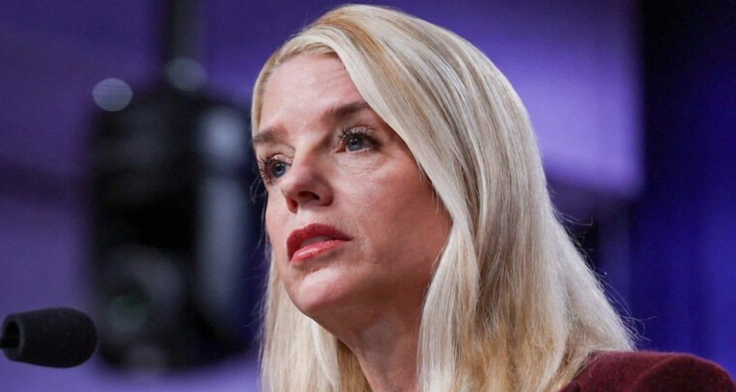
In a rare bipartisan rebuke, the Republican-led House Oversight Committee voted 24-19 on 4 March 2026 to compel Attorney General Pam Bondi to testify under oath about the Justice Department's handling of the Jeffrey Epstein files.
The motion was introduced by Rep. Nancy Mace, a Republican from South Carolina, and passed with five Republicans crossing the aisle to vote alongside Democrats. The four GOP members who joined Mace were Rep. Tim Burchett of Tennessee, Rep. Lauren Boebert of Colorado, Rep. Michael Cloud of Texas, and Rep. Scott Perry of Pennsylvania.
The Justice Department did not respond to requests for comment in the hours following the vote.
A Vote That Blindsided The White House
The subpoena of Bondi would bring the highest-level Trump administration official yet before the House panel as its investigation into the government's handling of Epstein's case presses forward. The vote came during a hearing that had nothing to do with Epstein; Mace forced the motion mid-session, catching committee leadership off-guard.
Ahead of the Wednesday vote, Oversight Chairman James Comer told the committee he had spoken with the attorney general's chief of staff, and that Bondi had offered to give members a briefing, a few at a time, regarding the Justice Department's Epstein files. That offer was not enough.
Mace was unequivocal in her reasoning. 'I know that Bondi has testified before the Judiciary Committee, but she's not testified before me or the Oversight Committee. I need to get to the bottom of this for other survivors of Jeffrey Epstein,' she told reporters after the vote.
Mace specified the subpoena is for closed-door testimony with video that would be released to the public afterward. There is no date yet for the testimony. Rep. Robert Garcia of California, the top Democrat on the panel, said in the committee room that the public had 'significant questions' about the department's process and that Bondi should 'directly answer questions about the release of the files, about transparency, about ensuring that victims and survivors are protected.'
47,635 Files Pulled Offline — And A Law That Forbids It
The immediate trigger for the subpoena vote was a Wall Street Journal investigation published the same day. Reporters Sadie Gurman and Caitlin Ostroff pressed the Justice Department about the discrepancy, and a spokeswoman confirmed that 47,635 documents were being held offline for further review. The department had not volunteered that information and confirmed it only after being directly asked.
Among the files taken down were FBI Form 302 witness interview reports containing an unverified allegation from a woman who claimed Trump sexually abused her as a minor in the 1980s. The files released in January included a summary of the woman's allegations and a Form 302 from her first interview, but not three other Form 302s, including the interviews in which Trump was named. The Justice Department has denied deliberately withholding documents mentioning Trump. Trump himself has not been accused of wrongdoing.

The legal framework against precisely this type of withholding is explicit. The Epstein Files Transparency Act, signed into law on 19 November 2025, states that no record shall be withheld, delayed, or redacted on the basis of embarrassment, reputational harm, or political sensitivity, including to any government official, public figure, or foreign dignitary.
Despite that mandate, the law gave the attorney general 30 days to release the documents. On 19 December, the Justice Department released the first batch of Epstein files, violating US law in failing to release all the files by that day. The department released additional files in waves, with a fifth and final release on 30 January 2026. It then declared it had fulfilled its legal obligations, a claim that critics say the 47,635 offline files directly contradict.
The 'Burn Book' And The Surveillance Allegation
The 4 March subpoena vote did not arise in a vacuum. It came three weeks after a scandal that crossed party lines in a way few Epstein-related controversies have. During Bondi's 11 February hearing before the House Judiciary Committee, photographs captured by Reuters and Agence France-Presse showed her holding a binder open to a page labelled 'Jayapal Pramila Search History,' listing a series of documents that Democratic Rep. Pramila Jayapal of Washington had apparently accessed.
Jayapal had recently visited a Justice Department facility to review less-redacted Epstein materials on department-owned computers. She confirmed to Speaker Mike Johnson that the search history shown in Bondi's binder matched what she had searched.
Rep. Jamie Raskin of Maryland, the top Democrat on the House Judiciary Committee, described lawmakers being required to 'sit at one of four DOJ-owned computers, use a clunky and convoluted software system provided by DOJ, and search for and read documents while DOJ staffers look over our shoulders.'

Raskin invoked the Speech or Debate Clause of the US Constitution in a formal letter to Bondi, co-signed by Jayapal and Rep. Robert Garcia, dated 13 February 2026 and filed publicly via the House Judiciary Committee's website. The letter states: 'The surveillance of Representative Jayapal's searches, and those of dozens of others, is just the latest effort by DOJ to interfere with Congress's oversight of the Epstein cover-up.'
It cited Eastland v. United States Servicemen's Fund, 421 US 491 (1975), and United States v. Rayburn House Off. Bldg., 497 F.3d 654 (DC Cir. 2007), as controlling precedent for the argument that congressional document review is a constitutionally protected legislative act.
Who Else Is Coming Before The Committee
Bondi is the highest-ranking sitting official to face a subpoena from the Oversight Committee's Epstein investigation, but she is not alone in the queue. Commerce Secretary Howard Lutnick agreed to an interview with the panel after Comer announced the development on 3 March 2026. A date for his testimony has not yet been set. Lutnick was among the slew of powerful people revealed to have been in communication with Epstein after the Justice Department made public its trove of records.
Former presidents Bill Clinton and Hillary Clinton both separately appeared for closed-door depositions before the committee. Bill Clinton appeared for closed-door testimony on 27 February 2026, addressing his connections to Epstein. Clinton told the committee he 'saw nothing, and did nothing wrong,' according to reporting from the session.
The subpoena puts Bondi in an interesting position. She has already faced questions related to the files under oath in committee hearings, though she has yet to appear before the House Oversight Committee. A closed-door deposition would mean hours of questions devoted to the topic. However, should Bondi for whatever reason push back on the appearance, any defiance and effort to hold her in contempt would land at the Justice Department.
Bondi has accused her critics of exploiting the Epstein files for political theatre, telling members that Democrats were diverting attention from Trump's policy achievements in office. The 24-19 vote against her, with members of her own party in the majority, suggested that argument is wearing thin.
© Copyright IBTimes 2026. All rights reserved.
- MOST POPULAR IN World