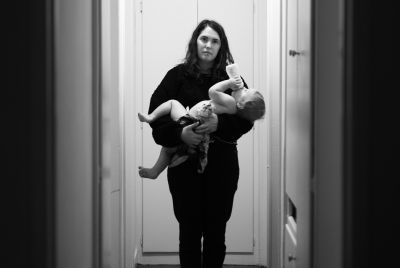
Netflix Documentary 'Death of the Pastor's Wife' Examines Mica Miller's Life and Federal Case
As the series airs, pastor husband JP Miller faces a federal cyberstalking trial and campaigners fight for 'Mica's Law' to criminalise coercive control

Netflix's new true crime series 'Death of the Pastor's Wife' digs into the life, marriage and death of South Carolina church singer Mica Miller, whose body was found at Lumber River State Park in North Carolina on 27 April 2024.
The three-part Netflix documentary, which premiered on 26 August, revisits how the 30-year-old, who was married to Myrtle Beach pastor John‑Paul 'JP' Miller, died from what officials ruled a self‑inflicted gunshot wound. It tracks her journey from a gifted teenage worship leader to a woman who, according to loved ones, felt trapped in what they describe as a toxic marriage.
The series also follows the federal case now facing JP, who has been indicted on cyberstalking and false statement charges but not over her death.
'Death of the Pastor's Wife' has pushed Mica Miller's name back into headlines and reignited questions her family say never really went away.
How 'Death of the Pastor's Wife' Reframes Mica Miller's Life
The Netflix series paints a detailed portrait of who Mica Miller was long before her name became a case file.
One of six children, she spent her early years in Wichita, Kansas, before her family moved to Myrtle Beach, where church quickly became the centre of her world. She found a natural home in worship, serving as a teenage worship leader and becoming known, as her brother Nate Francis recalls on camera, for a singing voice that outshone even their very musical family.
It was at Solid Rock Church that Mica met JP Miller, the man who would later become both her pastor and her husband.
According to the documentary, she was 13 when she first encountered him in the congregation. He was 15 years older, already an authority figure and, over time, her spiritual guide. She went on to marry her first husband, Jeremy, at 18, in a ceremony JP himself officiated.
The documentary outlines how, by 2015, Mica and JP began an affair, when she was 20 and he 35. Both eventually divorced their respective spouses, and in November 2017, they married.
Co‑director Julia Willoughby Nason told Time that the age gap was less unsettling than the fact that Mica had known JP from such a young, impressionable age. She had grown up seeing him as a spiritual authority, Nason argued, and that power imbalance never really went away.
Allegations of Coercive Control in the Netflix Portrait of Mica Miller
'Death of the Pastor's Wife' is not a gentle church‑community reminiscence. It is blunt. Friends and family allege on camera that JP 'mentally tortured' Mica during their marriage, describing what they and the filmmakers frame as coercive control rather than isolated cruelty.
According to the series, Mica's friends and associates say JP controlled her sex life, her sleep and even who she was allowed to see. They allege he refused to let her sleep until they had sex, demanded constant access to her and engaged in multiple affairs.
In one particularly disturbing claim, relayed through friends and papers attributed to Mica by her attorney, the documentary reports that she was coerced into sexual contact with homeless men and took testosterone to keep up with his sex drive.
None of these alleged acts have resulted in criminal charges, and prosecutors have not accused JP of these behaviours.
The control, her friends say, seeped into everyday social stuff too. One close friend, identified as Korn, describes JP repeatedly calling Mica when they tried to spend time together, then turning up in person if she did not leave quickly enough.
Mica's sister Sierra recalls an incident where he allegedly arrived armed at her home when Mica had gone there to get away.
A text message shown in the series has JP demanding she 'act like a godly wife' and warning that no man would tolerate what she had done, while offering 'one more chance'.
JP refused to participate in the Netflix production. His lawyer at the time, Nathan S Williams, declined to comment to journalists, and JP has denied any involvement in Mica's death.
Divorce Filings, Stalking Claims and the Final Day at Lumber River
It can be recalled that the marriage publicly unravelled long before the gunshot in the park. Mica separated from JP in January 2023 and filed for divorce that October, according to court papers cited in the series.
That first divorce action was dismissed on 13 February 2024. Ten days later, JP filed for legal separation, which was dismissed on 12 March. Mica tried again on 15 April, and court records show JP was served with notice of an upcoming hearing on 25 April.
In the background, the Netflix documentary details what contributors describe as a pattern of harassment. Friends and prosecutors allege JP contacted Mica more than 50 times in a single day and that she had to keep changing her phone number.
She allegedly found a tyre slashed, and mechanics later reported discovering a tracking device on her car.
During one period of separation, her siblings claim, JP initiated an involuntary psychiatric admission for Mica, and, according to the docuseries, she later told police that while she was in hospital he took belongings including a laptop that held nude photographs of her.
Prosecutors say he subsequently posted a nude image online without her consent.
On 27 April 2024, Mica left the Myrtle Beach flat where she had been staying and was expected to start a lunchtime shift at a local café. Security footage captured her instead at Dick's Pawn Shop at 12.12pm, buying a firearm and ammunition, then leaving at about 12.34pm.
She drove into North Carolina, stopped at a petrol station, then headed for Lumber River State Park. At 2.54pm, she phoned 911, telling a dispatcher she intended to take her own life and asking that they trace her location so her family could find her.
Later that day, officers located her body. The Robeson County medical examiner concluded she had died from a self‑inflicted gunshot wound.
Executive producer Alana Goldstein put it starkly in an interview with Netflix's own site, saying that although JP did not pull the trigger, what she described as more than a decade of grooming and escalating abuse helped create the circumstances in which Mica saw no way out.
From Netflix Spotlight to 'Mica's Law' and a Federal Trial
One of the most concrete legacies of Mica Miller's story is political, not cinematic.
Her family and supporters have pushed for 'Mica's Law', a South Carolina bill, SB 702, that would make coercive control a criminal offence and expand domestic violence laws to recognise emotional, psychological and financial abuse.
Her sister Anna says on camera that police told Mica they could do nothing about alleged stalking and harassment because she was still married, and she argues that this gap in the law proved deadly.
As of the most recent legislative session, the bill has stalled and has not been enacted. Co‑sponsor Senator Stephen Goldfinch has signalled he intends to bring it back.
About a year after Mica's death, JP married Suzie Skinner, whom Mica's friends allege in the documentary he had been seeing during their marriage.
Mica's death was officially ruled a suicide on 7 May 2024 by officials in Robeson County, North Carolina, after an investigation into her final movements and a post‑mortem examination.
At the time, local authorities treated the case as a tragedy, not a homicide, and no one was charged over her death.
Her husband's lawyer later insisted that the medical examiner's ruling 'completely exonerates Pastor Miller of any wrongdoing'.
Meanwhile, another arm of the state has moved. In December 2025, according to the US Attorney's Office for the District of South Carolina, a federal grand jury indicted JP on one count of cyberstalking and one count of making false statements to federal investigators.
The indictment alleges he sent unwanted and harassing communications to Mica from November 2022 until her death. He has pleaded not guilty and remains free on a $100,000 (£7,300) bond.
If convicted, he faces a maximum of five years in prison for cyberstalking, two years for the false statement charge, and a possible fine of up to $250,000 (£184,000).
His trial has been delayed several times and is currently listed for the October 2026 term of court. He has not been charged in connection with Mica's death.
© Copyright IBTimes 2026. All rights reserved.
- Recommended For You