Lindsay Clancy Prosecutor Calls Defence 'Laughable' as Lawyer Questions Evidence She Killed Her Children
After Lindsay Clancy's mistrial, her lawyer questions whether prosecutors proved she killed her children as the state calls the new defence 'laughable'
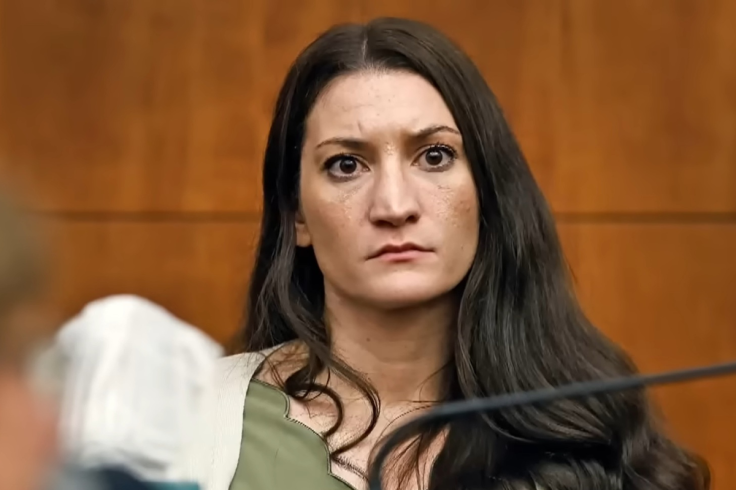
Lindsay Clancy's defence is now questioning whether prosecutors proved she killed her three children at all, marking a sharp shift from the strategy used during her first trial. Lindsay Clancy's lawyer has made a striking new argument after her murder trial ended in a mistrial, questioning whether prosecutors proved she killed her three children at all — an argument the prosecution dismissed as 'laughable'.
Kevin Reddington raised the issue on Tuesday during Clancy's first court hearing since a Plymouth Superior Court jury failed to reach a unanimous verdict on 4 September. During the six-week trial, the defence did not dispute Clancy's involvement in the deaths of five-year-old Cora, three-year-old Dawson and eight-month-old Callan at the family's Duxbury, Massachusetts, home in January 2023. Instead, her lawyers argued she was not criminally responsible because of severe mental illness, including what the defence described as postpartum psychosis.
Defence Asks: 'Where Is the Evidence?'
Reddington urged Judge William Sullivan to enter a required finding of not guilty, arguing that prosecutors had failed to prove the underlying killings beyond a reasonable doubt. 'This entire case is based on speculation,' Reddington told the court before repeatedly questioning where the evidence and any admission from Clancy were.
He pointed to her condition after she was found badly injured outside the home, her reported lack of memory after waking in hospital and what he described as shortcomings in the original investigation. Reddington did not present an alternative theory identifying another person as responsible.
The argument represented a significant shift from the defence presented during the first trial, when the central question was whether Clancy could legally be held criminally responsible because of her mental state.
Before trial, Reddington had also filed paperwork indicating Clancy was willing to stipulate in writing to her involvement in the children's deaths.
🚨 OH. MY. GOD.
— Lindsay 🇺🇸 (@TheLinzerShow) September 29, 2026
I cannot believe Reddington just did this.
“WHERE’S THE EVIDENCE SHE KILLED HER KIDS?” He says there is NO evidence — and that there was NO investigation. They just took other people’s word for it that Lindsay killed her kids
For weeks, some Lindsay Clancy… pic.twitter.com/7LVsL4NjeD
Prosecutor Calls New Defence Argument 'Laughable'
Assistant District Attorney Shanan Buckingham rejected the new approach, calling it 'laughable' and arguing that the trial record contained extensive evidence supporting the prosecution's case.
Jurors heard that Clancy's DNA was found on exercise bands involved in the children's deaths. They also heard testimony concerning statements that she heard a voice instructing her to kill them.
'For the first time, the defendant is arguing that there is no evidence she did this,' Buckingham told the judge. Prosecutors maintain that Clancy knew her actions were wrong and had decided to kill the children before attempting to take her own life.
The defence continues to maintain that she was suffering from serious mental illness at the time. Reddington told the court that the doctors who testified agreed she had a serious mental disease or defect, although experts differed over her diagnosis and whether her condition prevented her from understanding the wrongfulness of her actions.
What Happens After the Mistrial?
Clancy's first trial ended with the jury deadlocked 11-1, with 11 jurors prepared to find her not guilty by reason of lack of criminal responsibility.
Judge Sullivan did not immediately rule on the defence request for an acquittal.
Prosecutors have also not announced whether they will retry Clancy on first-degree murder charges, pursue lesser charges or take another course. Plymouth County District Attorney Timothy Cruz said after the hearing that his office was still considering its options.
The parties are due back in court on 2 November, when the judge is expected to address unresolved motions and a possible timetable for another trial. Clancy remains charged, and Tuesday's argument does not amount to an acquittal or a judicial finding that prosecutors lack evidence.
For now, the hearing has opened a new front in a case that previously centred largely on Clancy's mental state: whether prosecutors can prove the underlying killings to the standard required for conviction.
© Copyright IBTimes 2026. All rights reserved.
- Recommended For You