

How a NY Finance Writer Was Tricked by Fake CIA Agents Into Handing Over $50,000 in a Shoebox
A fake Amazon call spiralled into hours of threats, leaving the personal-finance columnist convinced she faced arrest unless she surrendered her savings.
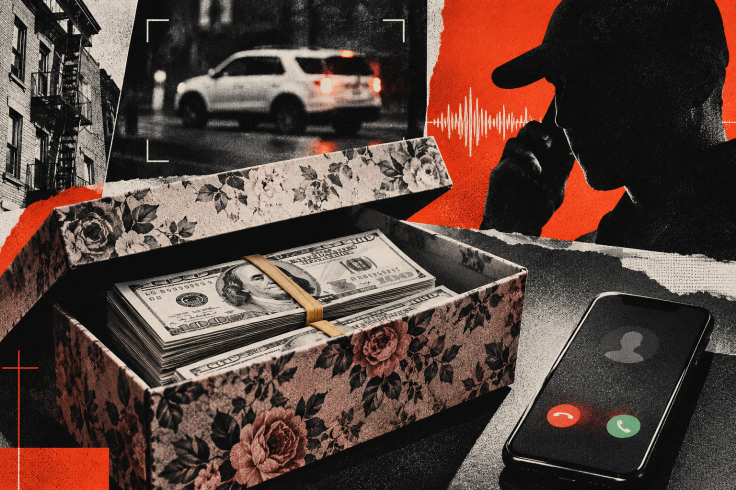
New York finance writer Charlotte Cowles handed $50,000 (£37,790) in cash to scammers posing as federal agents, placing her savings inside a floral shoebox before passing it through the window of a waiting SUV outside her Brooklyn apartment on Halloween 2023.
In a first-person essay published by The Cut on 15 February 2024, Cowles described how hours of threats and fabricated criminal allegations persuaded her to surrender money she had accumulated over several years.
The ordeal began with a supposed Amazon customer-service call about suspicious purchases. Within hours, Cowles believed she faced arrest, financial ruin and possible danger to her family. The personal-finance columnist, who regularly advised readers about money, later struggled to understand why she had obeyed the callers.
How Fake CIA Agents Frightened Charlotte Cowles Into Withdrawing $50K
At approximately 12.30pm on 31 October, a woman claiming to work for Amazon contacted Cowles about $8,000 (£6,046) in electronics purchases. Cowles checked her account and found nothing unusual. The caller insisted the transactions involved separate business accounts opened using her identity.
She then transferred Cowles to a supposed Federal Trade Commission investigator who identified himself as Calvin Mitchell. The man knew her address, date of birth and the last four digits of her Social Security number.
He claimed 22 bank accounts had been opened in her name and linked to overseas transfers exceeding $3 million (£2.27 million). The allegations became increasingly frightening. Cowles was told she was implicated in drug trafficking, money laundering and criminal investigations in Texas and Maryland.
Another caller, identifying himself as a CIA investigator named Michael Sarano, claimed her home was under surveillance. He warned her against contacting police, lawyers or family members, suggesting that doing so could endanger her husband and two-year-old son.
When Cowles questioned his credentials, a call appeared to come from the FTC's official number. She suspected spoofing but continued listening. The caller then claimed federal investigators needed to freeze her assets and issue a new Social Security number.
To protect her money, he instructed Cowles to withdraw $50,000 (£37,790) and hand it to someone he described as an undercover CIA agent.
Charlotte Cowles Hands $50K in Shoebox to Supposed CIA Courier
Cowles went to her bank, where a teller counted out $50,000 (£37,790) in $100 notes and handed her a warning about scams. Despite growing doubts, she returned home with the cash. She placed it inside a floral shoebox, taped it shut and labelled it with details supplied by the caller. At 6.06pm, a white Mercedes SUV arrived outside her building.
Following instructions, Cowles placed the box through the rear window without speaking to the driver, whose identity was not established. The caller subsequently sent an image of a purported Treasury cheque promising reimbursement.
But the promised government appointment never materialised. Later that evening, Cowles realised she had been deceived. She told her husband and contacted police, who visited her apartment around 10.30pm.
In her account for The Cut, Cowles described the shame, anxiety and financial uncertainty that followed. She reported the incident to authorities, froze her credit and sought therapy.
Psychologist Saul Kassin, whom Cowles interviewed, explained how prolonged questioning and incremental demands can alter a person's sense of reality. The fraud cost Cowles savings accumulated over several years, including money inherited from her grandfather.
Her February 2024 account did not report recovering the stolen $50,000 (£37,790).
© Copyright IBTimes 2026. All rights reserved.