Logan Paul Admits 'Massive, Massive, Massive' $100M Mistake as Prime Drink Empire Collapses After $1BN Peak
The YouTuber said investor interest valued a potential deal at about $500 million as the drinks brand now tries to rebuild trust after a sharp sales decline
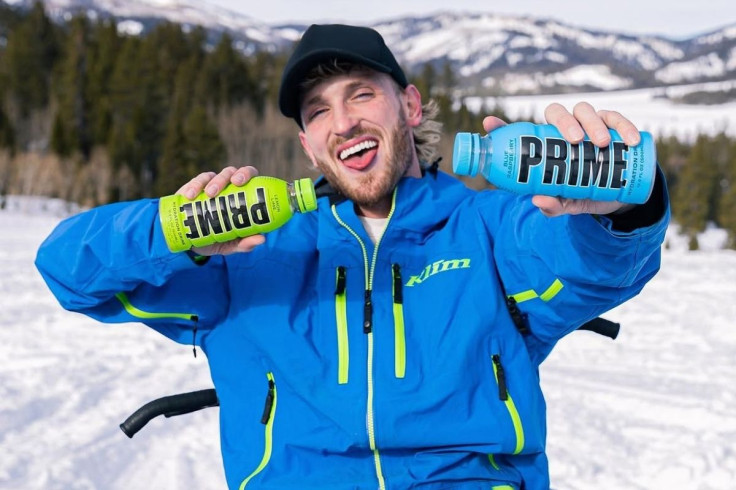
Logan Paul has admitted that he made a 'massive, massive, massive mistake' by failing to sell part of Prime or bring in acquisition partners when the beverage brand was at its peak, saying the decision represented at least a $100 million missed opportunity.
The YouTuber made the admission on the PBD Podcast on Tuesday, 15 September, as Prime attempts to recover from a dramatic reversal in fortunes.
Prime, the drinks company Paul co-founded with fellow YouTuber KSI, generated more than $1 billion in global retail sales within two years of launching.
By 2023, annual sales were projected to reach about $1.2 billion, turning the influencer-backed brand into one of the fastest-growing names in the drinks market, but sales and popularity subsequently declined.
Forbes reports that Prime's estimated revenue fell to about $300 million in 2025, roughly 76% below its peak. Paul now says the company had opportunities to take money off the table when investor interest was strongest, with private equity firms alone willing to value a potential deal at around $500 million.
He said he and KSI left acquisition decisions to their business partners. His warning to other entrepreneurs was simple: 'Don't be afraid to take chips off the table.'
Prime's Billion-Dollar Rise Came Faster Than Expected
Prime launched in 2022, with Paul and KSI using their large social media followings to promote a new type of influencer-led beverage brand. The initial range, Prime Hydration, was caffeine-free and marketed as a sports and hydration drink.
The strategy quickly generated strong demand, while limited availability, social media promotion and the pair's combined following helped turn Prime bottles into highly sought-after products, particularly among younger consumers. Bloomberg reported in November 2023 that Prime was on track to surpass $1.2 billion in annual sales.
The company also expanded through major sponsorship agreements involving the UFC, the Los Angeles Dodgers and Arsenal. Prime's rapid growth demonstrated how creator audiences could be converted into a large consumer business, but the same youth-focused marketing strategy that helped drive its rise also became a source of scrutiny.
Prime's Energy Drink Triggered Growing Scrutiny
The company expanded into energy drinks in 2023, with Prime Energy containing 200 milligrams of caffeine per can. Its popularity among teenagers attracted criticism from parents, politicians and health advocates.
In 2023, then-Senate Majority Leader Chuck Schumer called on the US Food and Drug Administration to investigate Prime Energy's caffeine content and marketing, citing its popularity among children and teenagers. The FDA subsequently reviewed concerns surrounding the drink.
Prime subsequently faced a proposed class action that included allegations concerning Prime Energy's caffeine content. A federal judge dismissed an amended Kentucky class action complaint in 2024 without prejudice, after finding that the plaintiffs had failed to meet the required pleading standard.
The litigation subsequently proceeded, with discovery continuing in 2026. In 2026, a federal court ordered Prime to designate Paul and KSI as custodians for electronic discovery, including searches for relevant text messages, internal messages and emails from their personal devices.
The development does not establish wrongdoing by either creator, but shows that legal scrutiny surrounding the brand has continued. The court proceedings concern discovery in the litigation and do not themselves establish that Paul or KSI engaged in wrongdoing.
Paul Says Prime Is Now Trying To Rebuild Trust
Prime's popularity also began to fade while criticism of the brand continued. Forbes reported that Paul said Prime had reached a point where it became 'cool to hate on Prime on social media'.
He also said the company is now focused on stabilising the business and rebuilding consumer trust. That reversal is significant because Prime's earlier success had been built around momentum, with the brand moving from limited releases and viral demand to major sports partnerships and billion-dollar sales remarkably quickly.
As that momentum disappeared, the decision to retain the company rather than sell part of it meant the founders remained exposed to the brand's subsequent decline. Paul's $100 million admission therefore relates to what he believes he could have secured at the height of Prime's success, not a documented $100 million cash loss.
His comments offer a rare look at the financial trade-off behind an influencer business that expanded from social media into a major consumer brand, then saw a substantial decline in estimated revenue only a few years after reaching its billion-dollar sales peak.
The $100 million figure remains Paul's estimate of a missed opportunity rather than an independently established financial loss.
© Copyright IBTimes 2026. All rights reserved.
- Recommended For You