Bill Ackman Loads Up on 6 New Stocks: Pershing Square Portfolio Now Targets 20% EPS Growth
Ackman targets durable earnings growth with new stakes in Netflix, Visa, Mastercard, and more

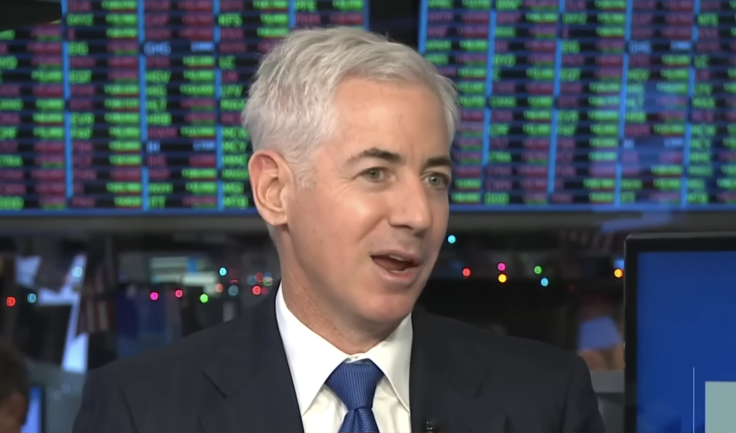
Bill Ackman is making one of the biggest changes to Pershing Square's investment portfolio in years, adding six new stocks as the hedge fund shifts towards companies capable of delivering durable earnings growth and strong free cash flow amid geopolitical uncertainty and economic challenges.
The new positions are Netflix, Visa, Mastercard, S&P Global, Intercontinental Exchange, and Alcon. The major portfolio overhaul comes after Pershing Square struggled to keep pace with the broader market in 2026.
Ackman's central argument is straightforward: over long periods, stock prices ultimately follow earnings. That makes the six new investments less of a collection of unrelated bets and more of an attempt to increase the portfolio's exposure to predictable, compounding earnings growth.
Although market experts are claiming that Pershing Square's portfolio now trades at 19x earnings with 20% EPS growth expected over the next three to five years, versus the S&P 500 at 20x and 12% growth rate.
Why Netflix is Back in Ackman's portfolio
Netflix is perhaps the most intriguing trade because Ackman previously sold the stock in 2022 after reportedly losing more than $400 million.
This time, Ackman likely believes Netflix has effectively won the streaming battle, with a huge global subscriber base, improving monetisation, and a growing advertising business.
The timing is notable. Netflix's Q2 revenue rose 13.4% year-on-year to $12.6 billion, while operating income increased 11.1% to $4.19 billion. EPS also beat consensus, although advertising revenue and free cash flow missed analyst expectations.
In other words, Ackman is buying a company where the core earnings engine remains strong even as investors debate the pace of its next growth phase.
Visa and Mastercard: The Toll-Road Strategy
The Visa and Mastercard investments are arguably the clearest expression of Ackman's preference for businesses with powerful competitive advantages.
Both operate payment networks that benefit from the continuing shift from cash to electronic payments. Ackman has argued that their fee-based models are relatively low risk and possess durable network effects, while dismissing concerns that stablecoins could seriously undermine their economics.
The attraction is not explosive revenue growth, but the combination of recurring transactions, pricing power, high margins, and the ability to compound earnings without enormous capital requirements.
S&P Global and ICE Add Financial Infrastructure
S&P Global gives Ackman exposure to ratings, indexes, and financial data, while Intercontinental Exchange operates exchanges and other financial-market infrastructure.
Both fit Pershing Square's stated preference for businesses that are simple, predictable, cash-generative, and protected by competitive advantages.
S&P Global is particularly interesting because Ackman reportedly sees the company as undervalued amid fears that AI could disrupt financial-information businesses. ICE, meanwhile, offers exposure to exchanges and energy markets where scale and network effects create significant barriers to entry.
Alcon Brings Considerable Healthcare Exposure
Alcon is the outlier, but its numbers help explain the attraction. The eye-care company reported fiscal Q1 sales of $2.7 billion, up 10% from a year earlier, while core diluted EPS climbed to $0.85 from $0.73 from the prior year quarter. New products including Unity, PanOptix Pro, Tryptyr, and Precision7 were highlighted as important growth drivers.
Alcon's 2026 outlook also calls for core diluted EPS growth of 9% to 12%, possibly implying that Ackman's upside thesis appears to depend on continued product launches, margin expansion, and longer-term earnings acceleration rather than simply buying a cheap stock. The stock price declined 15% in the past one year.
Ackman's Bigger Portfolio Reset
The six trades come after Pershing Square deployed nearly 85% of the capital raised by Pershing Square USA's April IPO into 12 companies. An SEC filing highlighted that the portfolio included Amazon, Microsoft, Uber, Meta, Brookfield, Restaurant Brands, Fannie Mae and Freddie Mac, with four additional companies yet to be disclosed.
The new additions, therefore, push Ackman's strategy well beyond his previous concentrated collection of technology, consumer, and property holdings.
The move also arrives at an uncomfortable moment. Pershing Square USA's NAV had gained only 0.6% since its launch, versus a much stronger S&P 500 performance, while the fund traded at a substantial discount to its underlying assets. That likely makes the latest trades more than a routine portfolio update.
In all, Ackman, who considers Warren Buffett his mentor, keeps emotions out of the equation when placing trades. 'I'm not emotional about investments,' Ackman had reportedly said. 'Investing is something where you have to be purely rational and not let emotion affect your decision making — just the facts.'
Disclaimer: Our digital media content is for informational purposes only and does not constitute investment advice. Please conduct your own analysis or seek professional advice before investing. Remember, investments are subject to market risks, and past performance does not guarantee future returns.
© Copyright IBTimes 2026. All rights reserved.
- Recommended For You