Murder Suspect Luigi Mangione Claims Police Broke Law in Fight to Block Gun and 'Hit List' Evidence
Court hearing will decide if key evidence can be used at trial
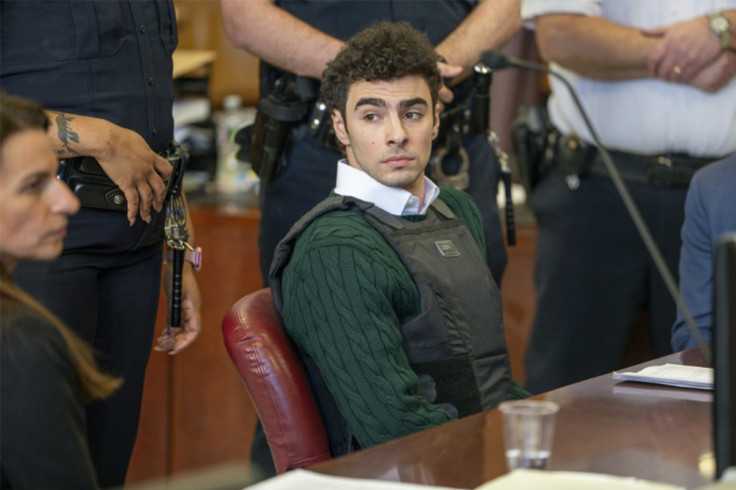
The murder trial of Luigi Mangione now hinges on whether prosecutors will be allowed to use the most damaging evidence against him after his legal team accused police of conducting unlawful searches and questioning during his arrest, according to a report from the Associated Press.
Mangione, 27, stands accused of fatally shooting UnitedHealthcare chief executive Brian Thompson outside a Manhattan hotel on 4 December 2024.
On Monday, he sat silently in a New York courtroom as prosecutors played surveillance videos showing both the sidewalk shooting and his arrest five days later at a McDonald's in Altoona, Pennsylvania, footage some journalists and members of the public had never seen before, the AP reported.
Wearing a grey suit and checked button-down shirt, Mangione watched intently as video showed police approaching him during breakfast in the fast-food restaurant.
A nearby manager had called 911 after customers raised suspicions that a masked diner matched public photos of the murder suspect. She later told authorities she could see only his eyebrows beneath a beanie and medical mask.
Court officers removed Mangione's handcuffs so he could take notes as the hearing began.
Defence Challenges Warrantless Search
At the heart of the case is a backpack police seized at the McDonald's, which allegedly contained a 3D-printed 9 mm handgun, a suppressor, foreign currency, and a handwritten notebook prosecutors claim amounts to a 'hit list' or manifesto against health insurance executives.
Mangione's lawyers told the court that officers did not have a search warrant when they opened the backpack, making its contents illegally obtained under constitutional protections. They are seeking to bar all of the items from being shown to jurors.
The defence is also challenging statements Mangione allegedly made to officers before being advised of his rights. They argue that police began questioning him prior to issuing Miranda warnings, rendering any responses inadmissible.
Prison Testimony Disputed
Correctional officers who interacted with Mangione following his arrest provided testimony that is now also being targeted by defence lawyers, according to AP.
Officer Tomas Rivers testified that Mangione discussed recent travel to Asia, including witnessing a gang fight in Thailand, and spoke about differences between private and nationalised healthcare systems. Rivers said Mangione asked whether the public focus was on him personally or on the crime itself and claimed the defendant wanted to make a public statement.
A second officer, Matthew Henry, stated that Mangione told him he had been carrying a backpack containing foreign currency and a 3D-printed gun at the time of arrest. Defence lawyer Marc Agnifilo expressed disbelief that Mangione would make such admissions unprompted.
Attorneys are seeking to exclude all such statements, arguing they were either improperly obtained or took place within conditions that violated the defendant's rights.
Prosecutors Push Back
State prosecutors maintain police actions were justified given the circumstances of Mangione's arrest. They said officers acted lawfully while detaining a potentially armed fugitive and were permitted to inspect his belongings for immediate safety concerns.
Body-camera footage shown in court reportedly captured an officer saying the bag was opened to make sure there 'wasn't a bomb' inside. Defence lawyers told the judge this explanation was a pretext designed to cover what they claim was an illegal search.
Prosecutors further argue that Mangione's statements were made voluntarily and occurred before he was formally placed under arrest.
Authorities say the 3D-printed pistol recovered from the bag matches ballistic evidence from the scene, where Thompson was shot from behind as he walked to an investor conference. Investigators also say ammunition was recovered bearing the words 'delay', 'deny' and 'depose', a phrase associated with criticism of insurance industry practices.
Court filings also quote extensively from the notebook, which prosecutors claim included praise for the late 'Unabomber' Theodore Kaczynski and writings describing a desire to rebel against what Mangione allegedly referred to as 'the deadly, greed-fuelled health insurance cartel'.
One passage reportedly states that killing an industry executive would convey that 'a greedy bastard had it coming'.
High-Stakes Suppression Fight
Legal experts note that suppressing the gun and notebook would deal a serious blow to prosecutors by removing their primary physical evidence and ideological motive material. Those items anchor both the forensic and narrative core of the state's murder case.
Mangione has pleaded not guilty to both state and federal murder charges. In the New York case, he faces the possibility of life in prison.
Federal prosecutors are pursuing a separate prosecution in which the death penalty is on the table. No trial dates have been set, according to AP, with his next federal hearing scheduled for 9 January.
Courtroom Atmosphere
The high-profile hearing has drawn supporters. A handful of people were seen in the courtroom wearing protest clothing, including one attendee dressed in a green T-shirt reading: 'Without a warrant, it's not a search, it's a violation'. Another spectator was observed carrying a Luigi video-game doll clipped to her purse, AP reported.
NYPD Sergeant Chris McLaughlin testified regarding the dissemination of surveillance images to national media outlets and online platforms during the five-day manhunt that preceded Mangione's capture, illustrating the intensity of public interest surrounding the case.
What Happens Next
Court officials said the suppression hearing may last more than a week. Defence lawyer Marc Agnifilo told the court that Manhattan prosecutors could call more than two dozen witnesses before arguments conclude.
The judge's eventual ruling on whether the gun, notebook and statements will be allowed into evidence is likely to determine the strength of the prosecution's case when the trial finally begins.
Until then, prosecutors and the defence remain locked in a legal confrontation where a single decision could reshape one of the most closely watched murder trials in the United States.
© Copyright IBTimes 2026. All rights reserved.
- MOST POPULAR IN World