

Michael Burry Says Tech Stocks in a 'Blowoff Top', Expands Nasdaq and Semiconductor ETF Bear Bets
Investor's research argues AI-era valuations are outrunning business fundamentals as bearish wagers grow

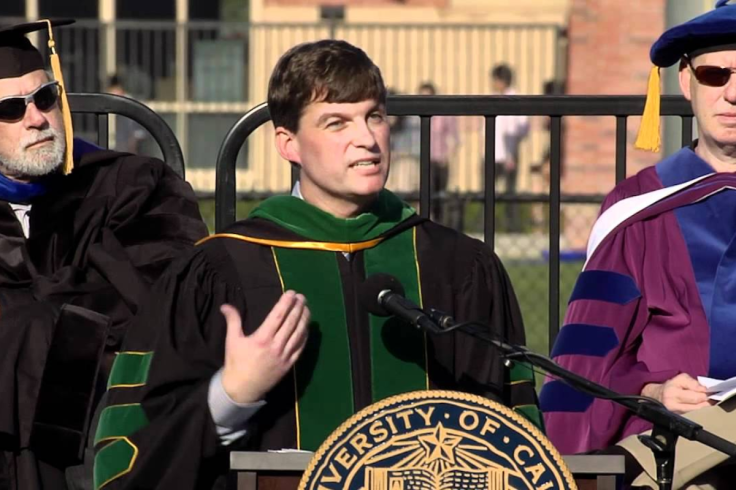
Michael Burry has expanded his bearish bets against technology shares, rolling his put options on the Invesco QQQ Trust and the iShares Semiconductor ETF into larger positions that keep him short the Nasdaq 100 and chipmakers while realising tax losses.
'Today's roll cost a little more than the tax loss harvested,' Burry wrote on Substack. 'Bigger positions, more capital at risk. We are dancing with the devil in the pale moon light. Blowoff Top.'
The revised trades maintain short exposure to the Nasdaq 100 through QQQ and the semiconductor sector through SOXX after Burry rolled earlier put positions into broadly similar maturities and strike ranges.
The report examines whether current AI-related valuations are supported by underlying business performance across the companies reviewed.
Why Burry Is Targeting QQQ And SOXX
QQQ tracks the Nasdaq 100, while SOXX tracks leading semiconductor companies.
'It is entirely possible that both go much higher, as has happened many times before,' Burry wrote of the ETF positions. 'It is also possible that historic overvaluation exhibits some gravity.'
Inside Burry's AI Valuation Review
The report reviews companies whose businesses and valuations have been reshaped by artificial intelligence, including software firms introducing AI-native products and services.
Across the companies, Burry examines customer retention, pricing, competition, legacy operations and proprietary datasets as businesses expand AI offerings. The review also compares those developments with current market valuations.
Wider Scrutiny Of AI Spending
Questions over whether AI investment will translate into stronger earnings have spread beyond Burry's research.
Bloomberg's review of regulatory filings found Microsoft, Meta Platforms, Alphabet and Amazon have committed about $850 billion in future data centre lease obligations, up 204% from a year earlier. Meta alone added about $79 billion during the latest quarter.
Christophe Barraud, chief economist at Market Securities Monaco, said infrastructure suppliers had captured most of the gains from AI spending so far.
'For now, the infrastructure sellers continue to capture most of the value but the sectors expected to use AI heavily are not yet showing a spectacular acceleration in earnings,' Barraud wrote on 4 July.
He added, 'The market will gradually start asking for proof. Not just announcements, speeches or AI partnerships, but visible results in the numbers with higher margins, stronger cash flow and faster earnings growth.'
Morgan Stanley has questioned whether AI will automatically prove disinflationary, arguing stronger productivity could lift demand and push equilibrium interest rates higher.
Allianz Research estimates the gap between AI investment and related revenue growth at about 46%, wider than the 32% gap recorded before the dotcom crash. The Philadelphia Semiconductor Index trades at about 30 times forward earnings, near the upper end of its 15-year range.
DocuSign As A Test Case
DocuSign was among the companies reviewed in Burry's report.
The company said its AI-native Intelligent Agreement Management platform had generated more than $350 million in annual recurring revenue after about 18 months and now manages more than 200 million agreements.
'However, I am not sure new AI-native Agents need the historical context of such a repository or lake in order to perform as expected,' Burry wrote.
The report cites net dollar retention of 102%, below the 112% to 119% range management has previously described as normal, alongside slower growth in the company's legacy electronic signature business and competition from Adobe Acrobat Sign, Microsoft 365, Ironclad and SpotDraft.
'Today, DocuSign is not necessarily broken, and may even be stabilising, but hoping against all evidence that any ephemeral future value will make its way over to shareholders would seem unwise,' Burry wrote. 'Whatever potential success agreement management has, the company is more than priced for it today. I do not own DocuSign.'
© Copyright IBTimes 2026. All rights reserved.