Apple Stock Plummets as Insider Warns Siri AI Delay Could Push 'Real Version' to 2027 With EU and China Banned
The market reaction suggests the company still has work to do to prove its AI reboot is more than a polished demo.
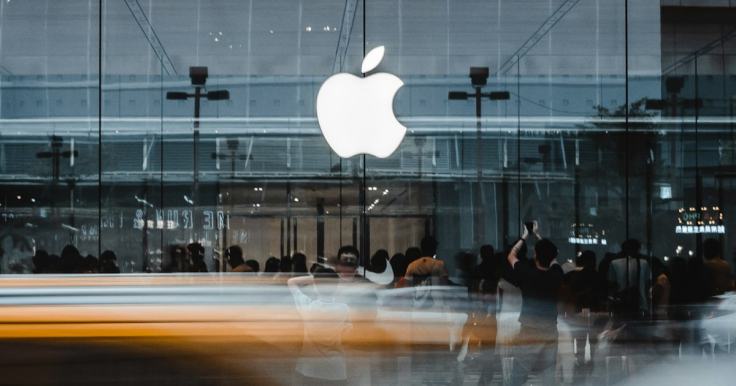
Apple's stock slid in New York on Monday after the iPhone maker used its Worldwide Developers Conference in Cupertino to unveil 'Siri AI', a revamped artificial‑intelligence assistant that investors were told will not fully roll out until at least 2026 and will initially exclude users in the EU and China.
The reaction left Apple as one of the few tech heavyweights in the red on a day when chip and AI names broadly rebounded.
At first, markets appeared to like what they saw. Apple shares climbed as much as about 2.5% during the presentation as executives showed off Siri AI and a broader 'Apple Intelligence' platform spanning iPhone, iPad and Mac.
By the end of trading, though, the mood had turned. According to Yahoo Finance, the stock reversed to close at $301.54 (£225.03), down 1.89% on the day, after touching intraday losses of nearly 5%. Volume surged to 76.6 million shares, roughly 68% above the three‑month average of 45.5 million.
Siri AI Delay Knocks Confidence In Apple Stock
The central frustration on Wall Street was not the technology Apple showed, but the timetable. As 24/7 Wall St reported, Apple did not provide a firm release date for Siri AI, committed only to a beta version in 2026 and confirmed that the assistant will not initially be available in China, where it is still seeking regulatory approval, or on iPhones and iPads in the European Union.
That combination led commentators to talk about the 'real version' of Siri AI effectively being pushed into 2027 for a large chunk of Apple's global customer base.
Wedbush analyst Dan Ives had only hours earlier laid out a bullish case for the stock, forecasting around 30% upside and up to $15 billion (£11.19 billion) a year in additional services revenue from a fully rebooted Siri.
Bloomberg's Mark Gurman described investor reaction to Apple's new AI platform and overhauled assistant as 'lukewarm', a judgement echoed in online trading forums that had already turned wary ahead of the event.
On Reddit's r/stocks, one widely shared post flagged what it called the 'underappreciated risk of AAPL re‑rating significantly downward' if WWDC underwhelmed.
What Apple Actually Unveiled With Siri AI
At WWDC in Cupertino, Apple described it as a system‑wide assistant for iPhone, iPad and Mac, with on‑device context, the ability to understand what is on screen and more natural back‑and‑forth conversations. The company said some of the capability will be powered by Google's Gemini AI model, a striking admission that Apple is willing to lean on a long‑time rival's technology.
Apple's software chief Craig Federighi argued ahead of the launch that the company was adding AI 'purposefully', rather than bolting it on to everything just to say it had done so.
The new Siri also gets its own dedicated app and customisable voices, and Apple demonstrated use‑cases such as asking when a favourite artist is performing nearby, automatically setting reminders and then jumping straight into playing a track.
Inside the hall, there was no shortage of enthusiasm. Tim Cook received a standing ovation at what will be his last WWDC before his planned retirement in September. Outside, though, the share price was telling its own, rather cooler story.
Gene Munster of Deepwater Asset Management said on X that the move in Apple stock looked to be 'entirely buy on the rumor, sell on the news.'
$AAPL announces the new Siri AI and stock trades down 2.5% on the announcement.
— Gene Munster (@munster_gene) June 8, 2026
My take: The stock drop is entirely buy on the rumor, sell on the news. Everything they showed is what was expected and the features are something only Apple and Google can do with personalized AI.…
Munster added that while the personalised AI features Apple demonstrated are the sort of thing only giants such as Apple and Google can realistically deliver, investors remain unsure about the timing and whether the company can turn Siri AI into a genuinely successful product.
At around 40 times earnings after a roughly 48% one‑year run, as 24/7 Wall St noted, Apple is not priced for long stretches of uncertainty.
Apple Stock Lags As AI Rivals Surge Ahead
The wobble in Apple stock looked even starker set against the wider AI rally. To recall, chipmakers had been hammered on Friday in a sell‑off that wiped about $1 trillion (£750 billion) from the sector and pulled the Nasdaq Composite 4% lower.
By Monday, the iShares Semiconductor ETF was up around 4% in pre‑market trade, with Nvidia, AMD and Broadcom all bouncing.
That rebound was helped by Nvidia chief executive Jensen Huang, who told an audience in Seoul that 'everybody should be very excited' about artificial intelligence and that investors should be 'very happy' with the market pullback because it meant they could 'buy at a discount.'
Nvidia also announced a multiyear deal with SK Hynix to develop AI memory chips, another reminder that the hardware side of the AI boom is still going full tilt.
Elsewhere in the ecosystem, Intel surged more than 11% after The Information reported that Google had placed a purchase order for 3 million of its in‑house Tensor Processing Unit chips to be manufactured by Intel.
OpenAI said it had filed confidential paperwork for an initial public offering, after disclosing a post‑money valuation of $852 billion in March, setting up a clash with rival Anthropic, which filed its own IPO documents last week at a valuation of $965 billion.
Other Reveals At Apple WWDC
Back in Cupertino, Apple did have more to show beyond Siri AI. The company revealed iOS 27, promising smoother performance, 30% faster app launches and support for older handsets all the way back to the iPhone 11. It highlighted new child‑safety tools giving parents tighter control over which apps their children can access and how that access expands over time.
WWDC 2026 had been trailed as Apple's big reset on AI. The company's strategy has long been viewed as sluggish compared with Microsoft, Google and OpenAI, and this year's event, Tim Cook's last as chief executive, was billed as a chance to prove Apple is still in the race.
The centrepiece was always going to be Siri AI, a long‑delayed overhaul of the digital assistant that first arrived on the iPhone in 2011 and has since been overtaken by newer chatbots and generative models.
© Copyright IBTimes 2026. All rights reserved.
- Recommended For You